
Most parents who find themselves in a therapist’s waiting room are genuinely confused. They love their children. They stay involved. They show up. So when a child goes quiet, withdraws, or stops sharing anything meaningful about their inner life, it feels like something has arrived from nowhere. The shutdown, though, rarely comes from nowhere. It tends to follow a pattern that has been building for years, often beneath the surface of an otherwise functional home.
The research on this is more specific than many parents realize. Parenting style is defined as a set of attitudes a parent holds toward their child that, taken together, create an emotional climate in which the parent’s behaviors are expressed. That climate, quiet and ambient as it may be, shapes how safe a child feels expressing who they actually are. When it consistently signals that emotions are unwelcome, inconvenient, or something to be fixed, children adapt. They stop expressing. They shut down.
The Invisible Pattern: Emotional Dismissal

The Invisible Pattern: Emotional Dismissal (Image Credits: Pexels)
Parental emotional dismissal is a form of emotional neglect, where a child’s feelings are ignored, ridiculed, or actively discouraged. The parent, often unintentionally, sends a clear message: your emotions are inconvenient, wrong, or unimportant. This can happen in loving households. It doesn’t require shouting or cruelty. Sometimes it sounds like “you’re overreacting” or “stop being so sensitive,” phrases that feel small in the moment but land differently on a developing mind.
Invalidation is when a child’s feelings or experiences are dismissed, ignored, or belittled. It might sound like “You’re overreacting,” “Just get over it,” or “You shouldn’t feel that way.” At first glance, these might seem like small comments, but over time, they can cause a lot of harm. For kids and teens, who are still learning to understand and express their emotions, invalidation can feel like a direct attack on their very sense of self.
Why Kids Go Quiet: The Learned Silence

Why Kids Go Quiet: The Learned Silence (Image Credits: Pexels)
The developmental literature suggests that parental responses to children’s emotions have a powerful effect on children’s subsequent perception, expression, and regulation of emotions. When the response is consistently dismissive, children learn quickly. They learn that bringing feelings to a parent creates discomfort, distance, or a lecture. So they stop bringing feelings at all.
A history of childhood emotional invalidation was associated with chronic emotional inhibition in adulthood, including ambivalence over emotional expression, thought suppression, and avoidant stress responses. In turn, emotional inhibition significantly predicted psychological distress, including depression and anxiety symptoms. The silence a parent notices at twelve or fourteen didn’t begin then. It was built slowly, one dismissed feeling at a time.
Authoritarian Parenting and the Fear of Getting It Wrong
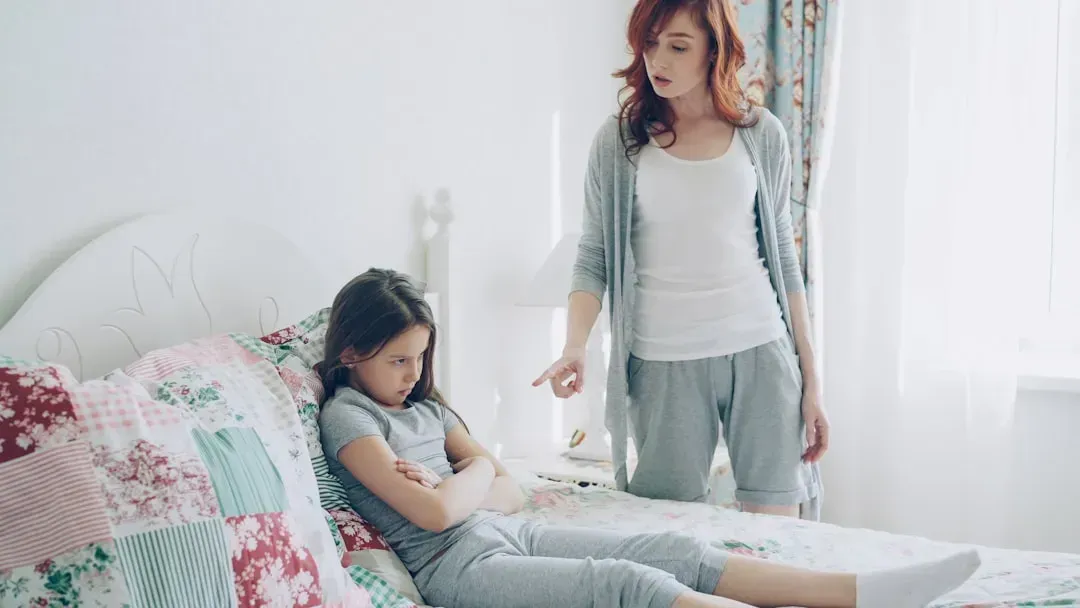
Authoritarian Parenting and the Fear of Getting It Wrong (Image Credits: Unsplash)
Authoritarian parenting can stifle a child’s emotional, social, and academic development in numerous ways. Children in these environments may grow up feeling that their opinions and emotions don’t matter. The emphasis on obedience over expression creates a particular dynamic: children learn to perform compliance rather than develop genuine self-understanding. They become very good at giving the right answer and very uncomfortable with their own inner experience.
When kids are raised by authoritarian caregivers, their experiences may prompt them to develop a hostile attribution bias, a tendency to assume that other people have aggressive or antagonistic intentions. At the same time, these kids lack role models and explicit instruction for learning healthy, effective strategies for coping with their negative emotions. The result is a child who can manage appearances but struggles to manage themselves.
When Warmth Is Missing: The Role of Parental Rejection

When Warmth Is Missing: The Role of Parental Rejection (Image Credits: Pexels)
Parental emotional warmth, as a positive parenting style, has a positive effect on adolescent mental health. Meanwhile, parental rejection, as a negative parenting style, has a negative and persistent impact on adolescent mental health. Rejection in this context doesn’t only mean active hostility. It includes coldness, emotional unavailability, and the kind of consistent disengagement that tells a child their inner world is not worth engaging with.
The lack of warmth and affection can create emotional distance between the parent and child. This detachment can hinder the development of relationship security, which is essential for building healthy relationships in adulthood. Children raised in authoritarian households might also internalize a fear of failure, as they’ll likely learn to associate mistakes with punishment rather than growth. Over time, this association reshapes how a child relates to vulnerability itself.
Helicopter Parenting: Too Close, Too Often
Helicopter Parenting: Too Close, Too Often (Image Credits: Unsplash)
Sometimes neglect is about a parent being too present in the wrong way. A parent can feed, clothe, and love their child, and still neglect their emotional growth by preventing every opportunity to practice autonomy. When you steal a child’s chance to struggle, they lose the chance to grow. Overprotection, though rooted in love, teaches children that they are not capable of handling difficulty. That belief can quietly devastate a child’s confidence.
Helicopter parenting is associated with “social withdrawal” in children raised by helicopter parents, which means unwillingness to participate in social environments. A 2024 meta-analysis concluded that over-involved parenting tends to limit autonomy-supportive development, whereas approaches that gradually encourage independence help young people build emotional and social maturity. The shutdown isn’t always withdrawal into sadness. Sometimes it’s withdrawal from life itself.
The Thwarting Parent: Frustrating Basic Needs

The Thwarting Parent: Frustrating Basic Needs (Image Credits: Pexels)
Research examined the relationship between supportive parenting styles such as warmth, structure, and autonomy support, and emotional well-being. It also explored thwarting parenting styles, including rejection, chaos, and coercion, that may be associated with emotional ill-being. The concept of thwarting is useful precisely because it describes not just what parents fail to provide, but what they actively block.
Ryan and Deci found that thwarting parental behaviors hindered the need for competence and induced inferior feelings that make adolescents prone to subjective distress, negative feelings, and affection. Thwarting parenting style positively influences basic psychological needs frustration, resulting in higher emotional ill-being. Children who feel perpetually blocked from expressing themselves, making choices, or being seen as capable learn to stop trying. That is the shutdown in slow motion.
What Emotional Neglect Actually Looks Like

What Emotional Neglect Actually Looks Like (Image Credits: Pexels)
Depression may cause parents to withdraw from their child emotionally or physically, a phenomenon known as emotional neglect. Emotional neglect not only affects children when they are growing up but can follow them into young adulthood, and can lead to anxiety disorders, depression, hyperactivity disorders, developmental delay, low self-esteem, and substance use. What makes emotional neglect particularly difficult to address is that it leaves no obvious mark. There is nothing dramatic to point to.
Children’s emotional needs involve much more than love, and unfortunately, some parents tend to be unaware of the importance of one very important emotional need: emotional validation. Emotional invalidation seems benign, but if it happens enough, the child internalizes that they are unworthy. This is the quiet architecture of shutdown: not a single bad moment, but a sustained absence of being genuinely seen.
How the Pattern Gets Passed Down

How the Pattern Gets Passed Down (Image Credits: Unsplash)
Parents who were raised in environments where emotions were dismissed or ignored may struggle to recognize and validate their children’s feelings. Growing up in households where emotional expression was viewed as a sign of weakness or instability could lead parents to unintentionally invalidate their children’s emotions. This is one of the most important and least discussed dynamics in family psychology. Parents often parent the way they were parented, not out of indifference but because it feels familiar and therefore normal.
Parents may not have been validated themselves when they were growing up, which makes it harder for them to recognize what validation looks like or how to practice it. This doesn’t make them bad parents, but it does mean that they may need some guidance to understand how to better support their child’s emotional needs. Recognizing the pattern is the first and most important step. Without that recognition, the cycle continues automatically, one generation quietly teaching the next to go silent.
The Long Reach Into Adulthood
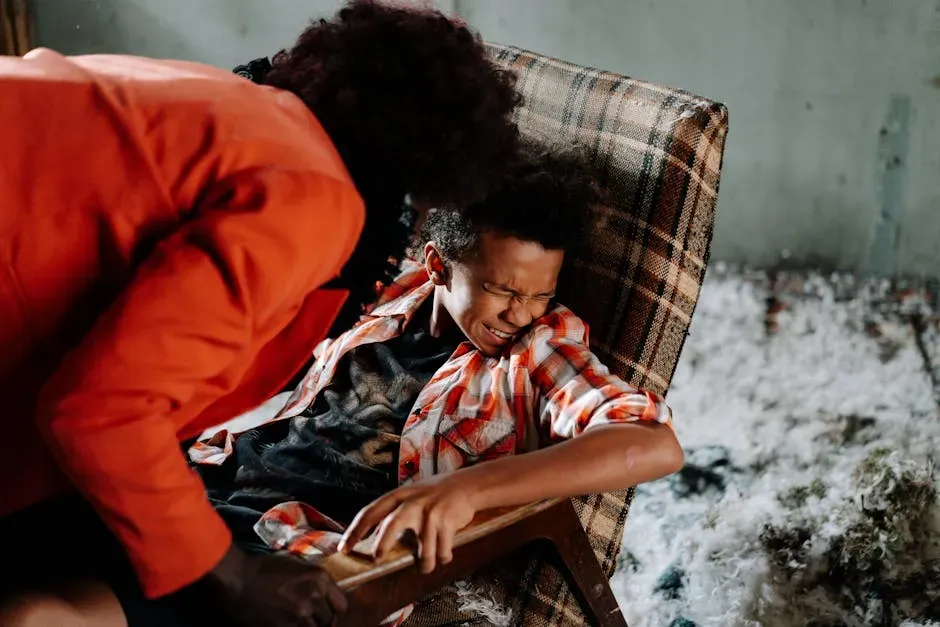
The Long Reach Into Adulthood (Image Credits: Pexels)
If a child routinely had their reality dismissed, minimized, or denied, they can struggle with identifying or expressing their emotions as an adult. They may become emotionally unavailable and can struggle to form or keep intimate relationships when emotional vulnerability is on the line. The child who went quiet at thirteen doesn’t always rediscover their voice at twenty-three. The patterns settle in, become part of how a person operates, and often require deliberate work to change.
The childhood strategy of suppressing emotions to gain parental approval or avoid conflict becomes a deeply ingrained adult pattern. This leads to several common psychological and interpersonal issues, including difficulty identifying and describing one’s own emotions. Complex Post-Traumatic Stress Disorder can be deeply tied to emotional invalidation experienced during childhood. When parents dismiss or ignore their children’s emotions, it disrupts the child’s sense of safety, trust, and stability. Over time, this undermining of their emotional reality fosters feelings of fear, shame, and helplessness, which are not easily shaken off in adulthood.
What Actually Helps: Building Emotional Safety

What Actually Helps: Building Emotional Safety (Image Credits: Pexels)
The development of children’s emotion regulation is the result of a complex interplay of factors, among which parental influences play a significant role. The good news is that parental influence runs in both directions. The same responsiveness that can cause harm when absent can become genuinely protective when present. Changing a pattern, even partway, has measurable effects on children’s emotional health.
Authoritative parents employ positive emotional communication, characterized by active listening, understanding, and positive recognition, along with consistent rules for their children, which positively influences their children’s emotional management and psychological adjustment. Successful modern parents actively create environments where emotional expression is welcomed and mental health discussions are normalized. The shift doesn’t require perfection. It requires presence, the kind that actually notices and stays with what a child is feeling rather than rushing to fix or dismiss it.