
Most people think the worst thing you can say in a relationship is something cruel. It turns out saying nothing at all might do more damage. Across therapy offices and psychology labs alike, one pattern keeps surfacing as a quiet but consistent predictor of relationship breakdown, and it rarely announces itself the way a screaming match does.
It shows up instead as a closed door, an unanswered text, a partner who suddenly goes flat and unreachable. By the time most couples recognize what's happening, the habit has often already taken root.
What the silent treatment actually is

What the silent treatment actually is (Image Credits: Pexels)
At its core, the silent treatment is a deliberate act, not an accident. Silent treatment is when one partner intentionally ignores the other as a way to manipulate, punish, or assert control. That intent is what separates it from simply needing a moment to cool down after an argument.
The behavior can range widely in intensity. This could range from ignoring texts or phone calls to completely cutting off verbal interaction. Some people go days without a single word, while others maintain a chilly, barely-there presence that feels almost worse than outright absence.
How it differs from stonewalling

How it differs from stonewalling (Image Credits: Pexels)
These two terms get used interchangeably, but researchers draw a real distinction between them. Stonewalling is a response in which one person withdraws from communication altogether, refusing to engage or address issues, and while similar, the silent treatment is often used to hurt or control, while stonewalling is more about avoiding conflict. One is a weapon, the other is often a shield.
The nonverbal cues can also give it away. Unlike stonewalling, during the silent treatment the perpetrator might still show that they've heard their partner through expressions or other non-verbal cues, like nods or eye rolls, and may continue the silent treatment for days. The psychological definition of stonewalling, on the other hand, describes an unintentional behavior that results from overwhelm or emotional flooding. Knowing which one you're dealing with changes how you respond to it.
Why Gottman calls it one of the "four horsemen"

Why Gottman calls it one of the "four horsemen" (Image Credits: Unsplash)
Psychologist John Gottman spent decades observing couples at his research facility, often called the Love Lab, and identified four communication patterns that reliably signal trouble. His research at the University of Washington uncovered that he could predict with striking accuracy which couples would divorce just by watching them argue for 15 minutes, and the four patterns responsible are criticism, contempt, defensiveness, and stonewalling. Stonewalling, the silence-based horseman, tends to arrive last in the sequence.
The predictive power of this research is what makes it stand out from ordinary relationship advice. These four communication patterns predict divorce with 93.6% accuracy according to Dr. John Gottman's research. That number has been replicated closely enough across multiple summaries of his work that it's become something of a benchmark in couples therapy circles.
The brain treats it like physical pain

The brain treats it like physical pain (Image Credits: Pexels)
There's a biological reason silence stings so much. Research shows that social rejection can have a similar effect on the brain as physical abuse, provoking feelings of pain and exclusion. This isn't a metaphor; brain imaging studies on ostracism have found overlapping activity with physical pain processing.
The psychological fallout can be severe even when the silence is brief. A study by Sommer, Williams, Ciarocco, and Baumeister found that being ostracised, even for short periods, can lead to feelings of worthlessness, low self-esteem, and helplessness. For the person on the receiving end, a few hours of silence can feel disproportionately devastating, and that reaction isn't weakness. It's wired into how humans process social exclusion.
Why the person giving silence isn't off the hook either

Why the person giving silence isn't off the hook either (Image Credits: Pexels)
It's tempting to frame this as one person's cruelty against another's suffering, but the research suggests both sides pay a cost. The silent treatment ultimately harms the person inflicting it too, since ignoring someone goes against human nature's tendency to reciprocate social cues, leading perpetrators to justify their behavior to continue ignoring others. That self-justification can spiral into a defensive posture that's hard to walk back from.
A 2026 systematic review looking specifically at this dynamic found the damage runs in both directions. The consequences identified for both givers and receivers of the silent treatment were decreased overall psychological health with long-term emotional distress and poor relationship satisfaction. Neither party walks away unscathed, even if only one of them is holding the silence.
It can become a habit that's hard to break

It can become a habit that's hard to break (Image Credits: Pexels)
What starts as an occasional coping mechanism can calcify into a default response. Moreover, the silent treatment can become addictive, with individuals repeating the behavior despite knowing its harm. Over time, silence becomes the automatic reply to conflict rather than a considered choice.
Gottman's research maps out how this escalation typically happens within a relationship. His findings suggest these patterns tend to appear in a predictable cascade, where criticism opens the door, contempt follows when criticism becomes habitual, contempt invites defensiveness, and when defensiveness fails to resolve anything, stonewalling takes over. By the time silence becomes the go-to response, a lot of other damage has usually already occurred.
Why people actually do it
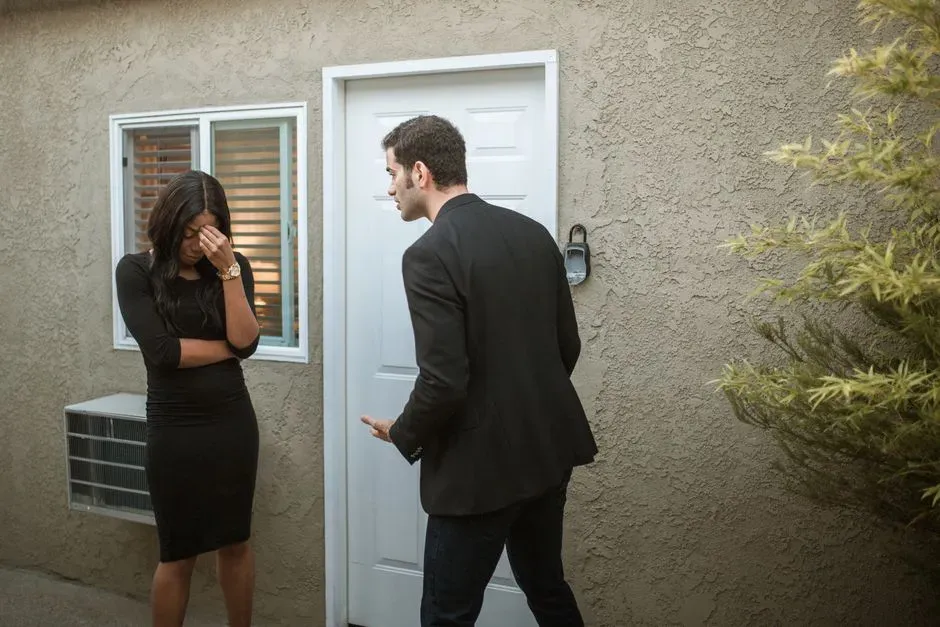
Why people actually do it (Image Credits: Pexels)
The motivations behind going silent are more varied than they might seem from the outside. Some people resort to silent treatment when they feel overwhelmed or unable to cope with intense emotions, using withdrawal as a self-protective mechanism, while for others it may be a response to fear or social anxiety, and in some cases individuals use it as a deliberate tactic to exert control and manipulate the relationship dynamic. Not every instance carries the same intent, even if the effect on the other person feels identical.
There's also a documented gender pattern worth noting, though it's not absolute. Gottman's research shows that men are more likely to stonewall than women because men's physiological stress responses during conflict are often more intense, getting flooded with a heart rate over 100 bpm and shutting down to cope. That physiological flooding is a real, measurable state, not just an excuse for checking out of a hard conversation.
How it slowly erodes trust

How it slowly erodes trust (Image Credits: Pexels)
The damage from repeated silence rarely arrives all at once. When silence becomes a repeated pattern, it slowly wears down a relationship, and the damage usually happens over time, not in one dramatic moment. That gradual erosion is part of what makes it so hard to name and address before real harm has been done.
Left unaddressed long enough, the pattern becomes one of the strongest warning signs researchers track. Research on relationship conflict patterns has shown that chronic stonewalling is a strong predictor of relationship breakdown when it goes unaddressed. It also creates a lasting sense of instability for the partner on the receiving end, who never quite knows when the next silence will hit.
The digital-age version: ghosting and slow fades

The digital-age version: ghosting and slow fades (Image Credits: Stocksnap)
Modern communication has given the silent treatment a new delivery method. Ghosting, the sudden disconnect after some amount of contact, has become what many now describe as the ultimate silent treatment, a passive-aggressive, detached communication style that can have ripple effects for both parties. Where silence once meant an empty room, it now often means an unanswered thread that sits there, visibly delivered, visibly read, and never responded to.
Clinicians treat this digital version with the same seriousness as its offline predecessor. Some mental health professionals think of ghosting as a type of silent treatment, which can be a form of emotional abuse, since silent treatment in a relationship is often a type of relational aggression, manipulation, and power tactic. The mechanics have changed with technology, but the emotional injury looks remarkably similar to what researchers documented decades before smartphones existed.
The physical toll it takes on the body

The physical toll it takes on the body (Image Credits: Unsplash)
The stress of chronic silence doesn't stay contained to mood or mindset. Over time, the body stays tense, stress hormones remain elevated, and physical symptoms like headaches or chronic fatigue can develop. This is consistent with a broader body of research on chronic relational stress and its physiological cost.
The sense of powerlessness that comes with being repeatedly shut out compounds this effect. Being repeatedly shut out can create anxiety, lower self-worth, and a growing sense of emotional insecurity. It's the kind of slow-building strain that people often attribute to work or general life stress, without realizing how much of it is actually coming from home.
What actually helps break the pattern

What actually helps break the pattern (Image Credits: Pexels)
Gottman's model does not simply diagnose the problem; it also points toward what counters it. The antidote to stonewalling that researchers identify is self-soothing, replacing withdrawal with a deliberate pause and return rather than an indefinite shutdown. The distinction matters. A short break to calm a racing heart rate is fundamentally different from days of engineered silence meant to punish.
Professional support tends to matter here more than willpower alone. Many couples need professional help to break entrenched patterns, but with commitment and the right tools, change is absolutely possible. Recognizing whether the silence in a relationship is protective flooding or a control tactic is often the first, most useful step toward addressing it honestly.
Final thoughts

Final thoughts (Image Credits: Pexels)
Silence has a strange kind of power precisely because it looks like nothing is happening. There's no raised voice to point to, no insult to quote back later, just an absence that somehow says everything. That's exactly what makes it so corrosive over time, and exactly why it deserves to be taken as seriously as any louder form of conflict.
Relationships survive plenty of arguments. What they struggle to survive is the sense that one partner has simply stopped showing up, even while still standing in the same room.