
Most people dump their quarters into a jar and forget about them. That jar, though, might be hiding something genuinely interesting. The 50 State Quarters Program ran from 1999 to 2008, and nearly 35 billion quarters were struck in circulation from this series. With production numbers that large, the vast majority will never be worth more than 25 cents. Still, a small group of specific coins – defined by minting errors, precious metal content, or extreme grade rarity – tell a very different story.
Value depends almost entirely on condition, mint errors, and scarcity within high grades, not age. That’s the crucial thing most people miss. A quarter doesn’t become valuable just because it sat in a drawer for 20 years. What matters is what happened at the mint, and whether the coin survived in near-perfect condition. Here are five state quarters that collectors and numismatists consistently identify as worth far more than their face value.
1. The 1999 Delaware "Spitting Horse" Quarter
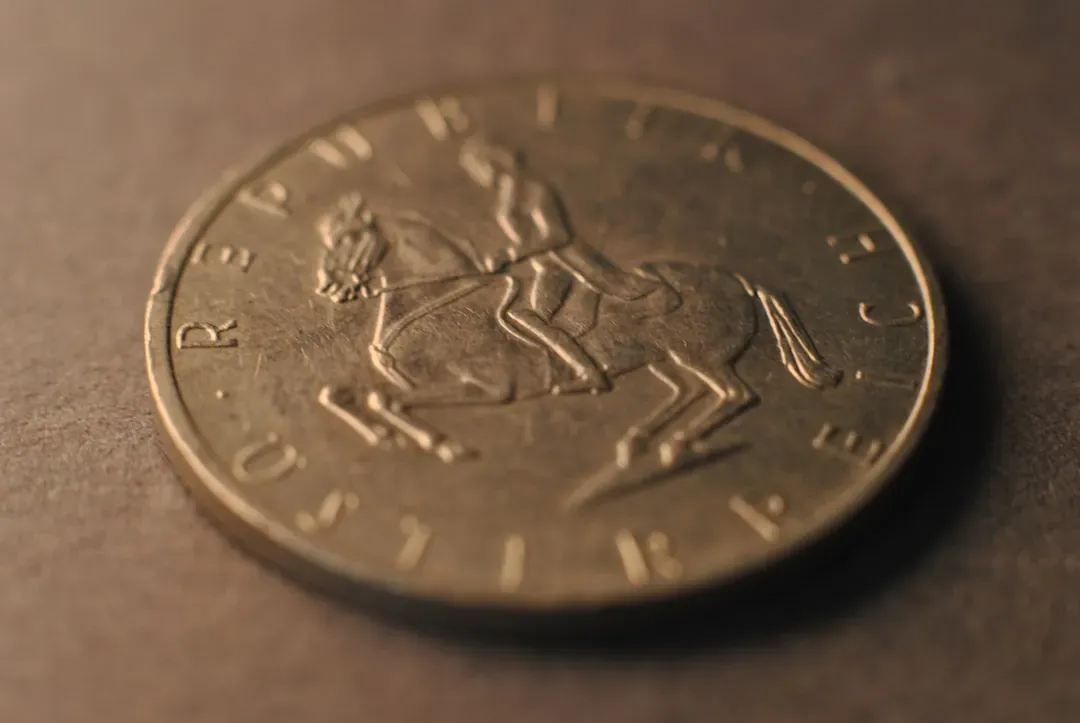
1. The 1999 Delaware "Spitting Horse" Quarter (Image Credits: Unsplash)
The Delaware State Quarter, released in 1999, was the first coin in the widely popular 50 State Quarters program. Commemorating Delaware's pivotal role as the first state to ratify the Constitution, the coin features a historical depiction of Caesar Rodney on horseback. A unique minting flaw known as the "Spitting Horse" error has made certain specimens highly collectible and valuable.
The "Spitting Horse" is a die break on some 1999 Delaware quarters. It's a small crack formed in the die near the horse's mouth. When the coin was struck, metal filled that crack and left a raised line that looks like the horse is spitting. This popular error can sell for $50 to $300 or more. High-grade certified examples push even higher, and when the Spitting Horse variety was first discovered in 1999, examples sold for $250 to $500 due to initial scarcity concerns, and as more specimens surfaced, prices stabilized – a pattern common with modern varieties that offers important lessons for today's collectors.
2. The 2004-D Wisconsin "Extra Leaf" Quarter
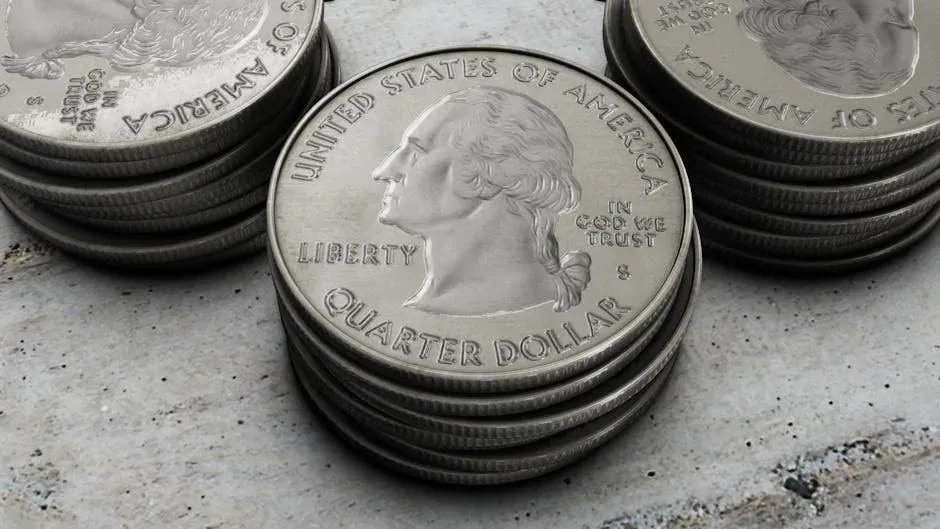
2. The 2004-D Wisconsin "Extra Leaf" Quarter (Image Credits: Pexels)
The Wisconsin quarter errors represent perhaps the most famous and valuable varieties in the entire state quarter series. Discovered in late 2004, these varieties sparked national media coverage and sent collectors scrambling through their change. The Wisconsin quarter shows a cow, a round of cheese, and an ear of corn, symbolizing the state's farming heritage. Certain Denver Mint quarters were struck with an extra leaf on the corn's left side – either a "High Leaf" or "Low Leaf" variation.
The rarest valuable state quarters are the 2004-D Wisconsin Extra Leaf varieties, with estimates of only 5,000 to 15,000 of each type existing. Circulated specimens of this error coin are worth around $50, while uncirculated examples have a value of $100 or more. Top-condition certified examples have commanded substantially more at major auctions, with the 2004-D Wisconsin Extra Leaf Low reaching up to $6,000 and the Extra Leaf High valued at $288.
3. The 2005 Kansas "In God We Rust" Quarter
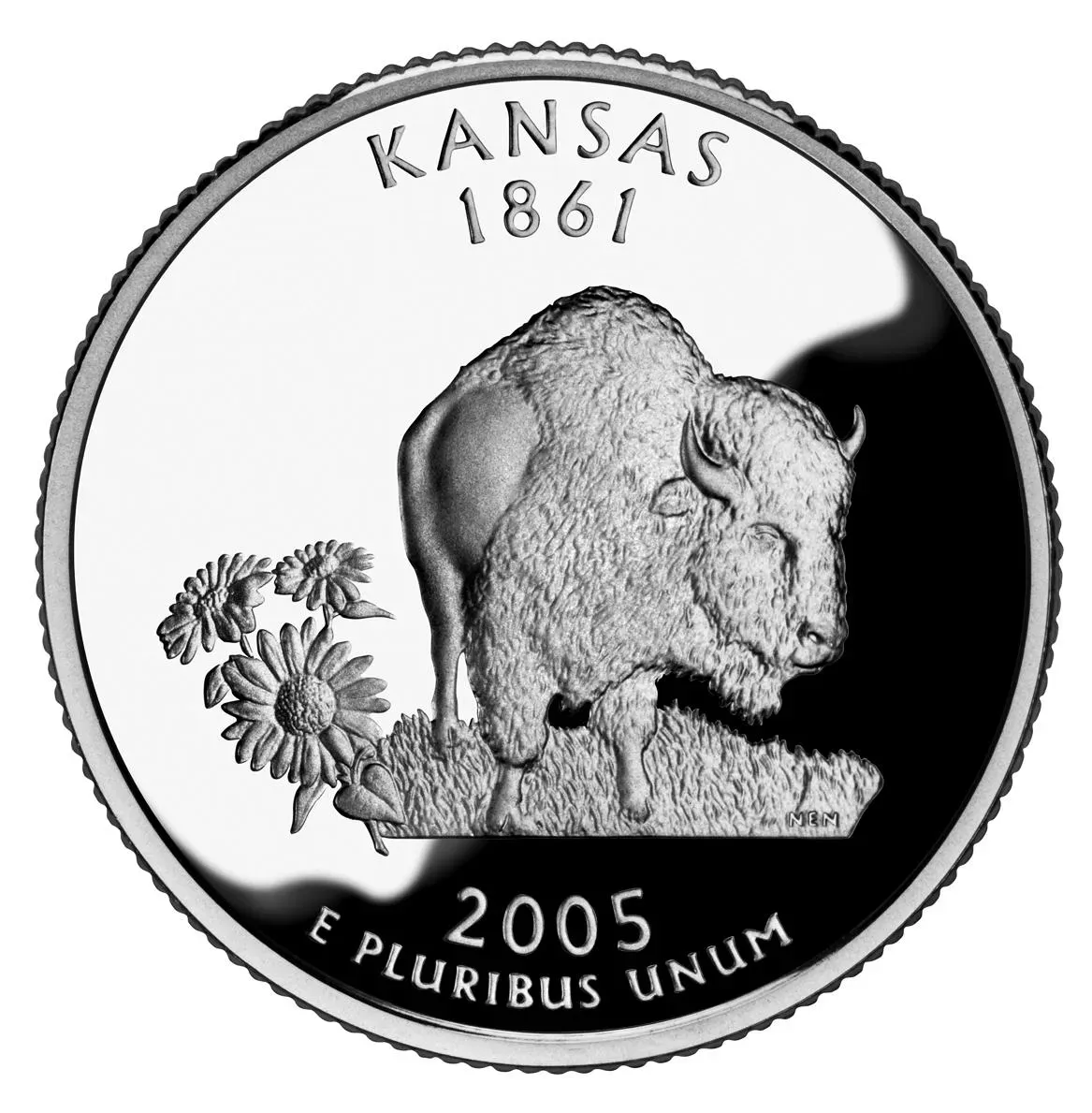
3. The 2005 Kansas "In God We Rust" Quarter (<a href="https://commons.wikimedia.org/w/index.php?curid=51472" target="_blank" rel="noopener">Public domain</a>)
The Kansas quarter is famous for one of the most amusing minting mistakes in modern U.S. coinage. On some coins, the "T" in "TRUST" is missing, leaving the phrase "In God We Rust." The cause was a grease-filled die that blocked the letter during minting. It's an error that manages to be both visually obvious and oddly charming, which is part of why it resonates with collectors who might not otherwise seek out error coins.
Although not as rare as others, this quirky error remains popular among collectors, with values typically ranging from $50 to $250 depending on condition. The Kansas quarter features a buffalo and the state motto, and some coins were struck with weak lettering, resulting in the phrase "In God We Rust." This error variety is popular among collectors for its humorous appearance, with values ranging from $50 to several hundred depending on condition.
4. The 2005 Minnesota "Extra Tree" Doubled Die Quarter
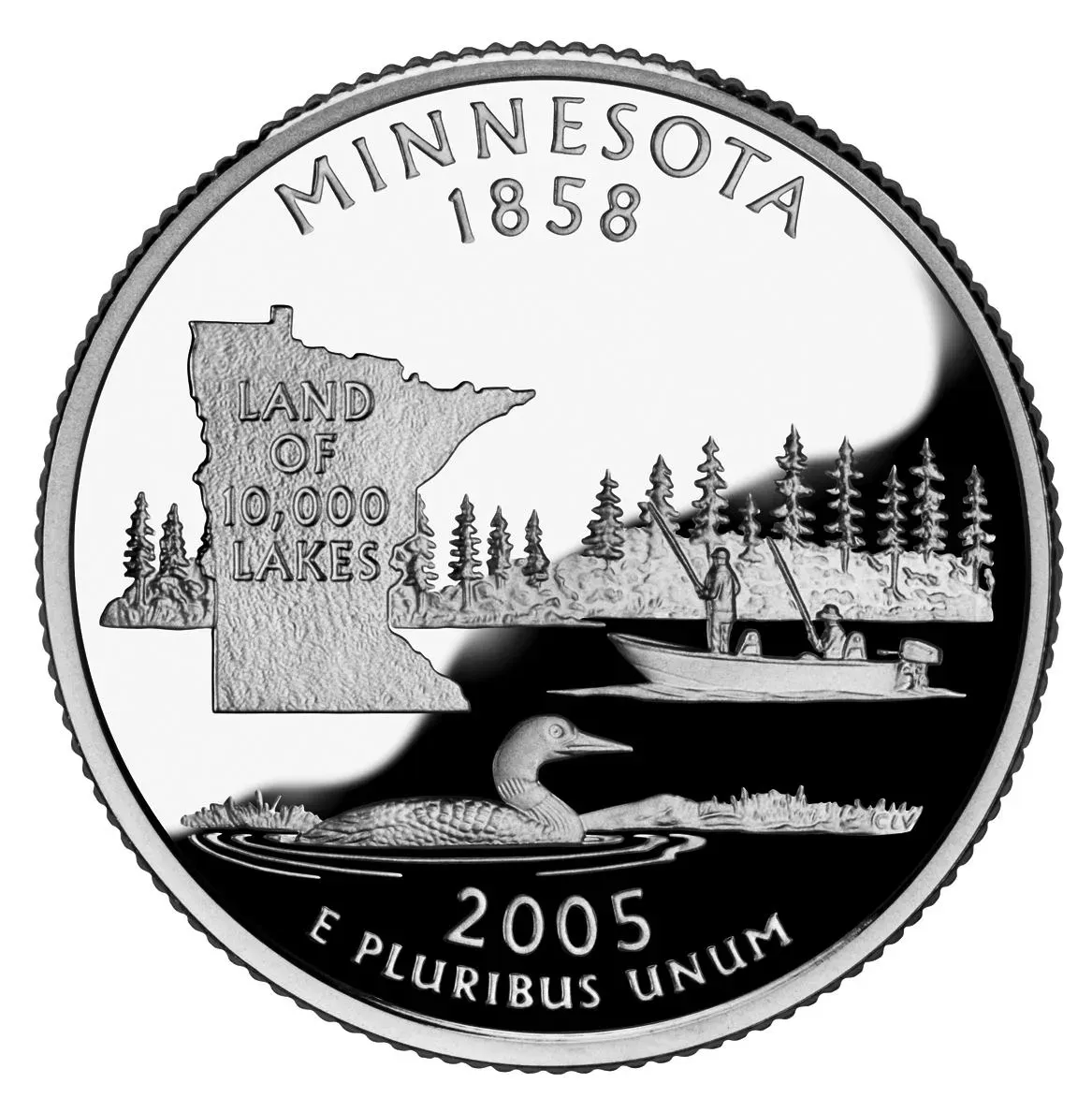
4. The 2005 Minnesota "Extra Tree" Doubled Die Quarter (<a href="https://commons.wikimedia.org/w/index.php?curid=51473" target="_blank" rel="noopener">Public domain</a>)
The same year that produced "In God We Rust" for the Kansas quarter also produced an error on some of the Minnesota quarters. What appears to be an "extra" tree is stamped into the background of the coin's reverse, typically appearing as the "fourth" tree from the left – in the gap between the two groups of trees in the design. Several varieties of this coin exist, and both the Philadelphia and Denver Mints produced their own versions. The appearance of the extra tree often results from die doubling or die deterioration, and in general, the stronger the error, the more prominent the tree appears and the more valuable the coin tends to be.
There are dozens of different types of 2005 Minnesota quarters showing evidence of an extra spruce tree in the middle of the coin. The more dramatic varieties are worth $50 or more, while more muted doubled die varieties have a value of about $5 and up. The 2005-P Minnesota Extra Tree is worth $40 to $275, with the spread entirely dependent on how boldly the extra tree shows up and the overall preservation of the coin.
5. The 1999-S Delaware Silver Proof Quarter
5. The 1999-S Delaware Silver Proof Quarter (Image Credits: Pexels)
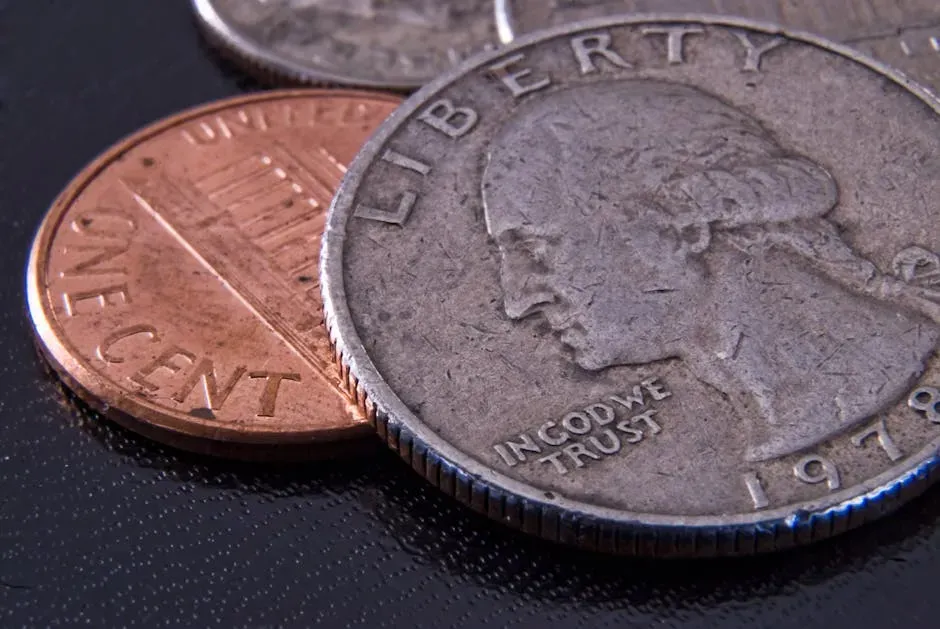
The 1999-S Delaware Silver Proof is among the most valuable quarters to look for because it inaugurated the groundbreaking 50 State Quarters Program, giving it immense historical significance as the first state quarter ever issued. It was exclusively available in special silver proof sets, never released for general circulation. The 90% silver content provides substantial intrinsic precious metal value.
Silver proof coins in perfect PR70 DCAM (Deep Cameo) grade combine 90% silver content – each containing 0.1808 troy ounces – with flawless surfaces and sharply frosted designs. The combination created the series record: $17,250 for the 1999-S Delaware Silver PR70 at Heritage Auctions in 2007. While PR69 Deep Cameo examples typically sell for around $22, the jump to PR70 commands astronomical premiums, with that record-setting sale representing a nearly 800-fold increase for just one point on the grading scale – illustrating how condition rarity drives value in modern commemorative coinage.
How to Know If Your Quarter Is Worth Anything
How to Know If Your Quarter Is Worth Anything (Image Credits: Unsplash)
Mint errors are flaws or variations that a coin incurs during the production process, and error coins from the 50 State Quarters Program are the result of deviations on the part of the United States Mint. Mint errors are not flaws in coins due to circulation. That distinction matters enormously. A coin that got scratched in someone's pocket is not a valuable error – it's just a worn coin.
Coins graded by professional services such as PCGS or NGC continue to command premiums, and uncirculated and high-grade coins can be worth significantly more than common circulated examples. Never clean coins – cleaning removes original luster and dramatically reduces value, potentially turning a $500 coin into a $5 coin. If a coin looks unusual under a loupe and shows a known die variety, the smartest next step is professional authentication before making any assumptions about its worth.