
Most people who find a 1776–1976 quarter in their change barely give it a second look. It’s old, sure, but old doesn’t always mean valuable – and with over a billion of these struck across two years of production, that instinct isn’t entirely wrong. Still, something has shifted in the collector market recently, and the coins that were once dismissed as sentimental novelties are drawing real attention again in 2025 and 2026.
Bicentennial coins have once again become a talking point in the U.S. collector community. These 1776–1976 quarters, half dollars, and Eisenhower dollars were created to honor America’s 200th year of independence, but their value story continues long after the celebration ended. Today, collectors are rediscovering them, and certain versions are seeing steady increases in price. The question isn’t really whether these coins are worth looking at. It’s whether you know which ones actually matter.
A Brief History of Why These Coins Exist
A Brief History of Why These Coins Exist (Image Credits: Pixabay)
In November 1972, Treasury officials agreed to add the date 1776 to 1976's coinage but would not change the coinage in any way to commemorate the Bicentennial. Congress ultimately took a middle path. It was only at the prodding of key hobby leaders and interested members of Congress that the quarter was also included. The result was legislation signed by President Nixon in October 1973, authorizing new commemorative reverse designs for the quarter, half dollar, and dollar coin.
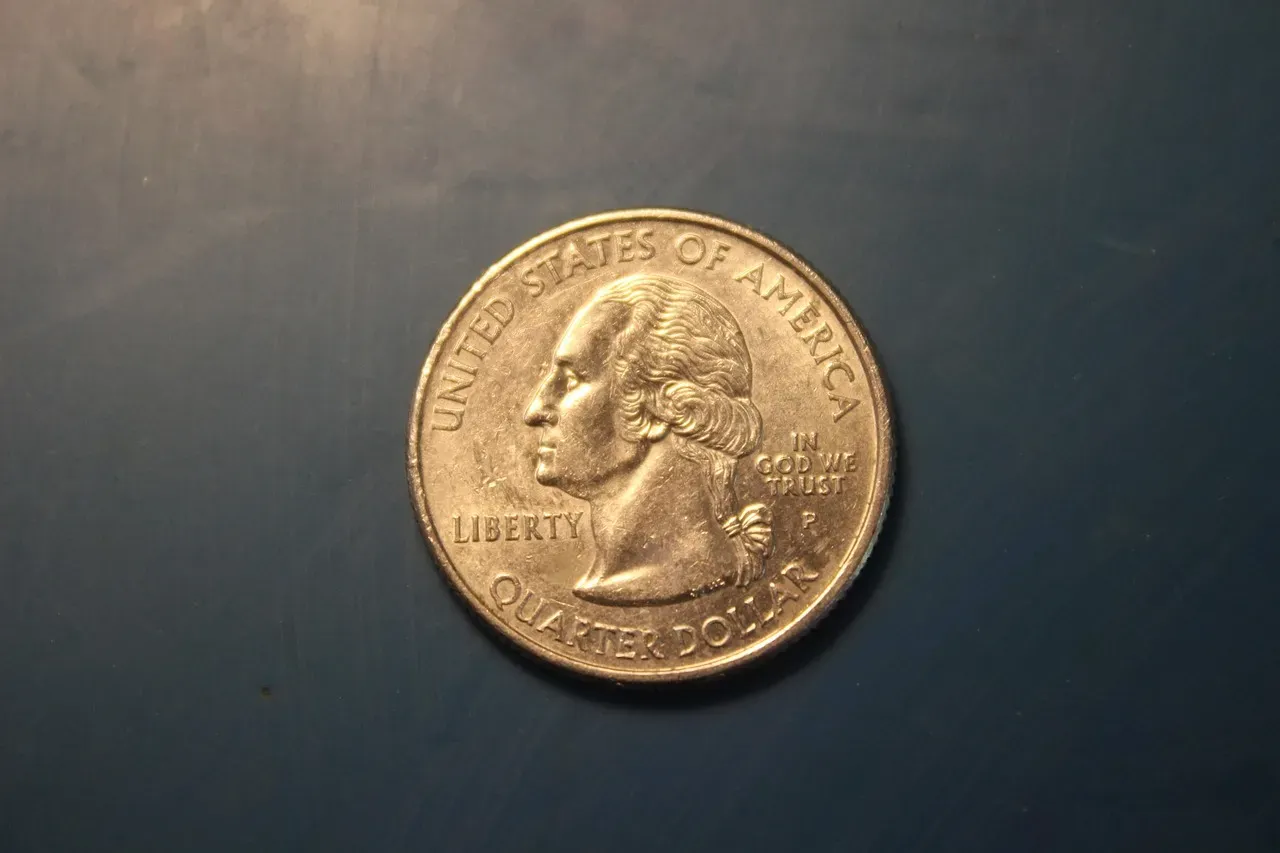
The Bicentennial Quarter was part of a special coinage program celebrating the United States' 200th birthday. Unlike regular quarters, it featured a unique reverse design created by Jack L. Ahr, showing a colonial drummer with a torch surrounded by 13 stars. The obverse retained George Washington's portrait but included the dual date "1776–1976." This was the first time a U.S. circulating coin carried a dual date, which makes it historically special.
The Three Coins and What Makes Each One Distinct
The Three Coins and What Makes Each One Distinct (Image Credits: Pexels)
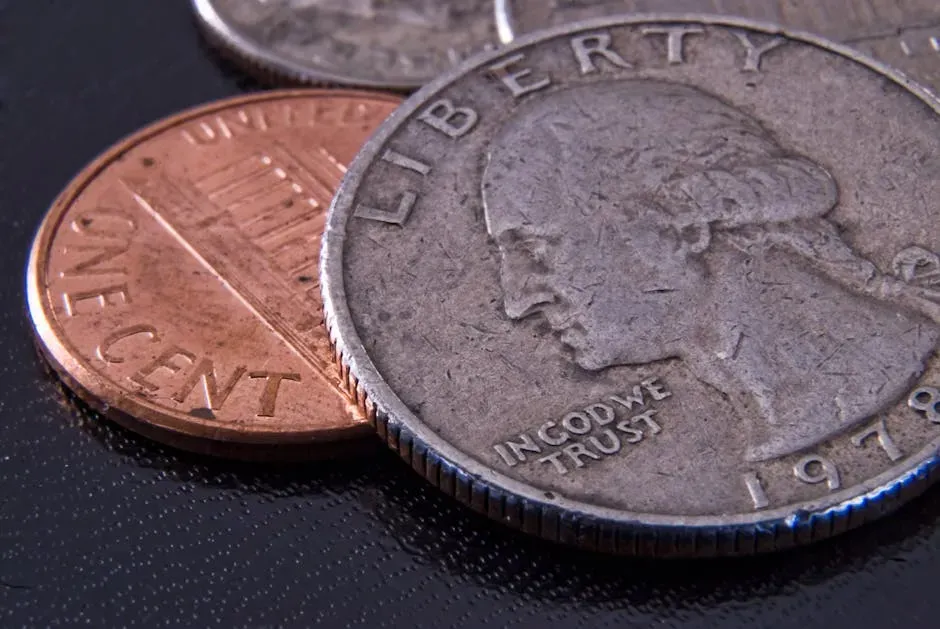
The U.S. Mint celebrated the nation's bicentennial in 1976 with three specially designed coins: the quarter, the half, and the dollar. The obverses carried the double date of 1776–1976, and all-new reverses, selected in a competition among private artists, appeared on the three coins. The reverse of the Bicentennial Kennedy Half featured a front view of Independence Hall in Philadelphia, designed by Seth G. Huntington. The reverse also carries the additional words "200 Years of Freedom" and "Independence Hall," the only one of the three bicentennial coins to feature additional words.
The reverse of the Bicentennial Dollar was designed by art student Dennis R. Williams, who was 21 at the time. It displays the Liberty Bell superimposed on the moon, which takes up most of the reverse. Notably, neither Huntington nor the other two Bicentennial design winners – Jack Ahr for the quarter and Dennis Williams for the dollar – ever produced another coin design for the U.S. Mint. Each coin carries a uniquely one-time story.
The Sheer Scale of Production – and Why It Matters
The Sheer Scale of Production – and Why It Matters (Image Credits: Pexels)
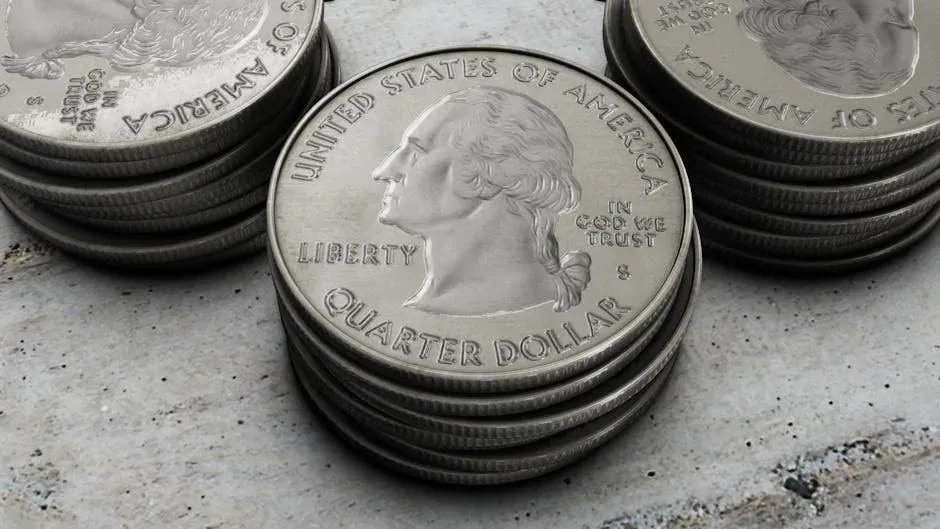
More than 1.6 billion quarters were minted for the 1976 Bicentennial, spanning three U.S. Mint locations: Philadelphia, Denver, and San Francisco. The Philadelphia and Denver branches handled the production of regular business strike quarters. Meanwhile, the San Francisco Mint crafted proof and uncirculated versions, available in sets for coin collectors, crafted from both silver and copper-nickel clad materials.
The Philadelphia quarter is the most common in the series, with nearly 810 million produced. Most circulated examples are worth face value – 25 cents. But the story changes dramatically as grade rises, because fully struck, bag-mark-free examples in MS67 and above are genuinely rare despite the enormous output. High production numbers create an illusion of abundance, but exceptional condition turns common coins into genuine rarities.
Silver Versions: The Hidden Gems Most People Overlook
Silver Versions: The Hidden Gems Most People Overlook (Image Credits: Unsplash)
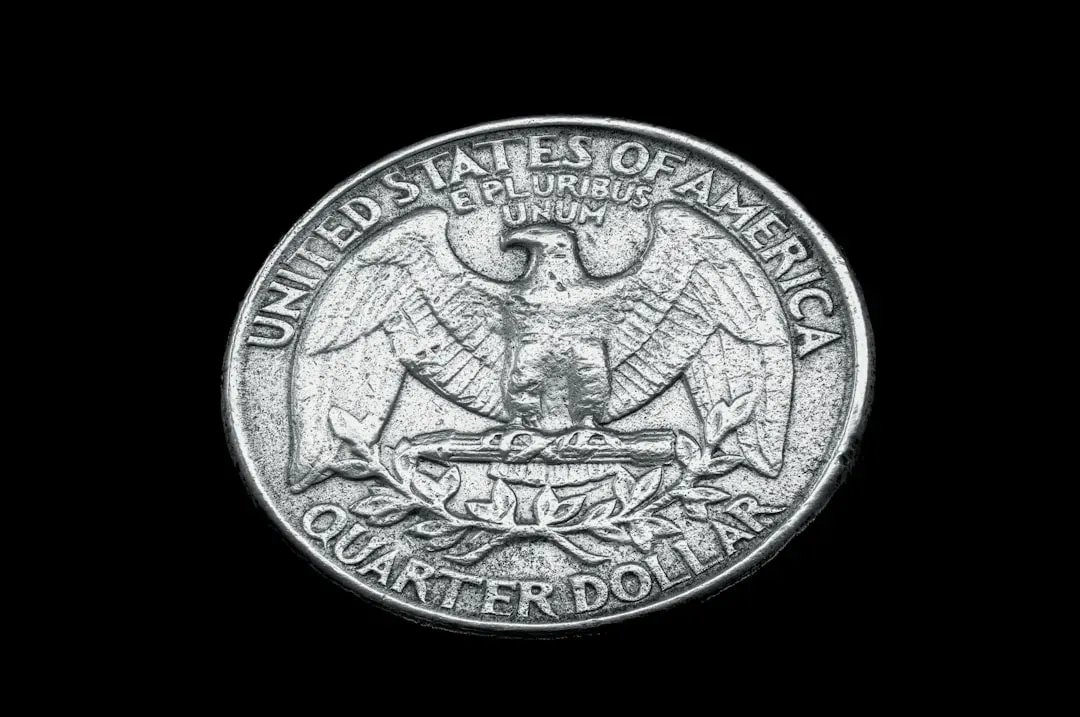
One of the most collectible versions of the Bicentennial Quarter is the 40% silver edition produced for collectors. These coins were never intended for everyday circulation and were included in special mint and proof sets. Collectors often value these coins not only for their silver content but also for their historical significance.
The 40% silver Bicentennial issues have gained from rising silver prices. Even if collector demand slows temporarily, the intrinsic metal value helps protect their long-term worth. Millions of silver Bicentennial quarters were melted in 1982 and subsequent years, reducing the surviving population and increasing scarcity for serious collectors. High-grade examples are particularly scarce due to poor initial storage and handling by the general public who received these as circulating commemoratives.
Error Coins: Where the Real Excitement Lives
Error Coins: Where the Real Excitement Lives (Image Credits: Pexels)
Error coins add another layer of rarity. Bicentennial quarters with off-center strikes, double dies, and planchet errors are highly collectible. These coins demonstrate the unpredictability of minting and the excitement of discovery. In 2026, error Bicentennial quarters remain popular among specialists, often selling for hundreds or more depending on rarity and condition.
Mint errors are where real value increases. Doubled die obverse coins, where letters or numbers appear doubled, carry 2026 values between $100 and $500. Off-center strikes, where the design is misaligned, range from $50 to $300. Clipped planchet errors, where a curved part of the coin is missing, can reach $75 to $400. Coins struck on the wrong planchet – a very rare mistake using a different metal blank – can reach $500 to over $2,000. The stronger and clearer the error, the higher the value.
Proof Coins and the San Francisco Premium
Proof Coins and the San Francisco Premium (Image Credits: Pexels)
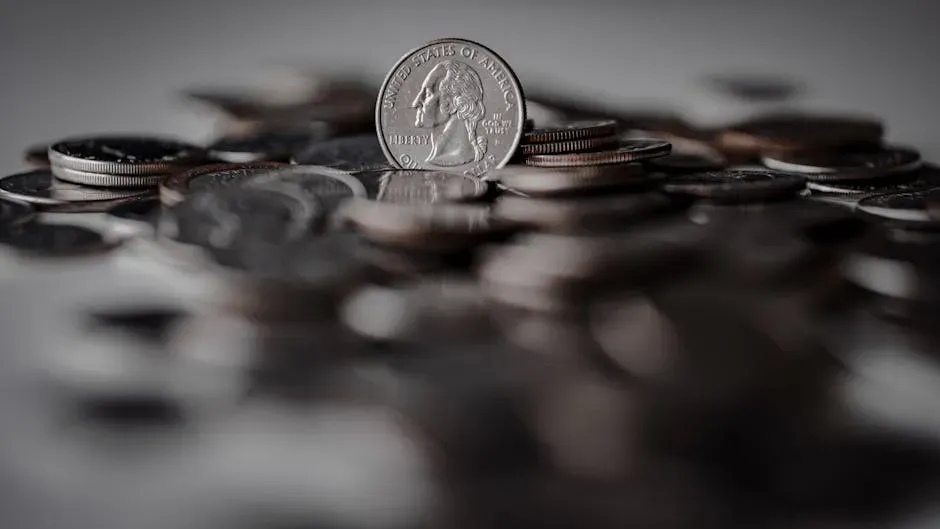
Proof Bicentennial quarters struck at the San Francisco Mint are another area of interest. These coins feature sharp details and mirror-like surfaces, making them attractive to collectors. Silver proof issues are especially valuable. In 2026, proof Bicentennial quarters continue to command premiums over face value.
In recent auctions, pieces of the proof Washington Bicentennial quarter in deep cameo finish have sold for $7 up to $50 in PR69 grade and $79 up to $154 in PR70 grade. One of the most astonishing sales involved a 1976-S Silver Proof Quarter graded PR70 Deep Cameo, which fetched over $13,500 at auction. That's a significant return on a coin that once left the Mint as part of a modest collector set.
The Eisenhower Dollar: The Underrated Piece of the Set
The Eisenhower Dollar: The Underrated Piece of the Set (James St. John, Flickr, <a href="https://creativecommons.org/licenses/by/2.0/" target="_blank" rel="noopener">CC BY 2.0</a>)
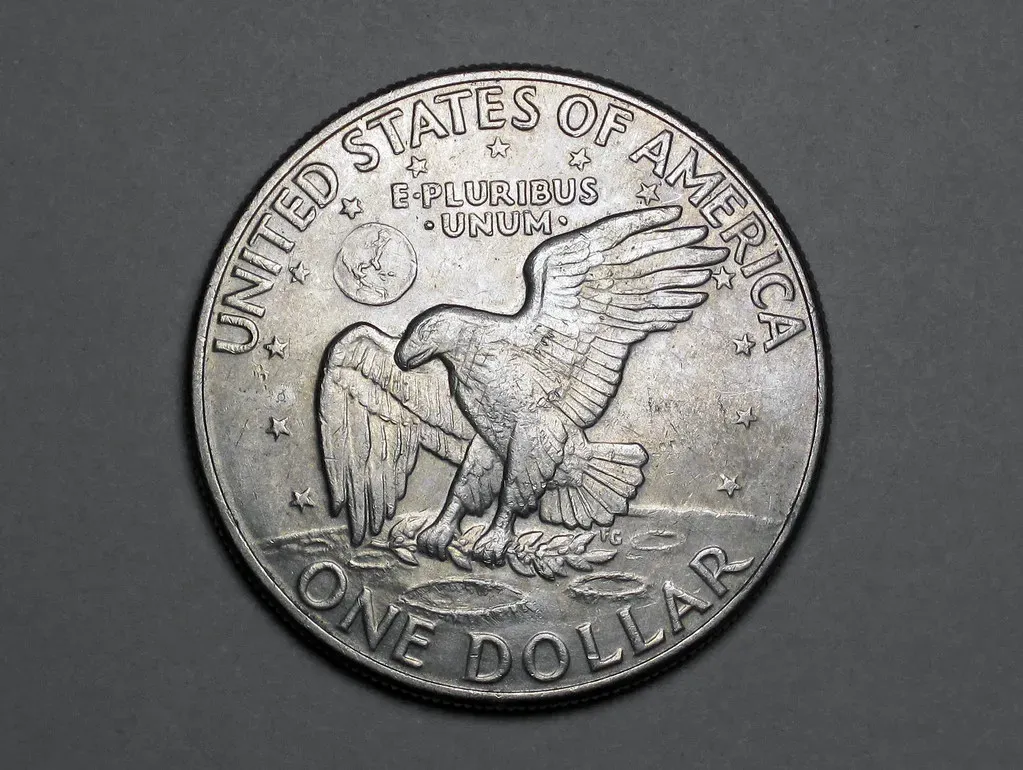
The Bicentennial Dollar features a "1776–1976" double date on the obverse and is a very popular coin among collectors. There were no other changes to the obverse of the 1976 Bicentennial pieces. The reverse of the Bicentennial Dollar was designed by art student Dennis R. Williams. It displays the Liberty Bell superimposed on the moon, which takes up most of the reverse.
MS66 specimens trade around $70, while MS67 examples reach approximately $800 to $3,600. A May 2025 Heritage auction recorded an MS67+ sale at $7,200. While hundreds of millions of Eisenhower dollars were made, copper-nickel clad business-strike specimens grading MS65 or better are remarkably scarce. This is because the coins are relatively large and heavy and thus more prone to surface gouges and other imperfections during shipment in bags. Thus, copper-nickel clad business strikes grading MS60–64 are typical; in MS65 they are scarce, rare in MS66, and virtually elusive in MS67.
Social Media and the New Generation of Collectors
Social Media and the New Generation of Collectors (Image Credits: Pexels)
Bicentennial finds shared on TikTok, YouTube, and collector groups keep the series trending. Viral discoveries encourage new collectors to search their change, creating more buzz and sustained demand. New coin collectors schooled on social media, such as YouTube and TikTok, have seen dozens of videos claiming that these Bicentennial Quarters are rare and valuable, but can still be found in pocket change. The enthusiasm, while sometimes overstated online, has a real effect on market activity.
People who grew up seeing these coins in their change now want high-quality examples for their collections. The history attached to them adds emotional value that continues to grow over time. The market for Bicentennial quarters operates on multiple levels. At the base level, silver varieties benefit from precious metals price movements, providing a floor based on current silver values. Beyond this, collector demand drives premiums for high-grade examples, while nostalgic appeal attracts Americans who remember the Bicentennial celebration.
How to Tell If Your Coin Is Actually Worth Something
How to Tell If Your Coin Is Actually Worth Something (Image Credits: Pexels)
Check the mint mark: look for an "S" mint mark, as this indicates a 40% silver proof quarter, which is more valuable than standard copper-nickel versions. Regular quarters weigh 5.67 grams, but silver versions are around 5.75 grams. A silver coin has a solid silver edge, not the usual copper stripe. These two checks can immediately tell you whether you're holding something worth a second look or just face value.
Examine for errors: inspect the coin carefully for any doubled lettering, off-center strikes, or missing clad layers, as these errors can significantly increase its value. Cleaning coins is strongly discouraged, as it can reduce their value. Professional conservation is recommended for rare and valuable pieces. If a coin looks unusual in any way, resist the urge to polish it up – that's one of the most common mistakes new collectors make.
What Professional Grading Actually Does for Value
What Professional Grading Actually Does for Value (Image Credits: Pixabay)
The market for Bicentennial quarters reflects both traditional numismatic patterns and modern trends. Most valuable error coins are graded by professional services such as PCGS and NGC. High-grade certified coins often command strong premiums because buyers trust authenticity and condition.
Auction records show consistent appreciation for top rarities, with some coins selling for thousands. Professional grading and authentication remain essential for maximizing value. A Philadelphia quarter in pristine MS68 condition is worth approximately $4,500. The grade on the holder isn't just a number – it's a benchmark that determines where a coin sits in the market and how competitive bidding around it will be.
The Approaching 250th Anniversary Factor
The Approaching 250th Anniversary Factor (Image Credits: Pexels)
As we approach the 50th anniversary of the Bicentennial celebration in 2026, interest in these commemorative coins may experience renewed growth. The combination of historical significance, precious metals content in silver varieties, and the natural collector appeal of well-designed American coins suggests stable to increasing demand for premium examples.
In 2026, demand remains strong, with collectors eager to acquire these historic pieces. Market trends suggest that values will continue to rise, particularly for coins with unique characteristics. As more people become aware of the potential value of Bicentennial Quarters, competition among collectors is likely to increase. The timing creates a window that serious collectors are already paying attention to – and casual holders of old coin jars might want to as well.