
Most people who come across an old Buffalo Nickel in a kitchen drawer or a grandparent’s coin jar assume it’s worth little more than a curiosity. That assumption is increasingly wrong. Over the past couple of years, auction results and collector demand have pushed certain examples of this 1913-to-1938 series to prices that would genuinely surprise anyone who hasn’t been paying attention.
The gap between common and rare in this series is unusually wide. The value of a Buffalo Nickel today typically ranges from one dollar to over a thousand dollars depending on its date, mintmark, condition, and rarity. That’s a broad range – and the top end keeps climbing for the right coins.
A Coin Designed for the Ages, Not for Durability
A Coin Designed for the Ages, Not for Durability (Homini:), Flickr, <a href="https://creativecommons.org/licenses/by/2.0/" target="_blank" rel="noopener">CC BY 2.0</a>)
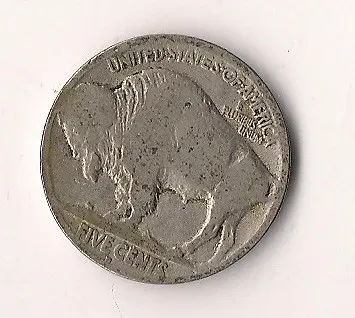
James Earle Fraser designed the coin to celebrate American heritage, with an obverse portrait combining features from three Native American chiefs and a reverse inspired by Black Diamond, a bison that lived in New York's Central Park Zoo. It was bold, artistic, and genuinely American. The problem was entirely practical.
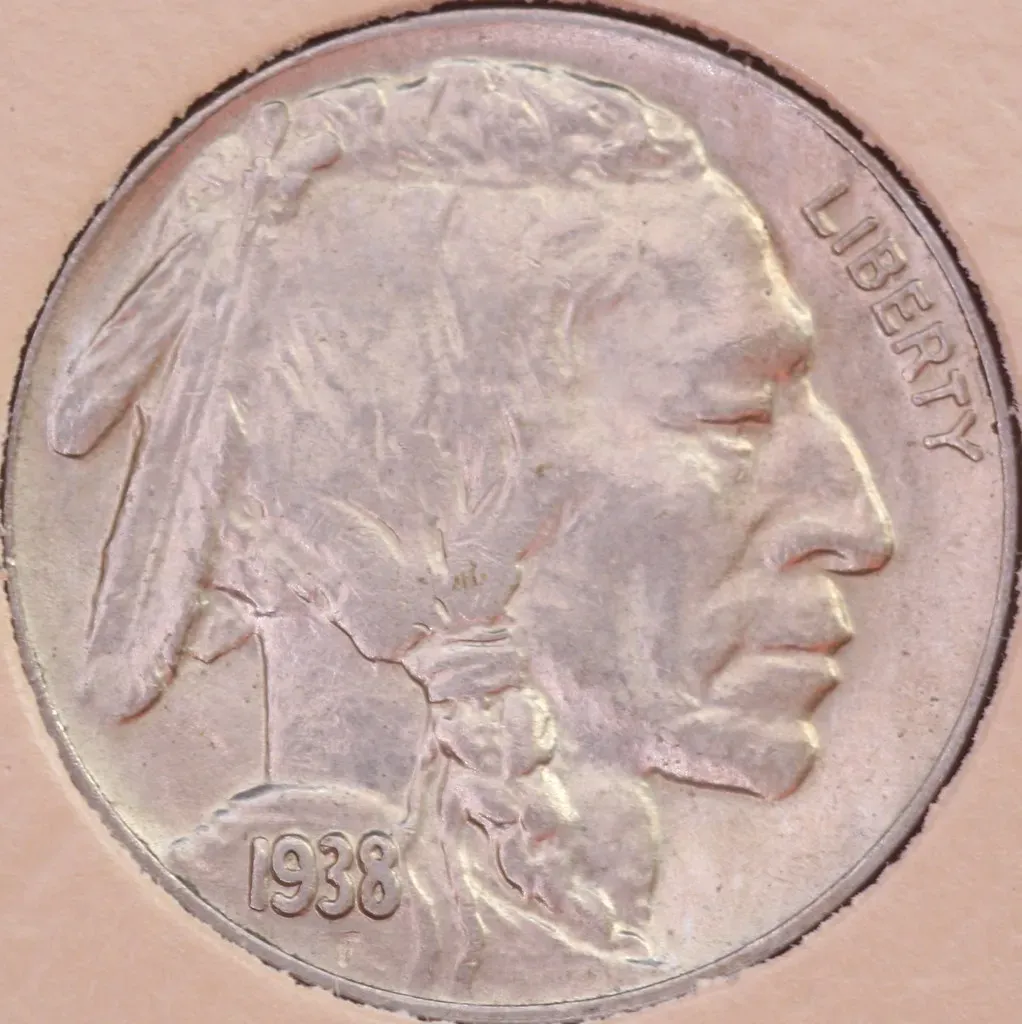
Fraser's artistry came with a critical design flaw: the date was placed on a raised area that wore rapidly through circulation. This fundamental weakness means that millions of Buffalo Nickels survive today without readable dates, trading as "dateless" culls worth mere cents. That scarcity of well-preserved examples is precisely what drives the market for surviving high-grade coins.
The 1913 Type 1 and Type 2 Split – And Why It Matters
The 1913 Type 1 and Type 2 Split – And Why It Matters (kevin dooley, Flickr, <a href="https://creativecommons.org/licenses/by/2.0/" target="_blank" rel="noopener">CC BY 2.0</a>)
For the first year of issue, the Buffalo Nickel was produced in two distinct types. The original or Type 1 design features the buffalo standing on a raised mound. The revised or Type 2 design features the buffalo standing on a flat plane or line. The change happened mid-year, making Type 2 coins from 1913 a noticeably shorter production run.
With only part of the year left to produce nickels, San Francisco's mintage totaled only 1,209,000 pieces. By the end of the series in 1938, this mintage became very small in comparison to the rest of the years and issues – ranking third lowest in the series. The 1913-S Type 2 nickels today are among the leaders in Buffalo Nickel value. Even worn examples command real money, which says a lot about how tight the supply truly is.
The San Francisco Mint's Outsized Role in Rarity
The San Francisco Mint's Outsized Role in Rarity (stephpbader, Flickr, <a href="https://creativecommons.org/licenses/by/2.0/" target="_blank" rel="noopener">CC BY 2.0</a>)
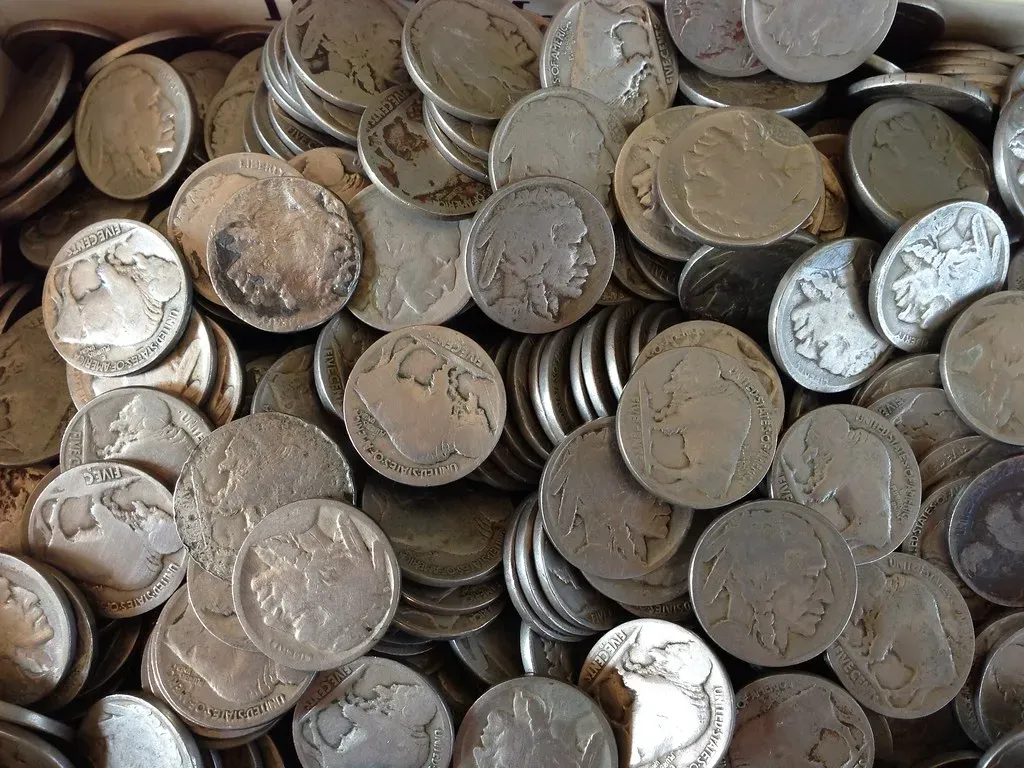
Low mintage numbers of San Francisco Buffalo Nickels place most dates as the scarce issue for the year. A total of 118 million were struck with all years combined, lowest of the mints. Many of the key and high-value nickels are the San Francisco coins. Collectors who understand this focus heavily on the "S" mintmark when building serious collections.
The 1924-S and 1926-S are similarly challenging, with the latter having the lowest mintage of the series at just 970,000 coins. Unlike the 1931-S, which had similar low mintage but was heavily hoarded, the 1926-S circulated without notice. It is the only Buffalo Nickel that commands a premium in AG3 condition. That last detail tells you everything about how genuinely scarce this coin is across all grades.
The 1918/17-D Overdate: A Mint Mistake Worth Half a Million Dollars
The 1918/17-D Overdate: A Mint Mistake Worth Half a Million Dollars (Image Credits: Unsplash)
The most outstanding example of a valuable nickel is the 1918/7-D. The 1918 date was stamped over the 1917 date, and a simple mistake turned this coin into a true numismatic rarity. According to PCGS, a 1918/7-D Buffalo Nickel MS65+ sold for $350,750 in 2006. More recently, the standout recent sale is the 1918/7-D Buffalo Nickel at $511,875 in 2024, far ahead of other Buffalo and Jefferson nickel results surfaced in public sources.
One of the most dramatic overdates in U.S. coin history, this Denver-minted coin shows a faint "7" under the "8" in the date. A scarce overdate where remnants of "1917" are visible under the "1918," it is highly sought-after by advanced collectors. The visibility of that ghost digit is the entire story – and the reason the price keeps climbing.
The 1937-D Three-Legged Buffalo: An Accident Collectors Love
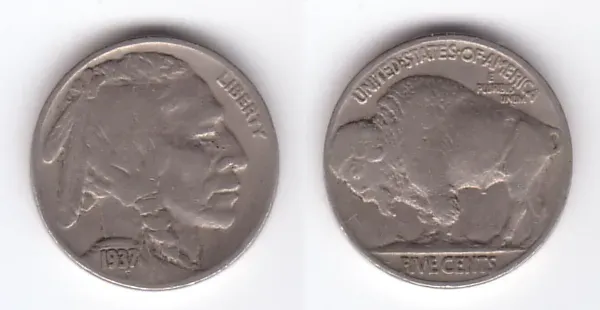
The 1937-D Three-Legged Buffalo: An Accident Collectors Love (Scanned by me, User:Crotalus horridus, on 2/1/06 with a CanoScan N650U scanner @ 300dpi., <a href="https://commons.wikimedia.org/w/index.php?curid=17870841" target="_blank" rel="noopener">Public domain</a>)
Of all the Buffalo Nickel coins, the 1937-D Buffalo Nickel Three Legs, minted at the Denver Mint, is considered the most valuable. This variety resulted from a U.S. Mint error where the obverse side of the coin was over-polished, causing three of the bison's legs to appear missing. It's an error that no one at the Mint intended to release – which makes it genuinely one of a kind in terms of its origin story.
Authentic 1937-D Three-Legged Buffalos display specific characteristics: the right front leg is completely missing, but the hoof remains visible on the ground line; the buffalo's shoulder shows a distinctive "moth-eaten" appearance where the die was over-polished. The highest recorded auction price for a 1937-D Buffalo Nickel with the "Three Legs" error is approximately $99,875. For circulated examples, this famous mint error where the front leg of the bison was accidentally ground away during die polishing can fetch $500 to over $10,000 depending on grade.
The 1916 Doubled Die: The Error You Need a Magnifier to Spot
The 1916 Doubled Die: The Error You Need a Magnifier to Spot (Image Credits: Pexels)
The 1916 Double Die error occurred when the die was accidentally engraved twice, creating a doubled image most visible on the date and the word LIBERTY on the obverse side. A genuine 1916 doubled die is extremely rare and valuable, especially in higher grades. Most people would walk right past it, which is part of what makes it such a compelling find.
The 1916 Buffalo Nickel doubled die obverse sold for $281,750 in 2004, establishing a strong market value for this remarkable minting error. The 1916 Doubled Die Buffalo Nickel is the most popular doubled die variety for the entire Buffalo Nickel series. The 1916 doubled die Buffalo nickel is a rare coin with six-figure prices in the mid-range uncirculated grades. The numbers speak for themselves.