
Most people spend decades dreaming about retirement, imagining it as a long-awaited reward. Yet once it arrives, the experience doesn’t always match the fantasy. There’s a measurable gap between how many workers think they’ll be happy in retirement and how many retirees actually report being happy. The jump from a structured career to open-ended freedom can feel disorienting, even for those who planned carefully.
What separates genuinely contented retirees from those who drift or struggle rarely comes down to wealth or travel plans. The happiest retirees often share one quiet advantage: they shape their days with small routines that keep life moving. These habits aren’t dramatic or expensive. They’re the kind of ordinary, repeatable choices that quietly build a life worth living.
1. They Wake Up With a Consistent Rhythm

1. They Wake Up With a Consistent Rhythm (Image Credits: Pexels)
After decades of alarm clocks and rigid schedules, the idea of sleeping in whenever you want sounds amazing. The happiest retirees, however, still wake up with intention. They’re not setting early alarms like they’re still commuting, but they’re also not letting their days dissolve into formless stretches of time. There’s a real difference between freedom and formlessness.
Research shows that maintaining regular sleep-wake cycles contributes significantly to both mental health and cognitive function. Our bodies crave rhythm, even when we don’t have to punch a clock anymore. When structure disappears completely, depression and anxiety often creep in. A simple morning routine creates anchors in your day, small rituals that remind you who you are beyond your former job title.
2. They Move Their Bodies Every Single Day

2. They Move Their Bodies Every Single Day (Image Credits: Pexels)
Research in BMC Public Health found a clear positive correlation between physical activity and psychological adjustment in retirees. Movement isn’t just good for your body. It’s essential for mental health. The crucial thing is that it doesn’t need to be strenuous. A walk, a swim, or light stretching counts just as much.
To achieve happiness in retirement, it’s crucial to work on physical health. Happier retirees tend to be more active, engaging in activities like exercise. Retirement often removes commuting, which means retirees can lose what might be called “accidental exercise,” and a short daily routine can bring it back. Even a ten-minute loop around the neighborhood matters more than a sporadic two-hour gym session once a week.
3. They Invest Deliberately in Social Connection

3. They Invest Deliberately in Social Connection (Image Credits: Unsplash)
In 1938, Harvard University scientists started what is still the longest-running study of human happiness, tracking hundreds of students as they progressed through their careers and retirement. Almost 80 years later, researchers found that one of the biggest challenges faced by participants when they retired was the loss of their social connections. They also showed that maintaining close relationships was more important to their happiness than money, and that it could help slow mental and physical decline.
A Gallup analysis found that nearly 70% of participants aged 65 and older who reported engaging in social activity for at least four hours a day described a high level of enjoyment and happiness, compared to 44% of those with zero social time. The happiest retirees treat their social lives with the same seriousness they once brought to work meetings. They schedule weekly coffee dates. They join clubs. They call their siblings. The point is that connection doesn’t just happen on its own. It needs to be scheduled like anything else that matters.
4. They Practice Daily Gratitude in Some Form

4. They Practice Daily Gratitude in Some Form (Image Credits: Unsplash)
Psychological research suggests that putting feelings of gratitude to paper can provide both mental and physical benefits, such as greater self-esteem, better sleep, and improved heart health. As reported by the Harvard Health team in 2024, practicing gratitude improves sleep and lowers blood pressure, both significant factors in increased life expectancy. Quality sleep allows the body to repair and rejuvenate, while healthy blood pressure reduces strain on the cardiovascular system.
Work from psychologist Nathaniel Lambert finds that stronger feelings of gratitude are associated with lower materialism. Gratitude enhances people’s satisfaction with life while reducing their desire to buy more things. For retirees on a fixed income, that’s not a trivial side effect. Whether it takes the form of a short journal entry, a quiet moment of reflection, or simply naming three good things before getting out of bed, the practice itself matters far more than the method.
5. They Volunteer or Contribute to Something Larger Than Themselves
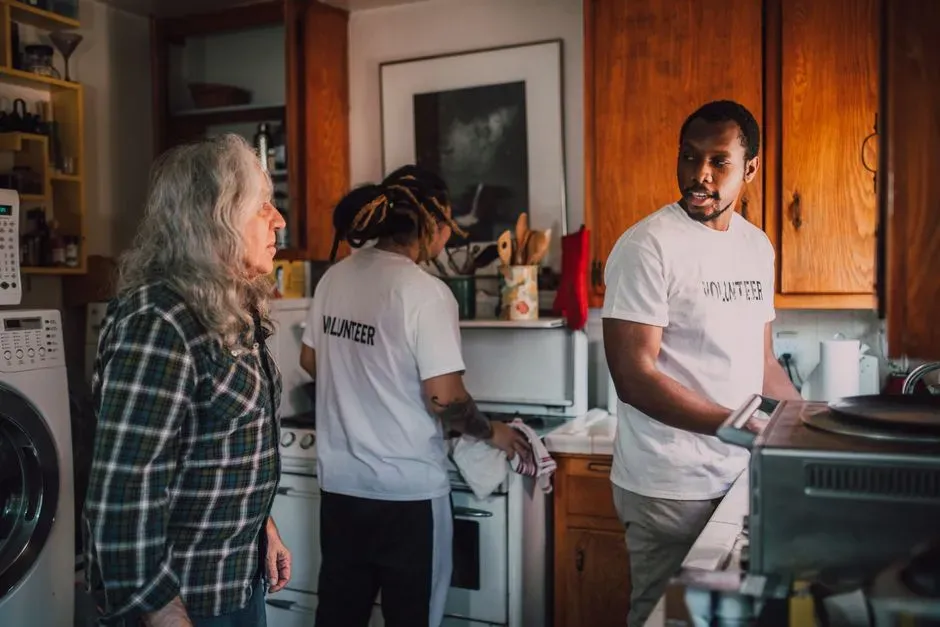
5. They Volunteer or Contribute to Something Larger Than Themselves (Image Credits: Pexels)
Purpose plays a powerful role in retirement happiness. Retirees who volunteer are significantly more likely to report high levels of happiness. A study from the Corporation for National and Community Service found that roughly three quarters of volunteers reported improved moods, with many noting a decrease in feelings of depression. The mechanism seems to be less about altruism and more about replacing the sense of being needed that a career once provided.
Older individuals who engage in volunteering tend to experience lower levels of loneliness compared to non-volunteers. Many volunteer roles offer opportunities to acquire new skills, polish existing ones, and share knowledge with others. This continuous engagement keeps the mind sharp and contributes to cognitive well-being. Showing up for something outside yourself, even once a week, creates a thread of purpose that runs through the whole week.
6. They Keep Learning Something New

6. They Keep Learning Something New (Image Credits: Pexels)
Participation in lifelong learning enhances well-being across psychological, cognitive, and social dimensions. Lifelong learning for seniors refers to continued education, skill refinement, and personal development throughout retirement. It encompasses formal and informal learning activities that enrich lives, expand horizons, and maintain mental, social, and emotional health. The subject itself is almost irrelevant. What counts is the act of staying curious.
Lifelong learning organizations promote purpose, social bonds, and smoother transitions into retirement. Such findings challenge ageist narratives by highlighting how retirement does not mark the end of contribution or personal growth, but instead acts as a way of sharing accumulated life experience and offering opportunities for older adults to thrive. A language app, a woodworking class, a local history lecture series – all of it counts. Curiosity is itself a daily habit, and the happiest retirees tend to treat it as one.
7. They Spend Time Outdoors and in Nature Regularly
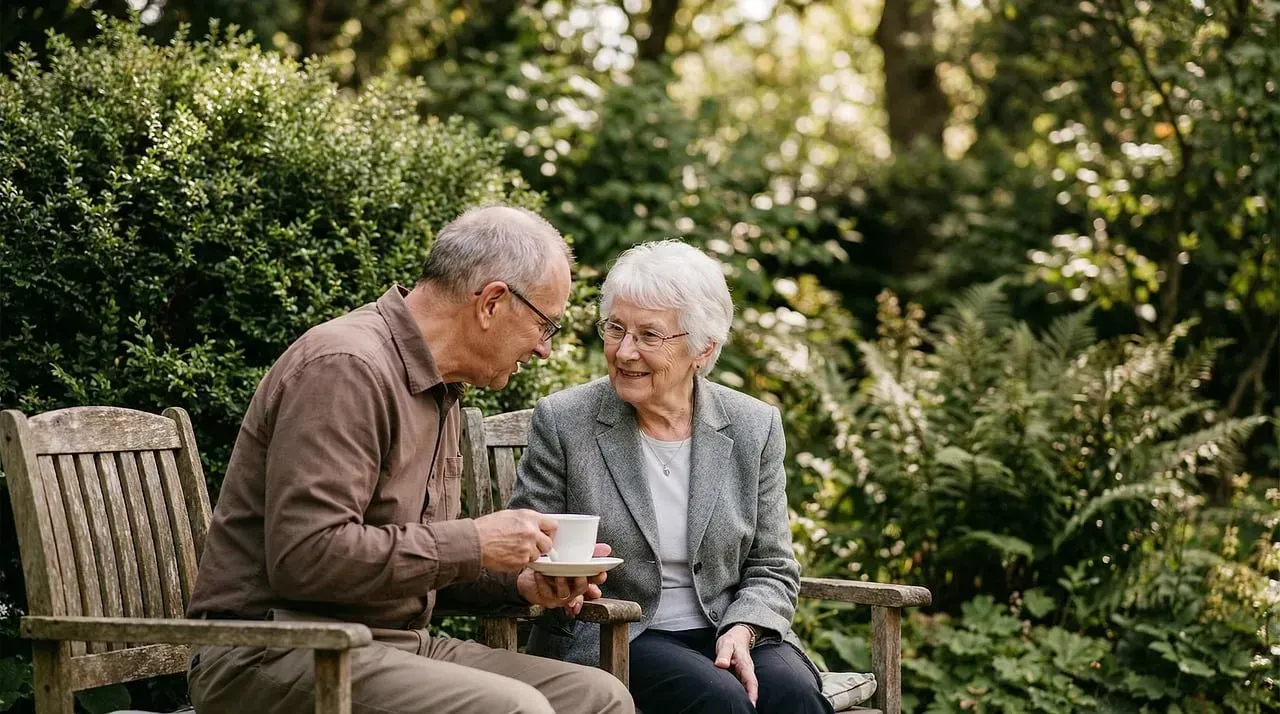
7. They Spend Time Outdoors and in Nature Regularly (Image Credits: Pixabay)
A major report that surveyed more than 2,000 adults aged 50 and older found that the happiest retirees spend significantly more time in nature and considerably less time watching television than unhappy retirees. Spending time in green spaces can relieve stress, put a smile on your face, and deepen your sense of well-being. There’s something about natural light, physical space, and fresh air that resets the nervous system in ways that indoor activity simply doesn’t replicate.
Research found that older dog owners who walked their dogs at least once a day got about a fifth more physical activity than people without dogs, and spent significantly fewer minutes being sedentary on average. Nature doesn’t have to mean wilderness hikes or national parks. A daily walk through a neighborhood with trees, a garden plot, or a bench by a lake all deliver the same essential benefit. The habit of stepping outside with intention – rather than just passing through – turns ordinary daylight into something genuinely restorative.
The simplicity of these seven routines is, in a sense, the whole point. Retirement contentment doesn’t require a particular level of wealth, a specific location, or a perfectly designed schedule. The happiest retirees approach their later years with the same active, engaged mindsets they maintained during their working lives. The key is managing new freedom by adapting old approaches or acquiring entirely new ones. Small daily choices, made consistently, turn out to be the most reliable architects of a genuinely good later life.