
Most people assume intimidation shows up as confrontation or obvious discomfort. The reality is much quieter than that. When someone feels intimidated by you, their body often reveals it through small, almost invisible adjustments that happen entirely below the level of conscious control.
These signals aren’t always about fear. Sometimes they reflect deep respect mixed with uncertainty, or a sense that you hold more social weight in a given room than the other person feels they do. Understanding them doesn’t make you more powerful. It makes you more perceptive – and that’s genuinely useful.
1. They Consistently Avoid Eye Contact

1. They Consistently Avoid Eye Contact (Image Credits: Pexels)
Nonverbal communication research from the National Institutes of Health and social anxiety studies shows that reduced eye contact often reflects anxiety or discomfort in an interaction, which means consistent eye contact avoidance around you can signal that they feel intimidated or nervous. The gaze tends to drift toward the floor, a phone, or anywhere neutral.
Consistently averting gaze is associated with submission and signals deference to the dominant party. Research further indicates that individuals with lower perceived power tend to complement dominance displays from others by averting their gaze, while those with higher power may instead reciprocate. It’s a subtle power transaction most people never consciously notice.
2. They Make Themselves Physically Smaller

2. They Make Themselves Physically Smaller (Image Credits: Unsplash)
People subconsciously try to make themselves smaller to hide from others. A common way this is done is by occupying less space. This can be done by minimizing the use of expansive gestures. Nervous people don’t want to be seen, so they avoid occupying too much space with their bodies and gestures.
Another way people make themselves look smaller is by raising their shoulders and moving them forward. Having bad posture and looking down is not only a way to avoid engaging with others but also a way to make yourself smaller. Watch for that slight shoulder cave the moment you walk in. It happens fast and it’s rarely deliberate.
3. They Create Extra Physical Distance
3. They Create Extra Physical Distance (Image Credits: Unsplash)
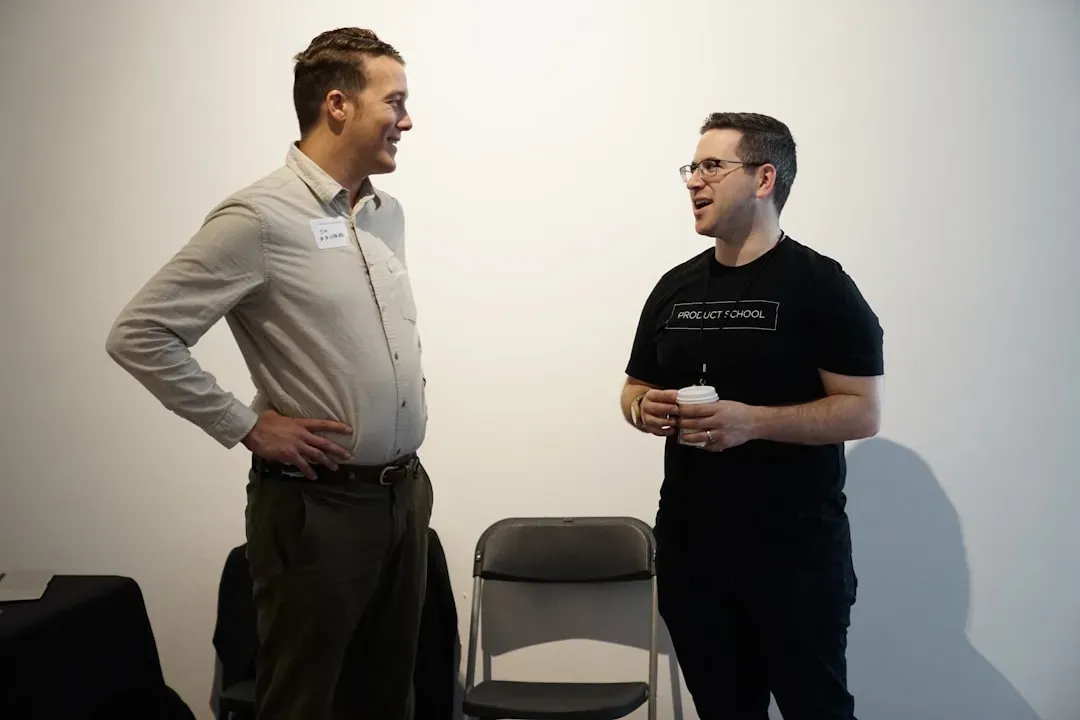
Psychologists often note that discomfort or perceived threat will lead individuals to maximize personal space. So if you notice someone physically pulling away more often than not, it could be a clue that they find you overwhelming or daunting in some capacity.
When people feel intimidated, they often create more physical distance to feel safer, expanding their personal space in conversations. If someone regularly chooses the far seat, leans away, or steps back around you, it can quietly signal discomfort or nerves. This behavior often stems from feeling like they don’t have the authority or comfort to be close to you.
4. Their Feet Point Toward the Exit
4. Their Feet Point Toward the Exit (Image Credits: Pexels)
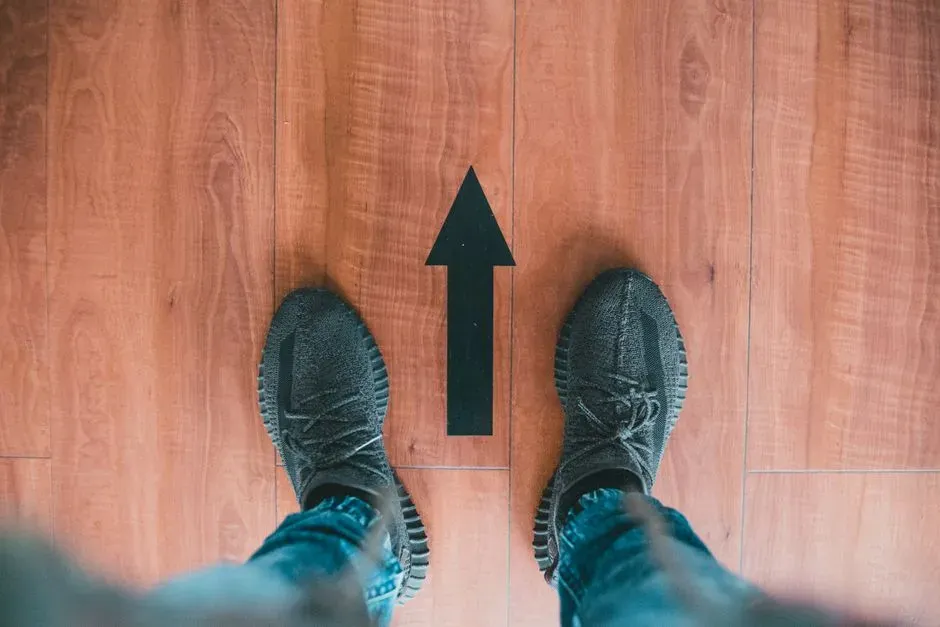
If someone’s torso faces you but their feet angle toward the door or away from you, they may be psychologically “preparing to leave.” This is especially meaningful if it appears during moments of tension or when you step closer. The upper body can lie quite convincingly. The feet almost never do.
This cue is easy to miss because most people focus on the face during a conversation. No single cue tells the whole story; meaning comes from clusters of signals and context. Nonverbal behaviors such as posture, facial expressions, gaze, and tone work together to communicate dominance, trust, nervousness, or warmth in relationships. Feet-toward-exit combined with other signals is when the pattern becomes meaningful.
5. They Fidget, Touch Their Face, or Self-Soothe

5. They Fidget, Touch Their Face, or Self-Soothe (Image Credits: Unsplash)
Look for behaviors like rubbing the neck, touching the face, smoothing clothing repeatedly, clasping hands tightly, or rubbing palms. These can be calming behaviors that help the nervous system regulate when someone feels under pressure.
Under circumstances that are moderately anxiety-provoking, the reticent individual may exhibit stress-related indicators such as increased fidgeting, adaptor gestures, elevated pitch and strident voice quality. In body language terms, “adaptors” refers to touching an object or oneself during a conversation or presentation. These communicate nervousness and uncertainty. When it happens consistently around you and not with others, that contrast tells you something.
6. They Nod Excessively and Agree Too Quickly

6. They Nod Excessively and Agree Too Quickly (Image Credits: Pexels)
Rapid nodding and immediate “yes” responses can be signs of intimidation, especially when the person doesn’t ask clarifying questions or offer opinions. It can be a conflict-avoidance signal, agreeing quickly to keep the interaction smooth and safe.
Agreeing with someone too much can signal submissiveness. It’s how lower-status people seek the approval of higher-status people. Imagine two people talking and one nodding much more than the other in a “Yes, Sir” manner. If you are the type of person that people are intimidated by, you may not be challenged when making suggestions; people may just go along with what you say to keep the peace.
7. Their Voice Pitch Rises Around You

7. Their Voice Pitch Rises Around You (Image Credits: Pexels)
A high-pitched voice is associated with submissiveness. Imagine a political leader delivering a speech in a high-pitched voice. People may find it hard to take him seriously. The same principle applies in everyday conversation. When someone’s voice tightens or climbs in pitch during an exchange with you specifically, it’s often an autonomic stress response.
Pitch, intonation, speed, and volume impact the way messages are decoded. The pitch of someone’s voice can be interpreted in different ways; a high-pitched voice is associated with excitement, while a low voice is associated with seriousness. Someone who normally speaks calmly but goes noticeably higher around you is likely managing some form of social anxiety tied to your presence.
8. They Laugh Nervously at the Wrong Moments

8. They Laugh Nervously at the Wrong Moments (Image Credits: Unsplash)
Awkward laughter can show intimidation when it appears after mild criticism, direct questions, or serious statements. It’s that off-beat chuckle that arrives when nothing funny was said – a small social alarm bell worth noticing.
One study conducted by Yale psychology researcher Dr. Oriana Aragon suggests that nervous laughter may be a form of self-regulation. Dr. Aragon’s research aims to show the psychological benefits of incongruous emotional displays – when a person expresses an emotion that doesn’t match the expected reaction in a given situation. A person who laughs when delivering bad news may be experiencing their body’s way of balancing negative and positive stimuli to restore emotional equilibrium. Around an intimidating presence, this balancing act can show up constantly.
9. They Smile More Than Usual – But the Smile Doesn't Reach Their Eyes

9. They Smile More Than Usual – But the Smile Doesn't Reach Their Eyes (Image Credits: Pexels)
Chimpanzees have a smile that is an appeasement face, where one chimp shows submission to another dominant chimp. With this so-called “fear face,” the lower jaw opens to expose the teeth and the corners of the mouth are pulled back, resembling the human smile though the underlying emotion is different. The “fear face” is submissive, communicating “I am no threat to you in the least.” Humans carry a remarkably similar reflex.
Laughter or smiling that is meant to disguise hidden anxiety, disagreement, or stress, or is used in an effort to connect with new people, works as a stress-response. We use a stress-laugh to dispel and ease tension both for our own purpose and for that of others. Laughter in this context is a fear-based response and also shows others that we are submitting to them.
10. They Over-Apologize Before and During the Conversation

10. They Over-Apologize Before and During the Conversation (Image Credits: Pexels)
Excessive apologizing is a huge red flag that someone finds you intimidating. They’re basically trying to preemptively smooth over any potential conflict or judgment. Phrases like “sorry to bother you” or “sorry if this is a stupid question” before they’ve even asked anything are small but telling.
According to a study from the Journal of Experimental Social Psychology, an envious or intimidated person’s insecurity is often reflected in their body language in a conversation with someone they view as superior to them. Whether it’s crossing their arms, turning away from a person they find intimidating, or maintaining a stiff posture, many people experiencing emotional discomfort allow it to manifest in their physical appearance. Excessive apologizing is often part of that same cluster of defensive behaviors.
11. Their Posture Stiffens and Their Expressiveness Drops

11. Their Posture Stiffens and Their Expressiveness Drops (Image Credits: Pexels)
Under more anxiety-provoking circumstances, the communicator may go into “lock-down,” exhibiting the rigidity pattern associated with tension – flat affect, reduced facial and head expressivity, little vocal variety and the like. Someone who is normally animated may suddenly appear frozen or unusually formal in your company.
Research has shown that body postures are more accurately recognized when an emotion is compared with a different or neutral emotion. A person feeling fearful would feel weak and submissive, and their posture would display avoidance tendencies. Body language signs someone feels intimidated by you often appear as distancing behaviors, reduced expressiveness, and subtle self-protection, including avoiding eye contact, closed posture, fidgeting, and leaning away. When you see multiple signals together, that’s the pattern worth paying attention to.
None of these signals should be read in isolation. Context always matters, and a single nervous laugh or a glance away from eye contact means very little on its own. What’s worth noting is when several of these shifts appear together, consistently, and specifically around you. That cluster is where the story actually lives. Awareness of it isn’t a power move. It’s simply a clearer picture of the room you’re in.