
There’s a running assumption that generational disagreements are mostly about manners or music. The reality runs considerably deeper. From where to live, to when to marry, to whether a career should define you at all, Baby Boomers, Gen X, Millennials, and Gen Z are often operating from entirely different playbooks – shaped by different economies, different crises, and very different ideas about what a good life looks like.
What makes these divides genuinely interesting is that they aren’t simply about age. If we accept that there are real differences across generations, we’re essentially saying that people born around the same time share certain attitudes shaped by external forces that uniquely influenced them during their formative years – social changes, economic circumstances, technological advances, or political movements. The twelve decisions below show just how far those shared influences can pull people apart.
1. Whether to Buy a Home

1. Whether to Buy a Home (Image Credits: Pexels)
Few decisions split generations more visibly than the choice of whether to pursue homeownership at all. Just over one quarter of Gen Zers owned their home in 2024, essentially flat from prior years, while roughly just over half of Millennials owned their homes – a figure that had also stalled after years of steady increases. Meanwhile, nearly three quarters of Gen Xers and close to four in five Baby Boomers owned their homes in 2024.
The gap at comparable ages tells the real story. Homeownership rates did increase for Millennials and Gen Zers in 2025, but both groups still own homes at lower rates than their parents did at the same age – with roughly just over half of people in their mid-thirties owning their residence today, compared to nearly two thirds of their parents' generation at that point. Some Gen Z members are actively shifting their values, prioritizing flexibility over ownership and preferring short-term rentals that allow greater mobility. For older generations who built wealth through real estate, that choice feels like a missed opportunity. For many younger adults, it feels like pragmatism.
2. When – or Whether – to Get Married

2. When – or Whether – to Get Married (Image Credits: Pexels)
Marriage timing has shifted dramatically across generations, and the numbers are striking. Just under half of Millennials ages 25 to 37 were married as of 2018, compared to roughly two thirds of Baby Boomers and more than four in five of the Silent Generation at the same age. The median age of first marriage has climbed steadily upward, and that figure now sits at about 30.8 for men and 28.4 for women – up from around 22 for women back in 1980.
Marriage and parenthood rates are lower and happening later than in the past, and this affects older generations too – from their adult children living with them longer, to missing out on grandparenthood earlier. Younger generations largely frame delayed marriage as a deliberate, values-driven decision rather than a failure to launch. Millennials have been delaying marriage and children compared to earlier cohorts, even while surveys show they still value family as a life priority. For many older Americans raised in an era when marriage before thirty was simply expected, that shift can feel disorienting.
3. Job-Hopping vs. Employer Loyalty

3. Job-Hopping vs. Employer Loyalty (Image Credits: Unsplash)
Staying with one employer for decades was once considered a mark of character. For younger generations, the idea looks more like a missed opportunity. Many older generations started with a company or government job in their twenties with the expectation they would retire from that same company at 65. Today, roughly six in ten young adults globally believe they should work for two to five organizations throughout their careers, and nearly one in five believe they should work at six or more.
More than half of Gen Z and nearly half of Millennials say they will find a new job if they aren't given a raise, while only about one in five Baby Boomers share that same willingness to leave. The contrast in attitude is sharp. Baby Boomers exhibit the most stability, with a much smaller share willing to walk away over stagnant pay, suggesting they are more inclined to stay despite unsatisfying compensation. For younger generations, loyalty flows in both directions – and they expect employers to earn it.
4. Prioritizing Work-Life Balance Over Career Advancement

4. Prioritizing Work-Life Balance Over Career Advancement (Image Credits: Pexels)
The idea of sacrificing personal time for career advancement sits very differently across age groups. Gen Zs and Millennials prioritize career progression, but many are not motivated by reaching leadership positions – they're focused on work-life balance, learning, and development, and while making money matters, so does finding meaningful work and preserving well-being. That's a marked departure from the cultural script that shaped Boomer-era careers.
Only 6% of Gen Z respondents in the 2025 Deloitte survey said their primary career goal is to reach a senior leadership position. Older generations often interpret this as a lack of ambition. Younger workers tend to see it as a rational response to watching previous generations sacrifice health and relationships for jobs that didn't guarantee security in return. Millennials essentially "work to live" rather than "live to work," placing greater emphasis on personal well-being alongside their careers.
5. How to Use and Trust Social Media

5. How to Use and Trust Social Media (Image Credits: Unsplash)
The platforms differ, but the divide in how generations use social media runs deeper than just which app is open. According to a 2025 Sprout Social survey, more than four in ten Gen Zers now turn to social media platforms first when looking for information, placing social media ahead of traditional search engines. For many older users, search engines and established media outlets remain the default starting point.
Baby Boomers are relatively united in their platform choice, with many in the age group sticking primarily to Facebook to connect with family and friends. Gen Z, by contrast, is spread across TikTok, Instagram, and newer platforms, often treating these spaces not just for social connection but as primary sources of news, product discovery, and political opinion. Generation Z employees prefer to connect even with coworkers by text messages rather than emails, which Generation X employees find less convenient. Communication norms, shaped by technology, are genuinely different from the ground up.
6. Attitudes Toward AI in the Workplace

6. Attitudes Toward AI in the Workplace (Image Credits: Unsplash)
Generative AI has landed in workplaces with uneven enthusiasm across age groups. Three quarters of Gen Zs and Millennials believe generative AI will impact the way they work within the next year, and more than half of respondents from both generations already use AI in their day-to-day work. Older workers, particularly Baby Boomers, tend to approach AI tools with more caution and less daily integration.
About one in three workers overall say they fear that AI usage at work could result in lower pay for people in their positions – and Gen Z is the most concerned generation on that front. Still, concern doesn't mean avoidance. Most Gen Z respondents and most Millennials reported using generative AI in their daily work, and most view it positively – saying the technology improves the quality of their work and allows more time for strategic tasks. Older generations tend to use AI more selectively and remain more skeptical of its long-term implications for employment.
7. Saving for Retirement – and What Retirement Even Means

7. Saving for Retirement – and What Retirement Even Means (Image Credits: Unsplash)
Retirement looks like a clear, shared goal until you compare how different generations think about it. More than half of both Gen Zs and Millennials are living paycheck to paycheck, and roughly four in ten from both generations say they are concerned about their ability to retire comfortably. For Baby Boomers who built retirement security through employer pensions and steady real estate gains, that level of uncertainty can be difficult to fully grasp.
Baby Boomers most commonly sought part-time jobs in 2025 surveys, reflecting a trend of easing into retirement – or in some cases, coming back out of it – rather than making a clean exit from work. Gen Z, meanwhile, is skeptical that traditional retirement will even be accessible to them. More than eight in ten Gen Z and Millennial respondents cited long-term financial futures and day-to-day finances as sources of anxiety or stress, with nearly half of Gen Zs reporting they do not feel financially secure in 2025 – a figure significantly higher than just a year earlier.
8. Voting and Political Engagement
8. Voting and Political Engagement (Image Credits: Unsplash)
Political participation and alignment diverge significantly across generations, and the 2024 U.S. presidential election made those differences concrete. Voters aged 18 to 29 cast roughly one in twelve of the total votes, with just over half supporting Kamala Harris and nearly half backing Donald Trump – a noticeably tighter margin than younger voters showed in 2020. Older age groups showed both higher turnout and more decisive preferences, with voters aged 50 to 64 and those 65 and older leaning more heavily toward Trump.
The political attitudes and behaviors of young people differ substantially from those of older generations. The reasons are structural as much as ideological. As individuals progress through different life stages, their priorities evolve – younger generations tend to focus on climate change and student debt, while older generations prioritize healthcare and retirement security. These different priority sets naturally produce different voting behavior, even when people of all ages share a general frustration with the political system.
9. Climate Change: Concern vs. Urgency to Act
9. Climate Change: Concern vs. Urgency to Act (Image Credits: Pexels)
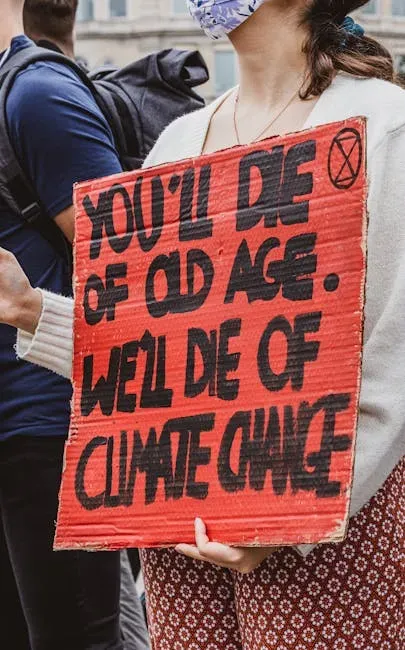
The generational gap on climate change is real, though perhaps not where most people expect it. Data from nationally representative UK surveys shows an overall pattern of higher levels of climate-related beliefs, risk perceptions, and emotions among younger generations – but the gap is larger and more consistent for climate-related emotions than for beliefs. In other words, older generations largely agree climate change is happening, they just tend to feel less urgency or anxiety about it.
For example, roughly two thirds of Gen Z believe environmental concerns should take priority over economic growth, compared to less than half of Baby Boomers. Where the disagreement sharpens is around the question of who should act. When asked whether individual action makes any difference, more than half of 18 to 34-year-olds said no – placing responsibility on large corporations and governments rather than individuals. Older generations are more likely to believe personal choices and behavioral changes carry meaningful weight.
10. The Value of a College Degree

10. The Value of a College Degree (Image Credits: Unsplash)
For decades, a four-year university degree was treated as the obvious next step after high school. That consensus is eroding fast among younger generations. Deloitte's 2025 Gen Z and Millennial survey found that around one in four respondents expressed concerns about the relevance of their university curriculum to the actual job market and the practical experience it offers. Baby Boomers and older Gen Xers, who came of age when a degree reliably translated into economic mobility, tend to view higher education as a non-negotiable investment.
Gen Z faces the worst housing affordability in decades alongside higher average student debt than previous generations, making the traditional college-to-stable-career pipeline feel less reliable as a life strategy. Many younger adults are weighing trade schools, coding programs, and entrepreneurship as alternatives that carry less debt and more immediate practical return. The generational tension here isn't really about education itself – it's about whether the traditional path still delivers what it once promised. For many in their twenties, the honest answer is: not reliably.
11. Where to Work: Remote, Hybrid, or In-Person

11. Where to Work: Remote, Hybrid, or In-Person (Image Credits: Pexels)
The debate over remote work is sometimes framed as laziness versus productivity, but the actual data points to a generational difference in values and expectations. Gen Z's desire for workplace flexibility was widely viewed as entitlement in recent years, but it more accurately reflects a natural evolution in workplace culture – this generation has grown up in a world where flexibility is the norm, and their expectations simply reflect what they've come to value.
The EY 2024 Work Reimagined Survey found sharp differences in what different generations value at work, with patterns emerging across how they envision success, who they trust, and how they approach technology and its impact on the future. Baby Boomers and many Gen Xers associate office presence with professionalism and commitment. Baby Boomers place less emphasis on compensation as a driver of job decisions, suggesting that factors like workplace stability and culture weigh more heavily in their choices – and for many in this group, that stable culture is still tied to a physical workplace.
12. Financial Security vs. Financial Meaning

12. Financial Security vs. Financial Meaning (Image Credits: Pexels)
How generations define financial success differs in ways that go beyond simple wealth accumulation. Baby Boomers and older Gen Xers largely built their financial frameworks around stability: a pension, a paid-off home, a predictable retirement timeline. Younger generations are navigating a messier picture. Forty-eight percent of Gen Zs and 46% of Millennials say they do not feel financially secure in 2025, compared to 30% of Gen Zs and 32% of Millennials just a year earlier in 2024.
Many older generations started with the expectation of retiring from a single company at 65 and then living comfortably. That model has largely dissolved. Rather than accepting financial instability as inevitable, younger generations are actively restructuring their lives around well-being, rejecting the notion that success is measured primarily by financial gain or career title. The disagreement isn't really about whether financial security matters – it's about whether the traditional paths to it are still accessible, and whether chasing them at the expense of health and purpose is worth it. On that question, the generational gap may be widening rather than closing.
What runs through all twelve of these decisions is a tension between inherited expectations and lived economic reality. The gaps between generations are real, but they're rarely about values alone – they're also about the very different worlds each generation was handed when they came of age, and the different tools they've had to build a life with.