
Grand gestures get all the attention, but most relationships aren’t sustained by fireworks. They’re sustained by the quiet, repeated stuff that happens on a random Tuesday when nobody’s watching. Relationship researchers have long pointed out that it’s the small, consistent behaviors, not the occasional big splash, that build a sense of being valued over time.
Below are twelve everyday actions that tend to make a real difference in how appreciated a woman feels in her relationship. None of them require money or elaborate planning. They just require attention.
1. Actually listening without reaching for a solution

1. Actually listening without reaching for a solution (Image Credits: Unsplash)
There’s a difference between listening to understand and listening to fix. When a man sits with what a woman is saying instead of immediately offering advice or trying to solve the problem, it signals that her feelings matter on their own, not just as a puzzle to be resolved. This kind of listening often means fewer interruptions, more eye contact, and simple acknowledgments like “that sounds frustrating” instead of jumping straight to solutions.
Therapists who work with couples frequently note that feeling heard is one of the most commonly cited needs in relationship counseling. It’s not about agreeing with everything. It’s about giving someone room to finish a thought before deciding what to do about it.
2. Remembering the small details of her day

2. Remembering the small details of her day (Image Credits: Unsplash)
Asking about a specific meeting, a doctor’s appointment, or a conversation she mentioned days earlier shows that he was paying attention, not just nodding along. This kind of recall doesn’t happen by accident. It usually means the original conversation actually registered instead of being background noise while he was thinking about something else.
Women often describe this as feeling “seen” rather than just present. A quick follow-up question, like checking how a stressful presentation went, costs nothing but communicates that her daily life matters beyond the moments they share directly.
3. Splitting household labor without being asked
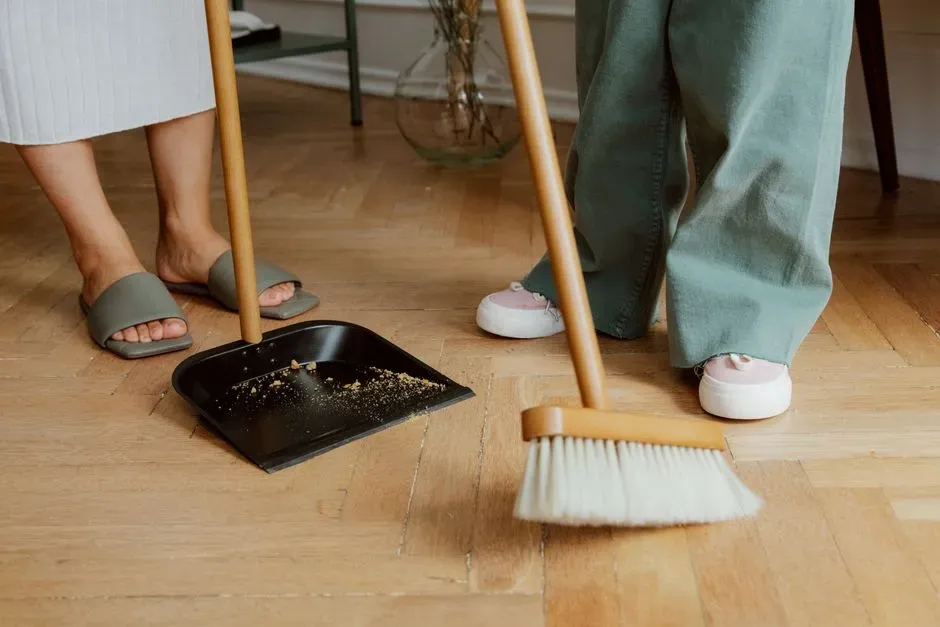
3. Splitting household labor without being asked (Image Credits: Pexels)
Data from time-use studies in the United States and several European countries has consistently shown that women still shoulder a disproportionate share of unpaid domestic work, even in dual-income households. When a man notices the dishes need doing, the laundry needs starting, or the trash needs to go out and simply does it, that quiet initiative removes an invisible layer of mental load she’d otherwise carry alone.
The key word is unprompted. Doing a task after being reminded three times reads differently than doing it because he noticed it needed doing. Appreciation tends to grow from the noticing itself, not just the completed chore.
4. Saying thank you for ordinary things

4. Saying thank you for ordinary things (Image Credits: Unsplash)
Thanking her for cooking dinner, picking up something at the store, or handling a phone call with the insurance company might feel unnecessary since these are “just normal things.” That’s precisely why the acknowledgment matters. Ordinary tasks are the ones most likely to go unnoticed over time, and a habit of unnoticed effort can quietly erode goodwill in a relationship.
A simple, specific thank you, rather than a generic one, tends to land better. Naming what was done, like “thanks for handling that call, I know it was annoying,” shows the gratitude wasn’t automatic or hollow.
5. Standing up for her when she's not in the room

5. Standing up for her when she's not in the room (Image Credits: Pexels)
Loyalty in absence carries weight that loyalty in her presence sometimes doesn’t. When a man corrects a friend’s careless comment about her, defends her decisions to family members, or simply doesn’t join in when someone criticizes her, it tells her the relationship has a backbone even when she can’t advocate for herself.
This isn’t about picking fights or being combative. It’s about a baseline refusal to let her be diminished when she’s not there to respond. Women often learn about these moments secondhand, and they tend to remember them longer than most compliments.
6. Checking in during stressful stretches, not just after

6. Checking in during stressful stretches, not just after (Image Credits: Pexels)
Support that shows up only once a crisis has passed is comfort. Support that shows up while it’s still happening is presence. A text during a hard workday, an offer to handle dinner because she’s swamped, or simply asking “how’s today going” mid-crisis signals that he’s tracking her stress in real time, not just reacting to the aftermath.
This kind of attentiveness doesn’t need to be constant to matter. Even one well-timed check-in during a difficult week can feel more meaningful than a long conversation once everything has calmed down.
7. Respecting her time as equally valuable

7. Respecting her time as equally valuable (Image Credits: Unsplash)
Showing up on time, following through on plans, and not treating her schedule as more flexible than his own are small signals of respect that accumulate. Chronic lateness or last-minute cancellations, even when unintentional, can quietly communicate that her time is less fixed than his. Consistency here matters more than any single instance.
This also extends to not assuming she’ll rearrange her plans by default when something else comes up. Treating her calendar with the same seriousness as his own is a subtle but steady form of respect.
8. Complimenting effort and character, not just appearance

8. Complimenting effort and character, not just appearance (Image Credits: Pexels)
Physical compliments are nice, but they’re not the only currency of appreciation, and relying on them exclusively can start to feel one-dimensional over time. Noticing her patience with a difficult coworker, her persistence on a hard project, or the way she handled a tense family situation speaks to a deeper kind of attention. It tells her he sees who she is, not just how she looks.
This kind of specific, character-based praise also tends to be more memorable. General compliments fade quickly, but being told she handled something with real grace or grit tends to stick.
9. Apologizing clearly, without deflecting

9. Apologizing clearly, without deflecting (Image Credits: Pexels)
A real apology names what happened and takes responsibility for it, rather than softening into “I’m sorry you feel that way.” Psychologists who study conflict resolution in relationships often point to this distinction as one of the clearest predictors of whether an apology actually repairs trust or just ends an argument temporarily. Deflection, even subtle deflection, tends to leave the underlying issue unresolved.
Owning a mistake without immediately pivoting to self-defense takes a certain amount of restraint. Women frequently describe this straightforwardness as more reassuring than grand romantic gestures, because it shows accountability rather than performance.
10. Making space for her interests, even unfamiliar ones

10. Making space for her interests, even unfamiliar ones (Image Credits: Pixabay)
Sitting through a hobby, a show, or a topic that holds zero personal interest, simply because it matters to her, is a small act of generosity that’s easy to underestimate. It doesn’t require faking enthusiasm. It just requires genuine curiosity about why she cares about it.
This kind of engagement builds a sense of partnership rather than parallel lives. Asking a follow-up question about her interest, rather than politely tolerating it, turns passive presence into something closer to active support.
11. Noticing when something feels off, without needing it spelled out

11. Noticing when something feels off, without needing it spelled out (Image Credits: Pexels)
Not every feeling gets announced clearly, and a man who picks up on a shift in tone or mood, then gently asks about it, shows a kind of emotional attentiveness that’s harder to fake than words alone. This doesn’t mean reading minds or being intrusive. It means being tuned in enough to notice the difference between a normal quiet evening and one that feels heavier than usual.
Simply asking “you seem a little off, everything okay?” opens a door without forcing anyone through it. That small gesture of noticing often means more than any attempt to guess and immediately fix whatever’s wrong.
12. Following through on small promises consistently

12. Following through on small promises consistently (Image Credits: Pexels)
Reliability in minor things builds trust in a way that occasional grand promises never quite manage. If he says he’ll call, he calls. If he says he’ll handle something, he handles it. These aren’t dramatic acts, but their consistency over weeks and months is what makes them count.
Trust researchers have long noted that reliability in small commitments is often a stronger predictor of relationship satisfaction than occasional big romantic displays. It’s the follow-through, repeated often enough to become expected, that quietly tells her she can count on him.
None of these behaviors are complicated or expensive, and that’s part of why they work. They rely on attention rather than effortful performance, which is exactly why they tend to feel more genuine over time. Consistency, more than any single grand gesture, is what turns these small habits into something a woman can actually rely on.