
Most couples do not break up because they stopped loving each other. They break up because the way they talked to each other slowly stopped working, and nobody noticed until the damage was already done. Therapists who spend their days sitting across from struggling couples tend to see the same patterns show up again and again, long before the couple themselves recognizes what is happening.
What follows is a look at the communication habits and blind spots that clinicians most often flag, drawn from decades of relationship research and the observations of therapists who work with couples every week. Some of these ideas will feel familiar. Others might reframe something you have been doing without realizing it has a name.
1. Criticism attacks the person, not the problem

1. Criticism attacks the person, not the problem (Image Credits: Unsplash)
There is a real difference between voicing a complaint and criticizing someone. A complaint sounds like naming a specific frustration, while criticism turns that frustration into an attack on someone’s character. A healthy complaint is something like “I’m upset that you didn’t call,” but criticism is an attack or judgment on the other person’s beliefs, personality or sense of self, sounding more like “It’s impossible to live with you” or “You never think about me.”
Therapists see this distinction as one of the most important lessons couples can learn. Criticism shuts down communication and problem-solving rather than inviting a dialogue or opportunity for a meeting of the minds. Once a partner feels judged as a person rather than corrected on a behavior, the conversation stops being about the dishes or the schedule and starts being about self-defense.
2. Contempt is the pattern that predicts the most damage

2. Contempt is the pattern that predicts the most damage (Image Credits: Unsplash)
Of all the ways couples fight badly, contempt is the one clinicians worry about most. It shows up as mockery, sarcasm, or a rolled eye, and it communicates something colder than anger. Contempt involves communicating from a position of superiority through mockery, sarcasm, eye-rolling, or disgust.
Researchers who have tracked couples for years have found that this pattern carries unusual weight when it comes to predicting whether a relationship survives. These behaviors, especially contempt, are strong predictors of relationship failure if left unchecked. Therapists often say that if a couple can eliminate only one habit, contempt should be the first to go, since it tends to signal a deeper erosion of respect.
3. Defensiveness blocks the very repair partners are looking for

3. Defensiveness blocks the very repair partners are looking for (Image Credits: Unsplash)
When someone raises a concern and gets met with excuses or a counter-complaint instead of acknowledgment, the conversation rarely goes anywhere good. Defensiveness means responding to a complaint with counter-complaints, excuses, or righteous indignation instead of taking responsibility. It feels protective in the moment, but it almost always escalates rather than resolves things.
What makes defensiveness tricky is that it rarely feels like an attack from the inside. It feels like fairness, like setting the record straight. Therapists tend to coach clients toward pausing long enough to hear the complaint before responding to it, since jumping straight to self-protection usually confirms to the other partner that they were not really being listened to in the first place.
4. Stonewalling is often the nervous system shutting down, not indifference
4. Stonewalling is often the nervous system shutting down, not indifference (Image Credits: Pexels)
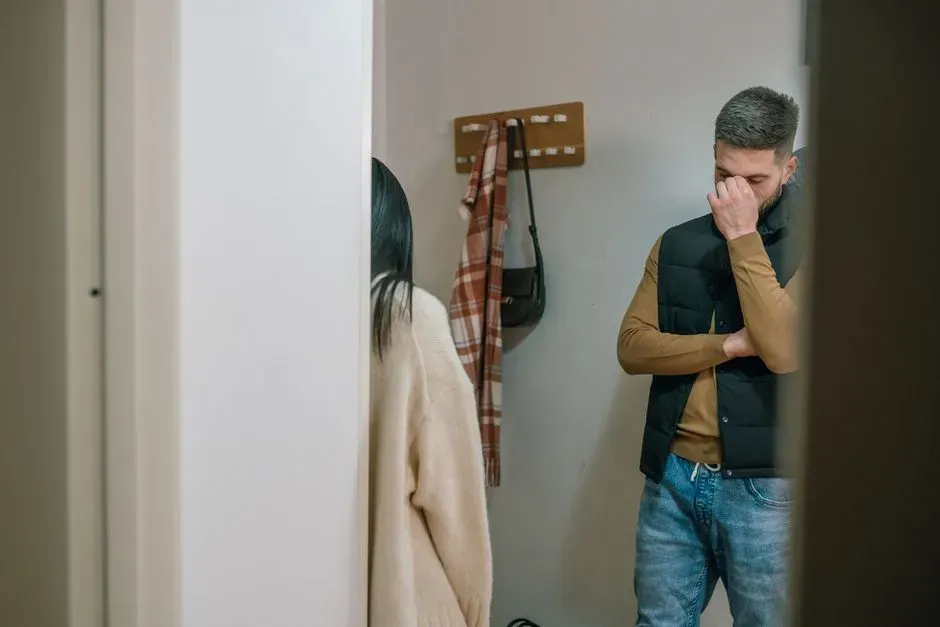
Going quiet, walking away, or physically shutting down mid-conversation looks like someone checking out. Clinicians increasingly frame it differently. Stonewalling involves withdrawing from the interaction entirely, shutting down, going silent, or physically leaving. Rather than a character flaw, it is frequently the body’s stress response taking over.
Interestingly, this pattern is not evenly distributed between partners. Studies show that men substantially tend to stonewall more, with roughly 85 percent of stonewallers in Gottman’s studies being male. Understanding stonewalling as a physiological reaction rather than a rejection can change how the other partner responds to it, shifting the goal from chasing someone down to giving them room to regulate.
5. These four patterns tend to arrive in a predictable order

5. These four patterns tend to arrive in a predictable order (Image Credits: Gallery Image)
Therapists trained in Gottman-based approaches often explain that criticism, contempt, defensiveness, and stonewalling do not usually appear in isolation. They tend to build on each other over time. These patterns tend to appear in a predictable cascade, where criticism opens the door, and when criticism becomes habitual, contempt follows, contempt invites defensiveness, and when defensiveness fails to resolve anything, stonewalling becomes the final retreat.
This matters because it means the earliest pattern is usually the easiest one to interrupt. Catching criticism before it hardens into contempt is far more manageable than trying to undo years of stonewalling after the fact. Many couples do not seek help until they are already at the stonewalling stage, which is part of why therapists push for earlier intervention whenever possible.
6. Physiological flooding is real, and it needs an actual break
6. Physiological flooding is real, and it needs an actual break (Image Credits: Pexels)
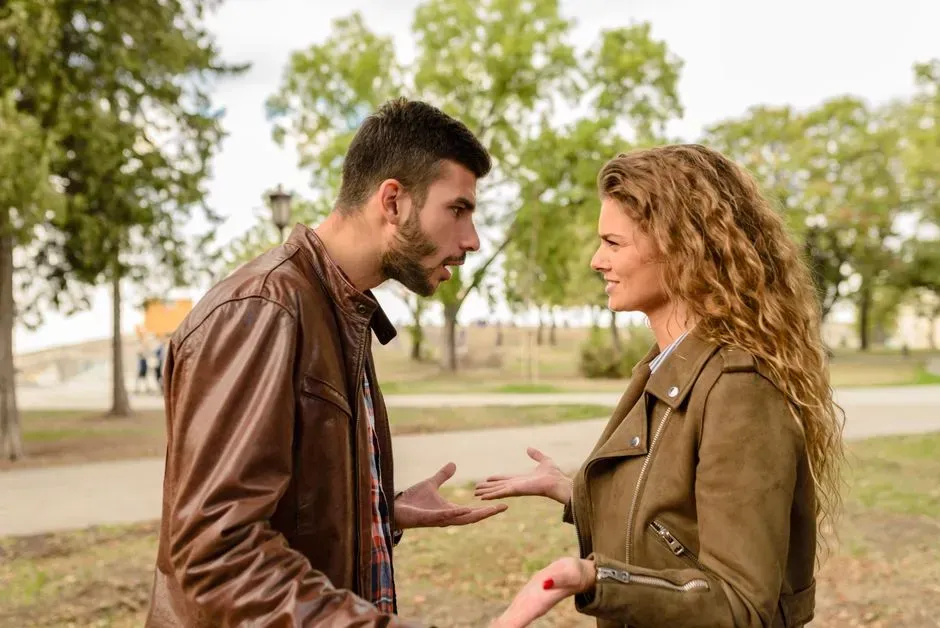
When a conflict gets heated enough, the body can respond as though it is under threat, not just annoyed. Partners experience physiological flooding during stonewalling, including increased heart rate, stress hormone release, and fight-or-flight responses. Trying to reason through a disagreement while flooded rarely produces anything productive.
The fix therapists recommend is simple but often ignored. Taking a twenty minute break becomes vital for self-soothing before continuing any discussion. The key is that both partners agree to actually return to the conversation afterward, rather than using the break as a permanent exit.
7. Timing and tone shape whether a message lands at all

7. Timing and tone shape whether a message lands at all (Image Credits: Pexels)
What you say matters less than when and how you say it, at least according to many practicing therapists. How and when you raise an issue can determine whether the conversation brings you closer or drives you apart, since if a partner has had a stressful day or emotions are already high, even small issues can feel magnified.
This is one of those insights that sounds obvious once you hear it, yet gets ignored constantly in daily life. Bringing up a sensitive topic the moment someone walks through the door after a rough day is setting the conversation up to fail before a single word about the actual issue gets said. Therapists often encourage couples to check in about timing before diving into anything heavy.
8. Framing feelings instead of accusations changes the whole dynamic

8. Framing feelings instead of accusations changes the whole dynamic (Image Credits: Pexels)
Language choices carry more weight than most people assume. Shifting from blame-based phrasing to feeling-based phrasing tends to open a conversation instead of closing it. Communicating needs works best when focusing on feelings rather than pointing fingers, so instead of saying “you never listen,” framing it as “I feel unheard when I’m interrupted” tends to work better.
This is not about softening the truth or avoiding real issues. It is about giving the other partner something to respond to besides an accusation. A statement about how something felt invites a conversation, while a statement about what someone did wrong invites a defense.
9. Conflict itself is not the problem couples think it is

9. Conflict itself is not the problem couples think it is (Image Credits: Unsplash)
Many people walk into a relationship believing that a good partnership involves minimal fighting. Therapists tend to push back on that assumption fairly directly. Every couple argues, and that is normal, since what determines whether a relationship survives conflict is not whether you fight, but how you fight.
Couples who avoid conflict entirely are not necessarily healthier than couples who argue regularly. They may simply be suppressing issues that will resurface later, often with more intensity. Conflict is inevitable in a relationship since two people with different minds are not always going to see eye to eye, but it is how we react and deal with these situations that defines the longevity and tone of romantic partnerships.
10. Recognizing a bad pattern is only half the work

10. Recognizing a bad pattern is only half the work (Image Credits: Pexels)
Knowing that criticism or contempt is damaging does not automatically stop someone from doing it under stress. Awareness is a starting point, not a solution on its own. Being able to identify the Four Horsemen in conflict discussions is a necessary first step to eliminating them, but this knowledge is not enough, since to drive away destructive communication and conflict patterns, each pattern must be replaced with healthy, productive behavior.
This is where a lot of self-help advice falls short. It is easy to read a list of bad habits and nod along, much harder to build the muscle memory for a better response in the heat of the moment. Therapists often frame this as skill-building rather than insight-gathering, which is part of why structured practice tends to outperform simply “trying harder.”
11. Repair attempts matter more than perfect conversations

11. Repair attempts matter more than perfect conversations (Image Credits: Pexels)
No couple communicates flawlessly all the time, and therapists generally are not expecting that from anyone. What separates couples who thrive from couples who struggle is not the absence of missteps but what happens afterward. The couples who do well are not couples who never slip into criticism or defensiveness, but couples who have built enough skill in the other direction that the repairs happen quickly and the positive interactions far outweigh the negative ones.
A repair attempt can be as small as a quick apology, a moment of humor to defuse tension, or simply acknowledging that a comment came out harsher than intended. These small gestures do a lot of quiet work over time. Couples who make room for repair tend to bounce back from arguments faster than couples who let a bad exchange sit unresolved.
12. Structured, evidence-based support can shift patterns that feel stuck

12. Structured, evidence-based support can shift patterns that feel stuck (Image Credits: Pexels)
Some communication habits are deep enough that reading advice or having a heartfelt conversation will not undo them on its own. This is often where therapy earns its reputation as genuinely useful rather than a last resort. Helping individuals and couples communicate better is a cornerstone of good therapy, and better communication sets people up for greater connection and stability in their lives.
Structured approaches give couples a shared language and a set of tools they can return to outside of session, rather than relying on willpower alone. Many arguments are not about big problems but about how those problems are communicated, and therapy gives couples a space to slow things down, practice hearing each other clearly, and respond without defensiveness. For couples who feel like they are having the same argument on repeat, that kind of outside structure often makes the difference that willpower alone could not.
Communication problems in relationships rarely come from a lack of love or effort. They usually come from habits that formed long before the relationship even began, patterns picked up from families, past partners, or simply the stress of daily life. Understanding these twelve dynamics will not fix every disagreement overnight, but it gives couples a clearer map of what is actually happening underneath the surface of a hard conversation, and a more specific place to start when things go sideways.