
Every generation likes to believe it invented romance, but the truth is messier. Millennials came of age with a fairly rigid rulebook, one passed down through sitcoms, self help books, and a lot of anxious phone calls to friends. Gen Z looked at that rulebook, shrugged, and started writing its own.
The shift is not just vibes. Surveys from dating apps, Pew Research, and relationship scientists in 2024 through 2026 show measurable changes in how younger daters approach texting, commitment, and even the basic mechanics of a first date. Here are eight old school dating norms that millennials once treated as gospel, and how Gen Z has quietly tossed them out.
1. Wait Three Days Before You Text Back

1. Wait Three Days Before You Text Back (Image Credits: Unsplash)
Millennials grew up on the so called Three Day Rule, the idea that texting or calling too soon after a date made you look desperate. The logic got so baked into pop culture that it became a running joke in sitcoms, and researchers note it still shows up constantly in online searches about post date etiquette. a substantial amount of anecdotal advice on when to reinitiate contact is available in pop cultural guidebooks and online, with 9.2 billion Google search results for "when to text after the first date".
Gen Z has largely dropped the performative waiting game in favor of just saying what they mean. Dating experts now suggest a much shorter window, and most daters agree that stalling on purpose reads as game playing rather than confidence. Women interviewed by Men's Health on this subject echoed my feelings: if he waits three days, they assume he's playing games. The new instinct is to text when you feel like it, not when a made up rule says you're allowed to.
2. Let the Guy Make the First Move
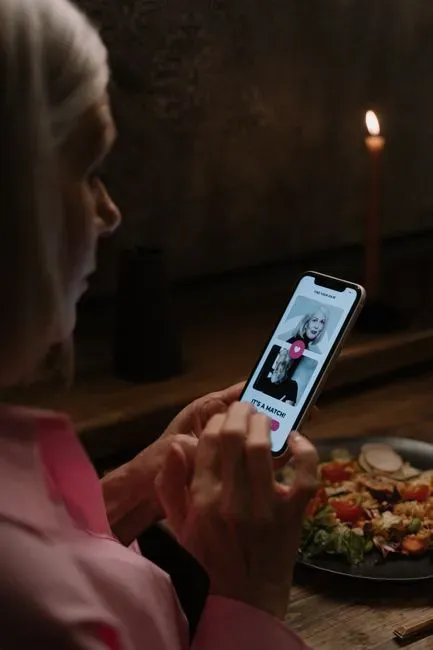
2. Let the Guy Make the First Move (Image Credits: Pexels)
Millennial dating culture, especially early on, still leaned heavily on the assumption that men initiate. That expectation started cracking with the rise of apps built specifically to challenge it. Your father might be appalled at Bumble's insistence on women making the first move, which was already a small rebellion when millennials were the primary users.
Gen Z has pushed that further, treating who messages first as a non issue rather than a gendered ritual. Broader survey data backs up how differently the generations approach initiation and pacing. Women expect consistent communication, while men often assume exclusivity sooner, suggesting the old script about who leads and who waits has been replaced by a more fluid, less scripted approach to who reaches out first.
3. Keep Things Casual and Avoid Labels Too Soon

3. Keep Things Casual and Avoid Labels Too Soon (Image Credits: Pexels)
Millennials were taught, sometimes painfully, that asking "what are we" too early was a dating faux pas. Ambiguity was almost treated as sophistication, a way of playing it cool while secretly hoping the other person would define things first. Gen Z has rejected that entirely in favor of naming things early.
Recent reporting on 2026 dating trends among younger daters found the opposite instinct at play. Daters are locking in on doing a temperature check for nonnegotiables like faith, political values, financial habits, family goals, and timelines, with nearly half raising these topics early and the vast majority doing so within a few dates. Other coverage of 2025 dating culture describes a similar pattern, noting that while the world once romanticised the slow burn, today's daters are opting for clarity over confusion, with no more decoding cryptic texts or pretending to be okay with seeing where things go. Ambiguity, once a millennial coping mechanism, now reads to Gen Z as a red flag.
4. Move In Together Only After Getting Engaged

4. Move In Together Only After Getting Engaged (Image Credits: Unsplash)
For a lot of millennial households, living together before marriage was framed as a step you took cautiously, often after a ring was already involved. That sequencing felt like common sense to a generation raised on more traditional relationship timelines. Gen Z sees it almost in reverse.
Recent generational data lays out just how far the gap has grown. 59% of Gen Z adults aged 18 to 29 say living together before marriage is essential, compared to 41% of millennials at the same age, according to Pew Research from 2024. For many younger daters, cohabitation has become a practical test run rather than a leap of faith reserved for after the engagement.
5. Meet People Organically, Not Through an App

5. Meet People Organically, Not Through an App (Image Credits: Pixabay)
Millennials were the first generation to dip into online dating, but many still carried a lingering stigma about it, often describing app matches as a backup plan rather than a first choice. Pew data from the mid 2010s captured that transitional moment well. A Pew Research Center study from 2016 revealed that 48% of 18 to 29 year old millennials said they'd used a dating app in their quest for love, a number that felt notable at the time precisely because it wasn't yet the default.
Gen Z grew up with no such hesitation, treating apps as simply how dating works. Reporting on 2026 dating habits notes that Gen Z has a higher rate of meeting their partners digitally compared to millennials, per a study conducted by hims in March 2025. Interestingly, that same reporting points to a small course correction, noting an August 2025 report from Dating News found that matchmaking services have seen a 400% surge in Gen Z clientele, suggesting even digital natives are starting to crave a more human touch after years of swiping.
6. A Kiss on the First Date Is Just Good Manners

6. A Kiss on the First Date Is Just Good Manners (Image Credits: Pixabay)
Millennial dating norms often treated a goodnight kiss as a fairly automatic ending to a good first date, something you did without much discussion beforehand. Survey data on millennial daters shows just how unevenly that assumption was actually shared. 62% of millennial men said they would kiss on a first date, while only 37% of millennial women agreed, a gap that suggests the old "just go for it" script was never quite as mutual as it seemed.
Gen Z has replaced that automatic script with explicit conversation. Research into Gen Z attitudes found that consent is a must and no means no, with 67% saying you need permission before going in for a kiss and 32% saying hugging needs approval. What was once an unspoken assumption has become something Gen Z would rather just ask about out loud.
7. Hookup Culture Is Just a Normal Part of Your Twenties

7. Hookup Culture Is Just a Normal Part of Your Twenties (Image Credits: Pexels)
Millennials came of age during the peak of hookup culture, when casual encounters were often framed as a rite of passage rather than something to question. It was less a rule and more an atmosphere, one that assumed physical intimacy would naturally outpace emotional commitment in your twenties. Gen Z has been steadily walking that assumption back.
A 2026 study surveying more than 5,000 young adults found a clear generational pivot. For the past two decades, hookup culture was the defining narrative of young adult sexuality, but the 2026 data shows a sharp pivot, with Gen Z actively moving away from the casual encounter model popularized in the 2010s. Reporting from the Irish Times adds weight to that shift, noting that a recent study found that almost half of Gen Z adults aged 18 to 27 had never had sex, compared with just over one in four millennials.
8. Get Married by Your Late Twenties, or Explain Yourself

8. Get Married by Your Late Twenties, or Explain Yourself (Young Married Couple after Wedding – Old City – Bukhara – Uzbekistan, <a href="https://commons.wikimedia.org/w/index.php?curid=64146044" target="_blank" rel="noopener">CC BY-SA 2.0</a>)
Millennials grew up under a lot of quiet pressure to be married, or at least engaged, by a certain age, often somewhere around their late twenties. That timeline was practically assumed, even if it caused plenty of stress along the way. Gen Z has simply stopped treating that clock as urgent.
The numbers make the generational gap fairly stark. Only 26% of Gen Z adults aged 23 to 29 are married, compared to 42% of millennials at the same age, according to a Pew Research 2024 generational analysis. Attitudes about marriage itself have shifted too, since 71% of Gen Z say marriage is important, but only 36% say it is very important, a significant decline from 50% of millennials at the same age. Meanwhile the median age at first marriage for U.S. adults reached an all time high in 2024, at 30.2 for men and 28.6 for women, per the U.S. Census Bureau, confirming that the old late twenties deadline has quietly been pushed back for everyone, not just Gen Z.
None of this means one generation is dating better than the other. It just means the rules kept moving, the way they always do, and what felt like common sense to millennials now looks like an unnecessary hurdle to the generation coming up behind them. Whether that turns out to be progress or just a different set of complications is still an open question, one that today's daters will end up answering for themselves.