
Most people picture retirement leaks as dramatic events: a stock market crash, a medical emergency, an unexpected layoff. The truth is less cinematic and more mundane. A lot of the damage happens in small, recurring moments that never feel like a big deal at the time, a tapped card here, a skipped cancellation there.
By 2026, several of these habits have grown large enough that researchers and financial institutions are tracking them closely. None of them look dangerous in isolation. Together, they explain why so many retirement accounts grow more slowly than they should, even when someone is technically saving every month.
1. Subscription Services That Quietly Multiply

1. Subscription Services That Quietly Multiply (Image Credits: Pexels)
Subscriptions have become the financial equivalent of background noise. The most widely cited figure comes from a C+R Research study: the average American spends $219 per month on subscriptions, which comes out to $2,628 per year. That is roughly a two and a half times gap between what people actually spend and what they estimate they spend.
When you count everything, the number of active subscriptions per person climbs to 8.2, according to aggregated 2025 data from multiple industry reports. Redirecting even half of that toward a retirement account would meaningfully change a decade-long trajectory. Instead, it disappears into streaming platforms, cloud storage, and apps nobody remembers signing up for.
2. Buy Now, Pay Later Checkout Habits

2. Buy Now, Pay Later Checkout Habits (Image Credits: Pexels)
Splitting a purchase into four payments feels harmless, which is exactly why it has spread so quickly. In 2025, 91.5 million American consumers used BNPL, up nearly six percent year over year. The convenience masks a subtler problem: it trains people to treat future income as already spent.
The savings data tells the real story. Twenty five percent of BNPL users have zero non-retirement savings, and on average they hold $11,981 less in non-retirement savings and cash than non-users. That gap does not appear out of nowhere. Money that could be building a cushion, or feeding a retirement account, is instead cycling through installment plans for clothes, electronics, and even groceries.
3. The Daily Coffee and Small Treat Habit

3. The Daily Coffee and Small Treat Habit (Image Credits: Pexels)
Nobody budgets for coffee the way they budget for rent, and that is precisely the point. A five dollar drink five times a week works out to well over a thousand dollars a year, money that never gets a chance to compound because it is spent before payday even registers it.
The issue is not caffeine itself. It is the psychological accounting trick where purchases under ten dollars feel invisible, even when they repeat daily for decades. Financial planners have long pointed to these micro purchases as a gateway habit that normalizes spending money the moment it arrives, rather than automating a portion of it toward long term savings first.
4. Food Delivery Apps and Convenience Fees

4. Food Delivery Apps and Convenience Fees (Image Credits: Unsplash)
Ordering dinner through an app now involves a delivery fee, a service fee, a small order fee, and a suggested tip, often adding a third or more to the actual cost of the food. People rarely add up these charges across a month, yet they behave exactly like a hidden tax on convenience.
What makes this category particularly costly for retirement savers is frequency. Unlike a vacation splurge, delivery fees repeat weekly or even nightly, and the cumulative total can rival a car payment. Every dollar spent on markup is a dollar that never reaches an employer match or an index fund.
5. Carrying a Credit Card Balance Instead of Paying in Full

5. Carrying a Credit Card Balance Instead of Paying in Full (Image Credits: Unsplash)
Credit card interest is one of the most quantifiable retirement drains, because the math is unforgiving. The average monthly credit card bill is a minimum payment of $132.36, based on the average American credit card balance of $6,618, and it would take over seven years of minimum payments to pay off that bill, costing roughly $3,610 in interest at the average APR of 22.83%.
Scale that up and the numbers get worse. On a $5,000 balance at 20% APR, making only minimum payments keeps someone in debt for about 23 years and costs roughly $7,723 in interest. That is money that, invested instead, could have become a meaningful piece of a retirement nest egg rather than a payment to a bank.
6. Extended Warranties and Add On Protection Plans

6. Extended Warranties and Add On Protection Plans (Image Credits: Pexels)
The checkout pitch for an extended warranty sounds reasonable, a little peace of mind for a modest fee. The economics behind it tell a different story. Retailers in the extended warranty market can reap profit margins in the 50 to 70% range, which explains why sales associates so often promote these policies at checkout.
Some retailers depend on this category more than shoppers realize. More than half of Best Buy’s net profits come from selling extended warranties. One business professor found the typical profit margin on these products runs 15 to 20%, yet businesses can realize a more than 200% profit on the warranty itself. Money spent protecting a blender or a laptop that will likely never fail is money that could have gone toward long term growth instead.
7. Impulse Buys Driven by Shopping Algorithms

7. Impulse Buys Driven by Shopping Algorithms (Image Credits: Pexels)
Online shopping used to require effort: a trip to the mall, a decision made in person. Now a personalized feed can surface a tempting product within seconds, complete with one click checkout and a countdown timer suggesting the deal will not last.
These purchases rarely get planned for in a monthly budget, which is what makes them so corrosive to long term saving. A pattern of frequent, unplanned fifty or hundred dollar purchases adds up to thousands annually, all funded by discretionary income that could otherwise flow into an IRA or a 401k contribution increase.
8. Lottery Tickets and Scratch Off Games

8. Lottery Tickets and Scratch Off Games (Image Credits: Pexels)
Buying a lottery ticket feels like a harmless indulgence, a couple of dollars for a sliver of hope. The trouble is that it rarely stays at a couple of dollars, and the habit tends to be sticky precisely because it offers just enough intermittent reward to keep people coming back.
Unlike a retirement contribution, a lottery ticket has a mathematically near certain negative return. Someone who redirected even a modest weekly ticket habit into a retirement account, and let it grow over decades, would very likely end up with far more real wealth than any jackpot they were chasing.
9. Treating a 401(k) Loan or Hardship Withdrawal as a Safety Net
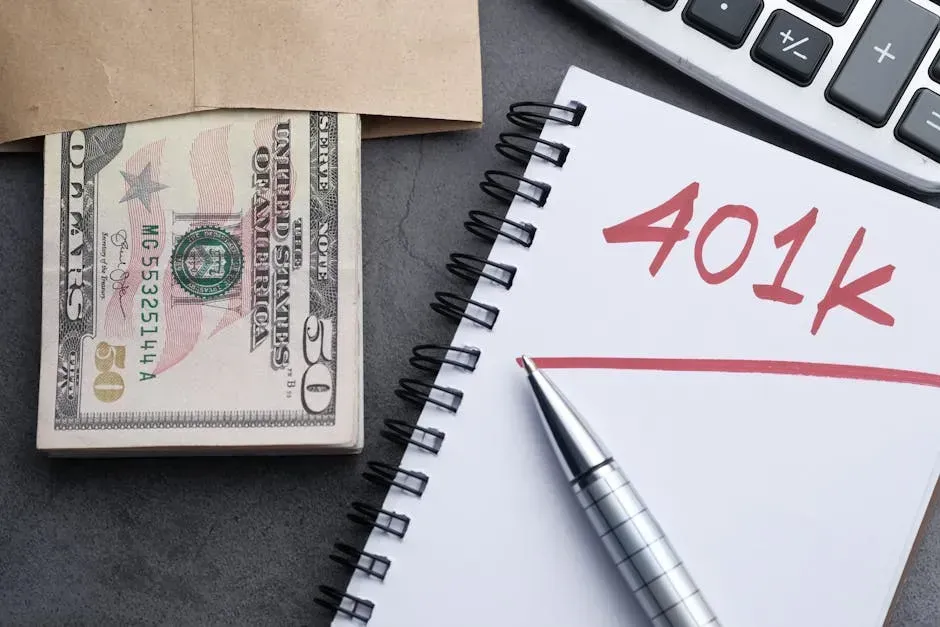
9. Treating a 401(k) Loan or Hardship Withdrawal as a Safety Net (Image Credits: Pexels)
This is the most direct way everyday financial pressure eats into retirement savings, because it comes straight out of the account itself. A record 4.8% of Vanguard 401(k) participants took hardship withdrawals in 2025, up from 2.8% just five years ago, with medical bills, rent, and mortgage payments among the top reasons cited. More recent data shows the trend accelerating further. A record 6% of 401(k) participants made hardship withdrawals in 2025, more than triple the pre-pandemic average of roughly 2%.
Loans carry their own quiet cost. Vanguard’s 2025 data show the average outstanding 401k loan is about $11,000, and 59% of workers who have taken a 401k loan say it has had a negative impact on their retirement savings. The irony is that these withdrawals often fund the same everyday categories already listed here, covering minimum payments, delivery bills, or subscription overages, which means the cycle can feed itself.
None of these nine habits is dramatic on its own, and that is exactly why they persist. A subscription renewal, a delivery fee, a warranty upsell, none of it triggers the kind of alarm that a big purchase would. Yet added together over years, they represent real, measurable money that never gets the chance to compound inside a retirement account.
The fix does not require austerity. It requires noticing. A once a year audit of subscriptions, a habit of paying credit cards in full, a moment of hesitation before an extended warranty or a BNPL checkout, these small course corrections tend to matter far more over a decade than most people expect.