
Language has a way of revealing far more than we intend. The words a person chooses in a first meeting, a job interview, or even a casual dinner tell a story about education, self-awareness, and respect for the people around them. It’s not about sounding stiff or antiquated. It’s about sounding like someone who has actually thought about what they’re saying.
Slang has become integral to modern communication, especially among younger generations, with terms spreading rapidly through memes and social media. There’s nothing inherently wrong with that in the right context. The problem is when informal language bleeds into every setting, flattening the impression a man makes wherever he goes. These nine old-school phrases are a quiet corrective. They’re not difficult to use, and they don’t require a costume change.
1. "I Beg Your Pardon"
1. "I Beg Your Pardon" (Image Credits: Pexels)
"I beg your pardon" maintains politeness and shows your willingness to understand the context in a way that a casual "huh?" or "what?" simply cannot match. The phrase is mainly used when you want to ask someone to repeat their words, apologize for a small mistake, or express polite surprise, and it is generally considered formal, used to show respect especially with elders or in business settings.
Understanding the correct usage of phrases like this based on context can make you sound more polished and thoughtful, whether you're addressing someone in a crowded place, apologizing for an error, or asking for clarification. Compared to a flat "no cap" or a bewildered "wait, fr?", the phrase signals an entirely different level of social awareness. It costs nothing to say and leaves a lasting impression.
2. "It Would Be My Pleasure"

2. "It Would Be My Pleasure" (Image Credits: Unsplash)
"It would be my pleasure" is the best polite way to express willingness or enthusiasm in a formal setting. Whether a colleague asks for help, a client makes a request, or a friend needs a favor, this phrase signals genuine readiness rather than reluctant compliance. This expression can be employed in a wide range of situations, from job interviews to informal gatherings and everything in between.
Consider how differently it lands compared to "sure, no cap" or "yeah, lowkey." Those phrases communicate indifference even when the speaker intends warmth. "It would be my pleasure" does the opposite. It implies investment and consideration, two qualities that people in every professional and social setting still quietly value.
3. "Much Obliged"
3. "Much Obliged" (Image Credits: Unsplash)
Few phrases carry the warm weight of "much obliged." It's a traditional expression of genuine gratitude, historically common among men who understood that receiving a favor required a response equal to the gesture. The phrase implies that the other person's effort has actually created a sense of debt, a meaningful acknowledgment rather than a throwaway thanks.
After being thanked, the polite response is "you're welcome" or "my pleasure," while saying "no problem" sends the wrong message because replying to an expression of gratitude with "no problem" is dismissive, simply saying that the gesture was easy for you, and it could also imply that the kindness performed was a nuisance. The logic runs both ways. Receiving with "much obliged" elevates the exchange in the same spirit. It tells the other person their effort was noticed and genuinely valued.
4. "With Respect" or "With All Due Respect"

4. "With Respect" or "With All Due Respect" (Image Credits: Pexels)
This phrase is used to preface a statement that may be critical or contradictory while still maintaining a respectful tone, signaling that you intend to express a different opinion or perspective without being disrespectful. That matters enormously in an era when disagreement so easily tips into confrontation. Using it correctly demonstrates that a man can hold his ground without surrendering his composure.
Retaining a fixed opinion yet not parading it on all occasions, and differing politely when you cannot agree, means that while your opponent may set you down as wrong, they are obliged to admit that you are a gentleman. That's a standard worth reviving. Slang-heavy deflections like "nah, that's mid" or "I'm not gonna cap, you're wrong" offer none of that social grace, and most rooms remember the difference.
5. "Pardon My Interruption"
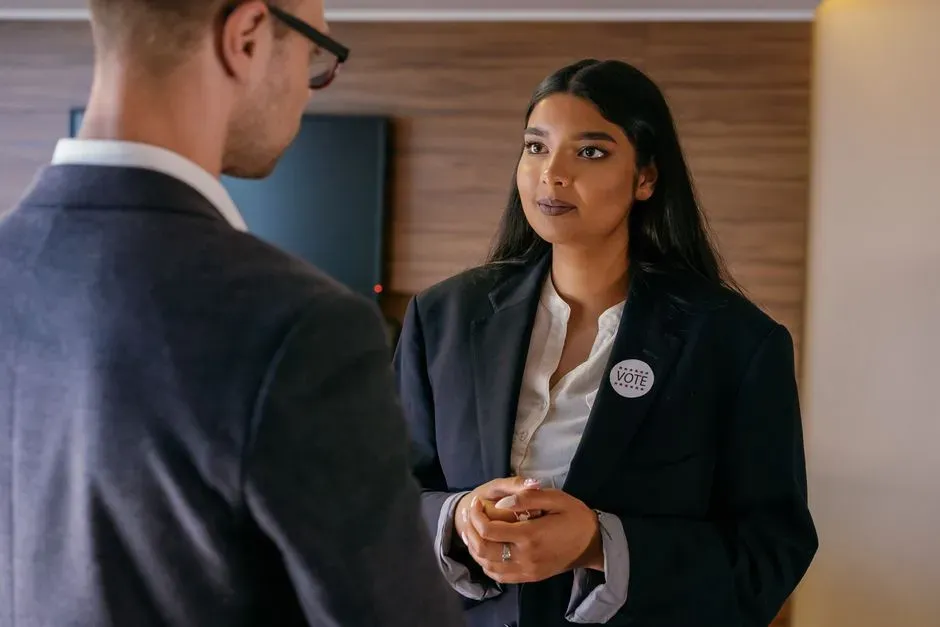
5. "Pardon My Interruption" (Image Credits: Pexels)
This phrase shows awareness of the disruption and respects the other person's speaking time. Interrupting someone is one of the oldest social violations, and most people feel it even when they don't say so. A deliberate, composed acknowledgment before cutting in transforms a potentially rude moment into a display of self-discipline. In a conversation, interruptions suggest that you have something more important to say than your interlocutor, an attitude that a gentleman finds inexcusable, which is why waiting until the speaker finishes and then talking is the standard.
Contrast that with the blunt "real quick though" or the cutting-in that Gen Z vernacular sometimes normalizes. The difference is not just stylistic. It signals that the man speaking has actually been listening, which is rarer than most people realize.
6. "At Your Convenience"
6. "At Your Convenience" (Image Credits: Unsplash)
Asking someone to do something "at your convenience" immediately reframes the request around their schedule rather than your own urgency. It's a small linguistic move with disproportionate social effect. Adding "at your convenience" to a request, for example saying "Would you mind reviewing this document at your convenience, please?" demonstrates politeness and consideration in a professional context.
In a world that now defaults to "lmk asap" or "no cap, I need this today," the phrase offers a quiet contrast. It doesn't sacrifice urgency entirely, but it wraps the request in a consideration that the recipient will feel. A gentleman chooses words that convey respect and consideration, using formal language not as something outdated or overly complex but as a thoughtful choice of words that suits the situation.
7. "May I"

7. "May I" (Image Credits: Pexels)
This question is considered the ultimate phrase of respect by etiquette experts, being permission-seeking rather than presumptive, which instantly softens the tone of any request and communicates deference and awareness of another person's space or time. Two words. That's all it takes. Yet most men in their twenties have already traded it in for commands dressed as statements.
The phrase is versatile enough for all kinds of situations, and rephrasing an order like "I'll take the salmon" as "May I order…" makes a meaningful difference, sounding considerably less like "fetch me this" and communicating a kindness that the other person will notice. Across every social context, from professional meetings to restaurant tables, this phrase quietly communicates that a man knows other people exist in the room.
8. "I'm Afraid That…"
8. "I'm Afraid That…" (Image Credits: Unsplash)
The phrase "I'm afraid that…" doesn't always mean fear in its true sense. In some contexts, it demonstrates regret or caution, functioning as one of the genuinely polite phrases in English. Delivering bad news or declining an invitation without this kind of softening can come across as blunt or dismissive, even when the speaker has the best intentions. A good example would be saying "I'm afraid that I won't be able to join you for dinner tonight due to a prior engagement."
The informal alternatives, things like "nah, I can't" or "that's not it for me," carry a social friction that the old phrase simply doesn't. "I'm afraid that" manages to decline, apologize, and soften all at once without sounding weak or evasive. That's surprisingly efficient for five small words.
9. "You Have My Word"

9. "You Have My Word" (Image Credits: Unsplash)
This phrase does something modern expressions rarely attempt: it creates a personal bond of accountability. When a man says "you have my word," he's not just confirming a fact. He's staking his character on it. That carries weight in any room, and the people listening to it tend to notice the difference between this and a casual "bet" or "yeah, fr, I got you."
By lacking accuracy and exactness, words can carry little weight in the eyes of those around you, while speaking like a gentleman means that people have confidence in what you say. Speaking like a gentleman goes beyond vocabulary; it reflects a mindset of respect, empathy, and composure, and at its core it is about communication that is clear, considerate, and compelling. "You have my word" is perhaps the purest expression of that idea. It's not nostalgia. It's reliability dressed in language.
None of these phrases require a complete personality overhaul. Most take three seconds to learn and a little practice to feel natural. The real shift is the underlying decision to treat language as something worth handling with care, which turns out to be one of the most consistently impressive things a man can do.