
Eighteen years in a kindergarten classroom teaches you things no textbook covers. You start to notice patterns – not in a judgmental way, but in that quiet, instinctive way that comes from watching hundreds of five-year-olds navigate their very first weeks of formal school. Some things that worry parents turn out to be nothing at all. Other things, the ones that barely register to an untrained eye, can signal real challenges ahead.
This isn’t about labeling children or predicting their futures. Kids are resilient and wonderfully unpredictable. What it is about is recognizing the habits and patterns that research consistently ties to later academic and social difficulty – so that parents, teachers, and caregivers can step in early, when the window for change is widest.
1. Difficulty Sitting With Discomfort

1. Difficulty Sitting With Discomfort (Image Credits: Unsplash)
One of the clearest early signals I've observed is a child's reaction when something doesn't go their way. A puzzle piece that won't fit. A crayon that breaks mid-drawing. A game they're losing. Kids who immediately escalate, shut down, or abandon the task rather than pausing and trying again are showing something important: their frustration tolerance is still very fragile.
Early academic and behavioral struggles place children at a heightened risk for school disengagement, academic failure, and dropout. When frustration tolerance is low from the very start, the classroom becomes a daily minefield. Children cannot learn when they are struggling to follow directions, get along with their peers, and control their emotions in a classroom setting. The habit of quitting when things get hard doesn't usually resolve itself without some intentional support.
2. Trouble Sustaining Attention Without Adult Direction

2. Trouble Sustaining Attention Without Adult Direction (Image Credits: Unsplash)
Success in kindergarten requires that children be able to focus, maintain concentration, and shift their attention to salient information as required. Most children struggle to sit still for long – that's developmentally normal. The real concern shows up differently: a child who cannot engage independently with a single activity for even a few minutes, or who constantly scans the room for the next stimulus rather than staying with the task in front of them.
Working memory and attentional flexibility deficits are strong indicators of academic difficulties over the first few years of schooling. This doesn't mean every fidgety child is in trouble. The pattern to watch is whether a child needs near-constant adult input just to stay oriented to any given task – that's a qualitatively different challenge, and one worth paying close attention to.
3. Weak Phonological Awareness
3. Weak Phonological Awareness (Image Credits: Unsplash)
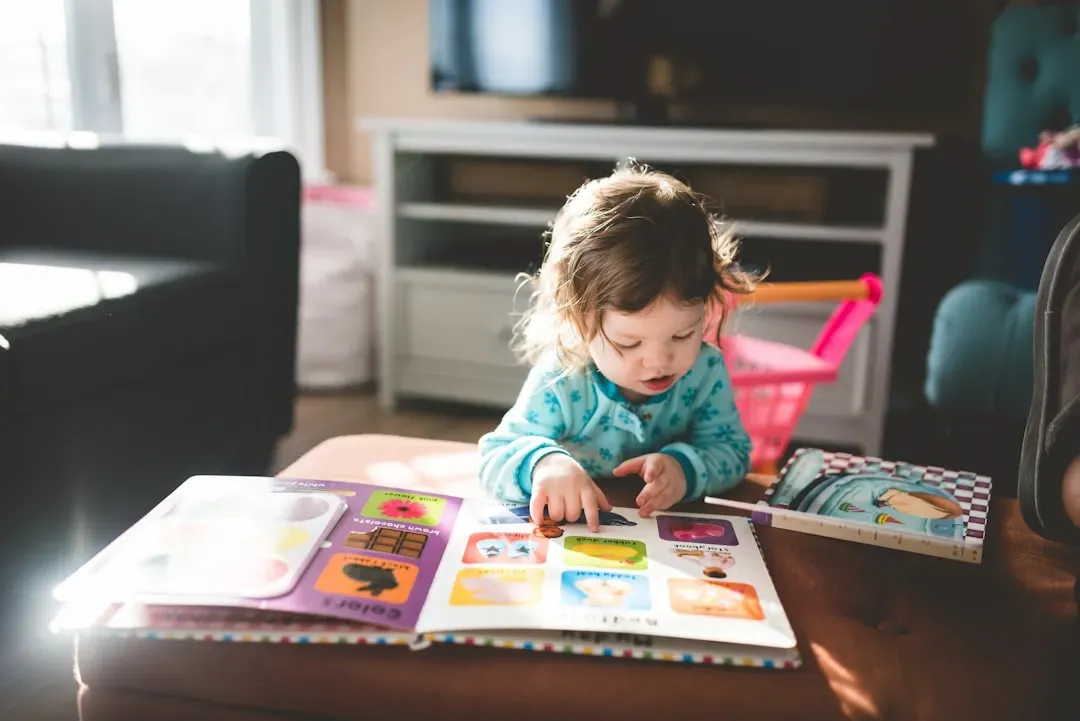
Phonological awareness is the ability to hear and play with the sounds inside spoken words – rhyming, clapping syllables, recognizing that "cat" and "cap" start the same way. It seems simple, almost playful. In reality, it's one of the most powerful predictors of reading success that early childhood research has identified. One of the most reliable markers of reading difficulty prior to reading onset is poor phonological awareness, the ability to manipulate speech sounds within oral language.
Key predictors of subsequent literacy outcomes in early childhood include letter-sound knowledge and rapid automatized naming skills. Children who can't hear or manipulate sounds in words by the end of kindergarten often hit a wall when formal reading instruction begins in first grade. Children arriving at kindergarten unprepared to learn to read are more likely to have low reading proficiency thereafter. The gap tends to widen rather than close on its own.
4. Avoiding Peer Interaction

4. Avoiding Peer Interaction (Image Credits: Pexels)
Some children are naturally quieter, and introversion is not a warning sign. What draws my attention is persistent, patterned avoidance – a child who consistently refuses to join group activities, who does not attempt to engage with classmates over weeks, or who seems genuinely distressed around peers rather than just shy. For children showing early signs of withdrawn behavior, experiencing peer rejection made it more likely that they would develop internalizing issues, such as anxiety and depression, starting in early childhood and increasing over time.
Active participation in kindergarten and fostering social skills may outweigh high academic expectations and frequency of home-based activities in supporting children's academic growth. This is something parents often find surprising. Academic drill at home matters less than people think. Learning to navigate a room full of peers, take turns, negotiate, and feel safe around other children – that's the foundation everything else is built on.
5. Poor Executive Function Skills
5. Poor Executive Function Skills (Image Credits: Unsplash)
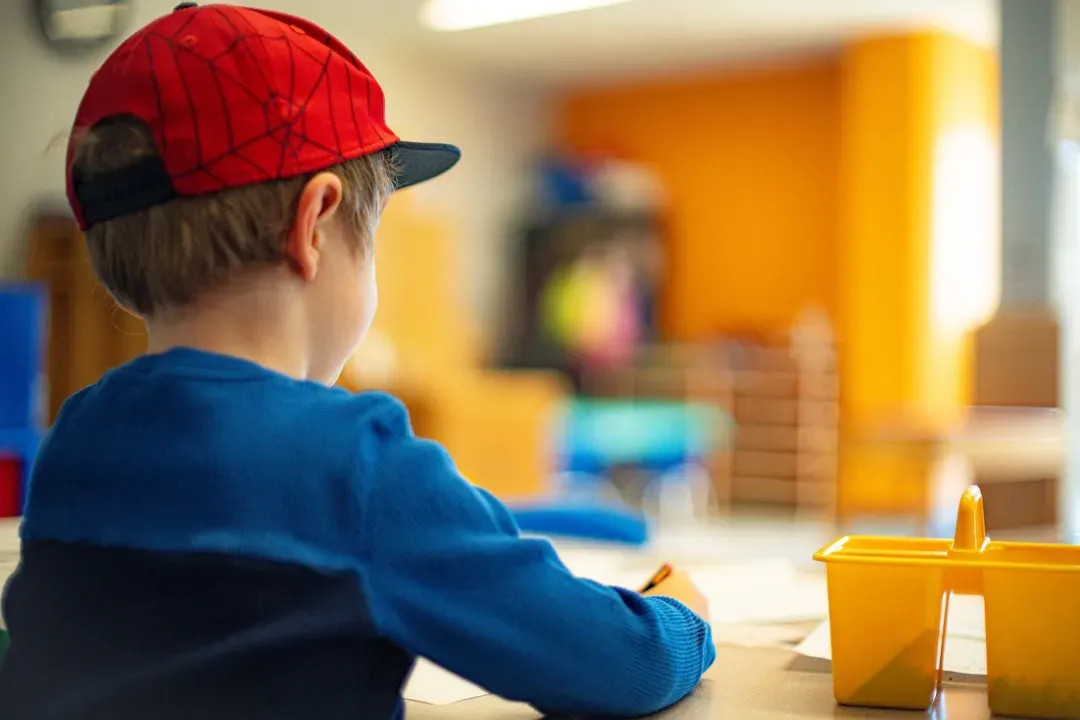
Executive function is an umbrella term for the mental skills that help a child plan, organize, remember instructions, and shift between tasks. In kindergarten, it shows up in small, concrete ways: Can a child follow a two-step direction? Can they put materials away before moving to the next activity? Can they hold a rule in mind while playing a game? Deficits in executive function, relating to self-regulation, organization, and goal-oriented behavior, have been reported to increase children's risk for academic difficulties, including repeatedly across elementary school.
Executive function deficits in kindergarten predict repeated academic difficulties across elementary school. That finding from Penn State research has stayed with me. Children with executive function deficits often experience repeated struggles to organize and self-regulate their learning in classroom environments. The encouraging part is that executive function is among the more trainable skill sets in early childhood, especially with consistent routines and structured play.
6. Limited Vocabulary and Verbal Expression
6. Limited Vocabulary and Verbal Expression (Image Credits: Pexels)
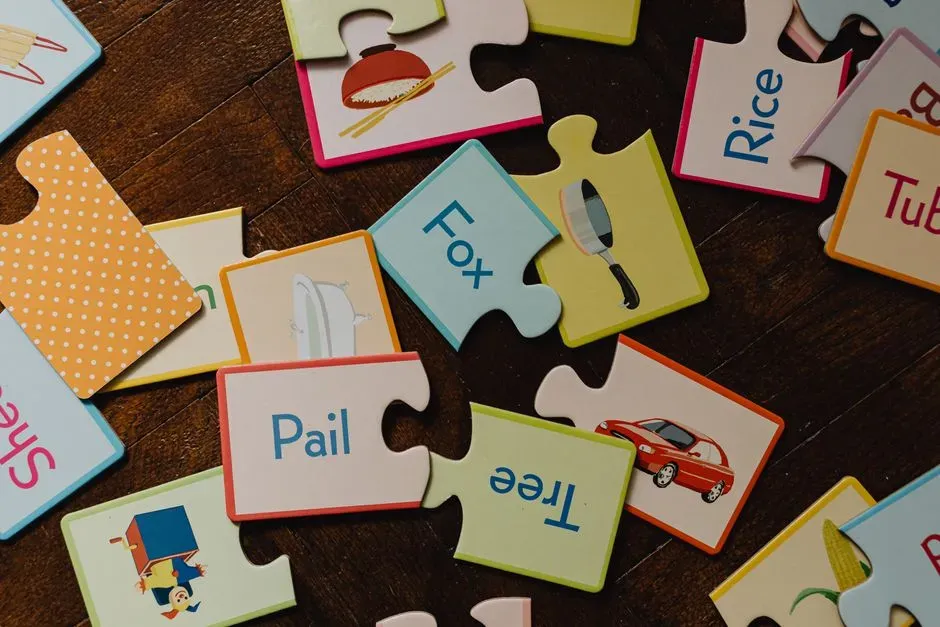
Children come into kindergarten with wildly different vocabularies, and that gap is far from trivial. A child who struggles to find words for what they mean, who can't narrate a simple event from their morning, or who communicates mostly in single words and gestures is likely to find academic instruction increasingly difficult as the years go on. Language is the vehicle for almost all learning. Children's learning often depends on verbal engagement with others, as their skills develop through social interactions with their family and peers.
Early vocabulary ability has been associated with later self-regulatory skills, underlying a distinct link between language ability and emotional self-regulation. That connection surprises many people. A limited vocabulary isn't just a reading or communication issue – it reaches into a child's ability to manage their own emotions, make sense of social situations, and learn in a group. Difficulty with emotional vocabulary and limited linguistic capacity to express and discuss emotions may reduce effectiveness in understanding and regulating feelings.
7. Dependence on Routine to the Point of Rigidity
7. Dependence on Routine to the Point of Rigidity (Image Credits: Unsplash)
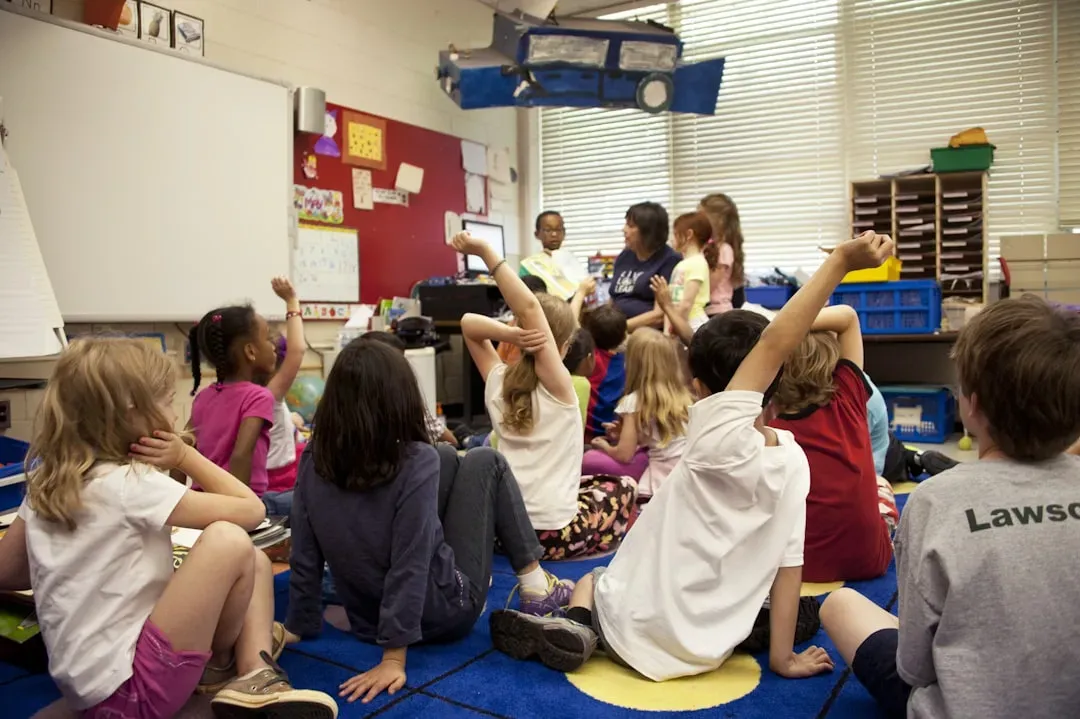
Loving routine is healthy for kindergarteners – predictability genuinely helps young children feel safe and focused. The flag goes up when a child cannot tolerate even minor variations without significant distress. A substitute teacher, a rearranged classroom, a schedule change, or a different lunch spot can completely derail the day. This level of rigidity, when persistent, often signals an underlying anxiety or regulatory difficulty that deserves attention.
Children's work-related and learning-related social skills and self-regulatory skills have been identified as factors that contribute to and define school readiness. School is an environment built on constant, low-level unpredictability. Tests get moved. Teachers get sick. A fire drill happens during storytime. Children are often expected to be able to calm down, stop, think, and choose prosocial actions – and the child who cannot adapt to small disruptions will find that demand increasingly exhausting through every subsequent grade.
8. Disinterest in Books and Stories

8. Disinterest in Books and Stories (Image Credits: Pexels)
Not every five-year-old loves sitting for a read-aloud, and that's perfectly fine. The pattern that matters is more specific: a child who never picks up a book independently, who shows no curiosity about what words say, who doesn't ask questions during stories, and who shows little enjoyment in narrative of any kind. That combination, sustained over time, is meaningfully different from ordinary wiggly behavior during circle time.
Studies have shown that children's literacy and numeracy skills in kindergarten are predictive of their later literacy and numeracy skills in elementary school, middle school, and even high school. The roots of reading engagement grow before formal instruction begins. Prior letter identification and reading skills are highly indicative of later literacy performance. Children who arrive without that early spark of interest in print are not doomed, but they do need deliberate and sustained encouragement to develop it.
9. Difficulty Recovering After Conflict With Peers

9. Difficulty Recovering After Conflict With Peers (Image Credits: Pexels)
Conflict between kindergarteners is normal and even necessary – it's how children learn negotiation, repair, and social resilience. The habit that predicts later trouble isn't having conflicts. It's the inability to move on from them. A child who holds a grudge all day after a playground disagreement, who cannot re-engage with a peer after a disagreement is resolved, or who repeatedly escalates minor friction into major incidents may be struggling with something deeper than typical social immaturity.
Behavioral and academic problems do not function unidirectionally but instead work reciprocally to predict later school maladjustment and failure. Poor social repair skills tend to create a compounding problem: the child accumulates negative peer experiences, which in turn fuel anxiety or aggression, which then affects their availability to learn. Children demonstrating early academic and learning difficulties are also at risk for developing later peer rejection, as well as emotional and behavioral disorders. Addressing social recovery skills early – before patterns entrench – is one of the most valuable interventions a family or teacher can offer.
None of these nine habits is a verdict. A child who shows several of them is not destined for struggle, and a child who shows none of them is not guaranteed smooth sailing. What early identification does is open a door. It creates space for targeted support while the brain is still at its most adaptable, and while the stakes are comparatively low. Research suggests that children's academic difficulties in kindergarten may be able to predict continued difficulties throughout elementary school – which is precisely why watching closely in those early years is so worthwhile. The point isn't to worry more. It's to act sooner.