
Every generation seems to have an opinion about how the next one handles money, and the boomer to millennial conversation might be the loudest version of that argument going on right now. Family dinners, comment sections, and daytime talk shows all seem to circle back to the same complaints about spending habits, career choices, and why nobody wants to just "buy a house already." Some of those criticisms hold up under scrutiny. Others fall apart pretty quickly once you look at what the data from 2024 through 2026 actually shows about wages, housing costs, and debt loads.
Spending too much on coffee, takeout, and small daily luxuries

Spending too much on coffee, takeout, and small daily luxuries (Image Credits: Unsplash)
This is probably the most repeated complaint of all, the idea that millennials could afford a house if they just skipped the lattes and delivery apps. It sounds tidy, but the math rarely works out that way once you compare a five dollar coffee habit to a median home price that has climbed well past four hundred thousand dollars in many markets. The median home price in 2024 reached $412,500, up 60% from $257,000 in 2019. No amount of skipped coffee closes a gap that large.
What the daily spending argument misses is scale. A few dollars a day adds up to maybe a couple thousand dollars a year, while housing costs have outpaced wage growth by a wide margin over the same stretch. Income needed to afford a median home now sits around $126,670 a year, yet only about 7.1% of adults aged 26 to 34 earn that much. The coffee isn't the obstacle. The income to price ratio is.
Renting instead of buying a home

Renting instead of buying a home (Image Credits: Unsplash)
Boomers who bought their first house in their twenties or early thirties often see renting as a failure of nerve or discipline rather than a response to market conditions. Yet the numbers tell a different story about timing. Millennials, ages 29 to 44, saw a modest homeownership increase to 55.4% in 2025, up from 54.9% in 2024. That is progress, but it lags far behind what earlier generations achieved at the same age.
The comparison gets sharper when you line up ages directly. While 42.5% of Gen X members and 44.4% of baby boomers were homeowners at age 28, only 38.3% of Gen Z reached that mark in 2025, and 57.2% of 36 year old millennials owned homes compared to 61.2% of Gen Xers and 63.7% of boomers at the same age. Renting longer isn't necessarily a lifestyle choice. It's often what happens when the entry price keeps rising faster than paychecks.
Taking on student loan debt for degrees that "don't pay off"

Taking on student loan debt for degrees that "don't pay off" (Image Credits: Unsplash)
The boomer critique here usually sounds something like this: college used to be affordable, so anyone drowning in loans made a bad bet. What often gets left out is how dramatically tuition costs shifted between generations. Average student loan debt reached $39,375 by the third quarter of 2025, close to twice the average student debt of 2008. That's not a spending choice, it's a structural change in what college costs.
The downstream effects show up in homeownership too. Research found that a 1 percent increase in education loan debt decreases the likelihood of owning a home by 0.15 percentage points, meaning a jump from $50,000 to $100,000 in student debt could lower homeownership odds by 15 percentage points. Loans taken out to get ahead can end up doing the opposite when it comes to building wealth later.
Job hopping instead of staying loyal to one employer

Job hopping instead of staying loyal to one employer (Image Credits: Pexels)
There's a persistent idea that millennials lack commitment because they switch jobs more often than their parents did at the same career stage. What's usually missing from that framing is that the old model of loyalty came with pensions, steady raises, and job security that mostly disappeared by the time millennials entered the workforce. Staying put for decades made sense when companies still rewarded tenure with real financial upside. That bargain largely evaporated well before most millennials had their first job.
Switching roles more frequently has also become one of the more reliable ways to secure meaningful pay increases, since internal raises at many companies have failed to keep pace with inflation. Treating job changes as recklessness ignores that the labor market itself changed the rules first. It's less a character flaw and more a rational response to how compensation actually works now.
Signing up for too many subscriptions and streaming services

Signing up for too many subscriptions and streaming services (Image Credits: Unsplash)
Streaming, meal kits, fitness apps, cloud storage, the list of monthly charges is long, and it's an easy target for anyone comparing it to the single cable bill of decades past. There's some truth to the idea that subscription creep adds up quietly. Plenty of people carry more recurring charges than they realize, and canceling unused ones is genuinely good advice regardless of generation.
Still, the scale problem shows up again here. Even an aggressive subscription habit rarely reaches more than a few hundred dollars a month, while housing, insurance, and debt payments dwarf that figure many times over. Framing subscriptions as a major reason homeownership or savings goals are out of reach overstates their weight compared to the bigger structural costs already discussed above.
Being too scared to invest in the stock market
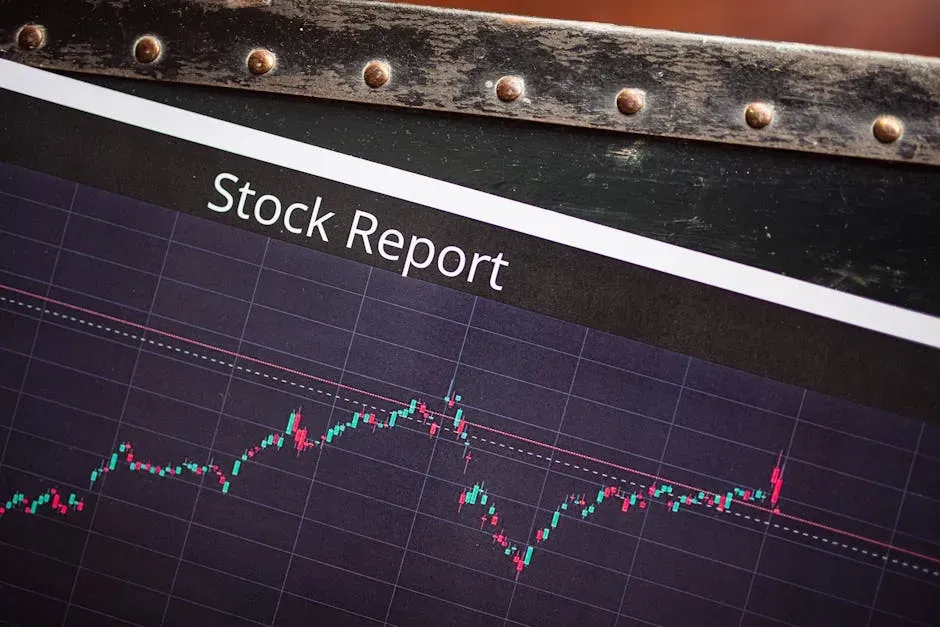
Being too scared to invest in the stock market (Image Credits: Pexels)
This is one criticism that has some real backing, since younger generations came of age watching two major market crashes before they'd built much of a financial cushion. That experience left a lasting wariness toward investing that boomers, who saw markets mostly climb for decades, didn't have to contend with in the same way. Fear of losing money in a crash is a rational response to lived experience, even if it can slow long-term wealth building.
The encouraging part is that this particular gap appears to be closing. Millennial wealth grew 13% in 2024, and the Federal Reserve's 2022 Survey of Consumer Finances found millennials' median net worth at ages 35 to 39 is actually higher than boomers' median at the same age when adjusted for inflation. Hesitation around investing was real, but it hasn't been the disaster the stereotype suggests.
Relying too heavily on credit cards and buy now pay later plans

Relying too heavily on credit cards and buy now pay later plans (Image Credits: Unsplash)
Boomers often point to installment payment apps and revolving credit balances as proof of poor discipline. There's a kernel of a valid point here, since these tools can make overspending feel painless in the moment. But comparing debt habits across generations reveals something more nuanced than a simple discipline gap.
Millennials and baby boomers actually carry very similar amounts of credit card debt on average, at $6,961 and $6,795 respectively. The tools have changed, from store credit cards decades ago to buy now pay later apps today, but the underlying behavior of financing purchases over time isn't unique to one generation. It's more a story of evolving payment technology than a moral failing specific to millennials.
Waiting too long to get married and have kids

Waiting too long to get married and have kids (Image Credits: Unsplash)
Delaying marriage and children gets folded into the money mistakes list because boomers often see these milestones as financial stabilizers, the kind of life events that pushed their own generation toward homeownership sooner. There's data supporting the connection. Delayed marriage had the most significant impact on millennial homeownership, since being married increased the probability of owning a home by 18 percentage points after accounting for other factors. That's a real financial cost tied to a life choice, not just a sentimental one.
What's harder to pin on personal preference is why marriage got delayed in the first place. The median age of first marriage is now 30.8 for men and 28.4 for women, up from 22 for women in 1980. Higher education timelines, career instability, and housing costs all push these milestones later, which makes the "they're just choosing to wait" framing incomplete at best.
Chasing side hustles instead of committing to a stable career

Chasing side hustles instead of committing to a stable career (Image Credits: Unsplash)
Multiple income streams get framed by some boomers as a sign of restlessness or an inability to settle into a "real job." In practice, side hustles have become less of a hobby and more of a financial necessity for a lot of younger workers trying to close the gap between wages and rising costs. Full time salaries alone have struggled to keep pace with housing, healthcare, and general inflation over the past several years.
The gig economy also reflects genuine flexibility that wasn't as available decades ago, letting people supplement income around unpredictable schedules or caregiving responsibilities. Treating this as laziness or lack of focus overlooks that many side hustlers are working more total hours than a single traditional job would require, not less. It's an adaptation to economic pressure, not an escape from it.
Prioritizing travel and experiences over saving for the future

Prioritizing travel and experiences over saving for the future (Image Credits: Unsplash)
The image of the millennial who books a trip abroad instead of contributing to a retirement account is a familiar one in this debate, and it does capture a real generational shift in values around spending on experiences. Surveys have consistently shown younger adults place more weight on travel and memories relative to material accumulation compared to previous generations at the same age. That's a genuine values difference worth acknowledging honestly.
What often gets overstated is the financial impact of that choice relative to the much larger headwinds already covered here, like housing costs and student debt. Millennials hold only 10.3% of national wealth compared to Baby Boomers' 51.4%, despite similar population sizes, a disparity described as the defining financial statistic of the generation. A vacation or two rarely explains a wealth gap of that size. The bigger structural forces do most of the heavy lifting in that story.