
There’s a particular kind of exhaustion that doesn’t come from doing nothing. It comes from doing too much, for too long, without pause. Many families have lived inside that exhaustion for years, moving from one commitment to the next, calendars packed to the edges, and somewhere along the way, a quiet but growing number of them have started to say: enough.
The shift is real and measurable. A growing number of people are embracing slow living, a lifestyle movement that encourages living intentionally, mindfully, and at a gentler pace, stepping away from back-to-back schedules and choosing connection over hustle. For families in particular, this isn’t a trend born from laziness or disengagement. It’s a considered response to something that has quietly broken down.
The Research on Overscheduling Is Harder to Ignore

The Research on Overscheduling Is Harder to Ignore (Image Credits: Pexels)
A data analysis published in the February 2024 issue of the Economics of Education Review found that students are assigned so much homework and signed up for so many extracurricular activities that the "last hour" was no longer helping to build academic skills. Instead, the activities were actually harming their mental well-being, making students more anxious, depressed, or angry. This wasn't a fringe finding. It was backed by a rigorous statistical method applied to a large dataset of real children's lives.
The research team analyzed the time diaries of 4,300 children and teens, from kindergarten through 12th grade, collected as part of the Panel Study of Income Dynamics, a nationally representative household survey overseen by the University of Michigan. Children, parents, and survey workers tracked how children spent every minute of a random weekday and weekend day. The picture that emerged was sobering.
Parents Are Burning Out Too

Parents Are Burning Out Too (Image Credits: Unsplash)
A study published in early 2025 found that nearly two thirds of working parents reported experiencing burnout. That figure isn't abstract. Parental burnout, which includes emotional exhaustion, emotional distance, and feeling fed up with parenting, is a chronic and potentially debilitating stress condition that has become highly prevalent in Western countries.
Parental burnout results in an imbalance between a parent's perceived stressors in relation to parenting and the resources available to cope with those stressors. When every evening involves driving to practice and every weekend is consumed by tournaments and commitments, that imbalance gets harder to correct. The packed schedule doesn't just tire the children. It hollows out the adults running it.
The Pandemic Reshaped Expectations in Ways That Stuck

The Pandemic Reshaped Expectations in Ways That Stuck (Image Credits: Unsplash)
The pandemic became an unexpected catalyst for slow living, forcing global society to pause and reconsider priorities. What initially felt like an enforced interruption quickly transformed how people saw the world. For many families, lockdown was the first time in years they sat still long enough to notice what they had been missing.
Remote work demolished traditional workplace boundaries, giving people unexpected opportunities to redesign daily rhythms. Families rediscovered shared moments, cooking together, and engaging in meaningful conversations. Not every family wanted to preserve that slower tempo permanently. Still, plenty did, and that recalibration has influenced how many parents now approach their children's schedules.
The True Cost of Youth Sports and Activities Culture

The True Cost of Youth Sports and Activities Culture (Image Credits: Unsplash)
Club and travel teams are economically incentivized to recruit kids younger and younger. According to a 2022 study by the Aspen Institute, families spend an average of $883 for every sport a child plays, and more than half of children in the US play sports, with roughly four in ten playing one sport year-round. The financial pressure compounds the logistical one.
Access to sports has also become an equity issue, as expensive club teams and travel sports replace more affordable and less time-intensive recreational leagues, not to mention the unstructured, child-led pickup games kids once played. Families are starting to push back against overscheduling, and the social permission to do so is slowly widening. Parents who once feared being judged for pulling a child from an activity are finding more peers who share the same relief.
What Overscheduling Actually Does to Children's Development

What Overscheduling Actually Does to Children's Development (Image Credits: Unsplash)
Psychologists have long warned that children's lives are overscheduled, which undermines their ability to develop non-academic skills they'll need in adulthood, from coping with setbacks to building strong relationships. These aren't minor skills. They're the ones that determine how well a person navigates life past the age of eighteen.
Overscheduling children can do more harm than good, including causing too much stress, reducing opportunities for creative thinking, and having detrimental effects on attention span and mental health. Constant exposure to structured activities can create children who constantly seek stimulation and cannot handle boredom or time alone. That inability to sit with boredom, to invent something to do, turns out to matter enormously as children grow.
The Case for Unstructured Play Is Getting Stronger

The Case for Unstructured Play Is Getting Stronger (Image Credits: Unsplash)
A wealth of research shows that unstructured play, which isn't organized or directed by adults and generally doesn't have a defined purpose or outcome, is a fundamental necessity for children to thrive physically, emotionally, mentally, and socially. Unstructured play is crucial to childhood development, and a lack of open play can disrupt a child's normal cognitive, emotional, and social development. Children who engage in frequent unstructured playtime tend to be less stressed, happier, better adjusted, and even more intelligent.
Recent research suggests that children should experience twice as much unstructured time as structured play experiences, citing benefits for whole child development including social competence, self-discipline, problem-solving skills, leadership development, and conflict resolution. Yet unstructured playtime has declined in recent decades due to increased screen time, academic pressures, and safety concerns, and this reduction has been linked to rising anxiety and depression among young people.
How Social Norms Around Busyness Are Starting to Shift

How Social Norms Around Busyness Are Starting to Shift (Image Credits: Pexels)
In 2025, slow living is no longer niche – it's mainstream. The cultural pressure to demonstrate parental commitment through activity enrollment is quietly losing its grip in certain communities. Instagram boasts over six million posts under the hashtag #slowliving, which says something about the appetite for an alternative, even if social media is an imperfect vehicle for it.
The pandemic permanently reshaped holiday expectations. Large, loud, multi-day gatherings have lost appeal, replaced by more intentional traditions focused on comfort and authenticity. Many Americans now prefer smaller, more manageable gatherings at home, or they choose to host only those whose presence feels meaningful. That same logic is now being applied to the weekly family schedule.
The Privilege Problem: Who Gets to Slow Down?

The Privilege Problem: Who Gets to Slow Down? (Image Credits: Pexels)
While slow living has clear appeal, it's not without critique. Critics argue that the ability to "slow down" is often a privilege not everyone can afford. Those working multiple jobs or balancing caregiving responsibilities may find it unrealistic to fully embrace the trend. This is a fair and important tension to name honestly.
Advocates stress that slow living isn't about perfection – it's about small, intentional shifts, even if that's just finding five quiet minutes in a busy day. Removing one after-school activity, protecting Sunday mornings, or simply declining to fill every gap in the calendar doesn't require a lifestyle overhaul. It requires a willingness to push back, even slightly, against a culture that has normalized perpetual motion.
What Families Are Actually Gaining by Pulling Back
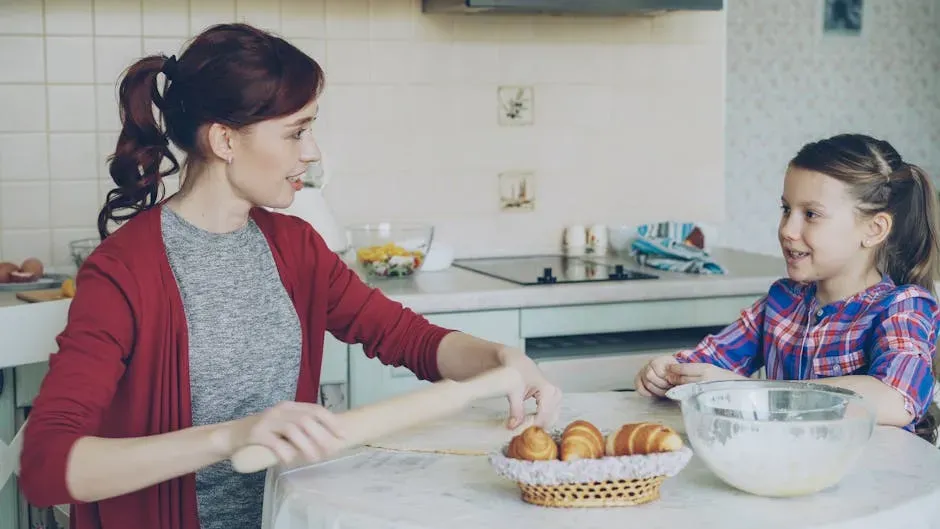
What Families Are Actually Gaining by Pulling Back (Image Credits: Pexels)
One reason slow living resonates with so many is the increasing awareness of the toll that busyness takes on mental health. Constant multitasking and over-scheduling leave little room for reflection or rest, and slow living invites families to reclaim that space. The gains aren't abstract. Families report more spontaneous conversation, better sleep, and children who can tolerate boredom without falling apart.
Unstructured play allows children to use their imagination, make decisions independently, and explore their interests without the constraints of rules or directions. This type of play fosters creativity and problem-solving skills, as children are free to invent games, scenarios, and solutions on their own. When parents deliberately protect that time, something quietly shifts in the household. The rush fades. The children start doing something unexpected: they start playing.
A Changing Conversation About What Good Parenting Looks Like

A Changing Conversation About What Good Parenting Looks Like (Image Credits: Pexels)
College admissions departments value applicants with high grades and activities, and researchers sympathize with parents who find it hard to individually push back against the current system. It's similarly difficult for one school to unilaterally change homework policies when colleges could penalize their students. The structural pressures are real, and pretending otherwise doesn't help anyone.
Yet the conversation is genuinely changing. Researchers found that the downside of overscheduling was most evident in high school, when students feel pressure to get high grades and load up on extracurriculars for their college applications. More parents are now weighing that pressure against what they can see happening in front of them: anxious teenagers, chronically tired children, and households running on fumes. The families pulling back aren't giving up on their kids. They're betting on a different version of what it means to prepare a child for life.