
There’s a quiet kind of compromise that happens in relationships – not the healthy kind where two people meet each other halfway, but the kind where someone slowly gives up on what they actually need. It usually doesn’t happen all at once. It creeps in gradually, wrapped in justifications: “Nobody’s perfect,” “At least they’re here,” or “Things will get better eventually.” The problem is, these thoughts rarely signal acceptance. More often, they signal settling.
The science behind relationship satisfaction is remarkably consistent on this point. What you accept in a relationship shapes not just how you feel day to day, but how you see yourself and how you grow over time. Understanding why settling is genuinely harmful, not just emotionally uncomfortable, is worth taking seriously.
The Psychology of Settling: What Research Actually Shows
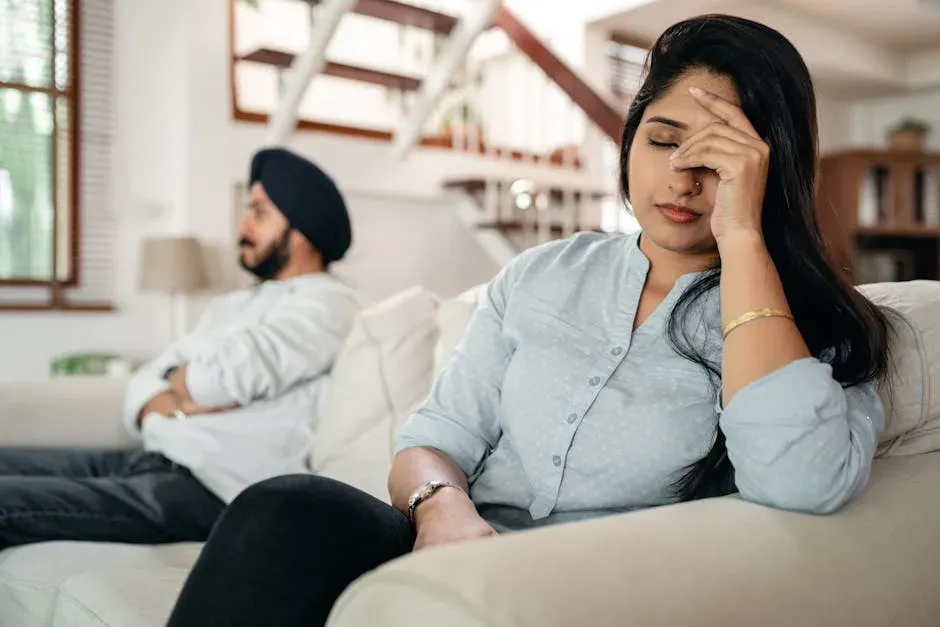
The Psychology of Settling: What Research Actually Shows (Image Credits: Pexels)
Research demonstrates that fear of being single predicts settling for less in romantic relationships, even accounting for constructs typically examined in relationship research such as anxious attachment. That's a significant finding. It means the decision to stay in an unsatisfying relationship is often driven not by genuine love, but by anxiety.
Studies have found preliminary support for the idea that fear of being single predicts settling for less in ongoing relationships, as evidenced by greater dependence in unsatisfying relationships, and that this fear also predicts a lower likelihood of initiating the dissolution of a less satisfying relationship. In other words, people who fear being alone tend to stay, even when they know they shouldn't.
Fear of Being Single Affects Both Men and Women Equally

Fear of Being Single Affects Both Men and Women Equally (Image Credits: Unsplash)
Fear of being single is a meaningful predictor of settling for less in relationships among both men and women, as a University of Toronto study has found. This challenges a widespread cultural assumption that only women wrestle with this fear. The data tells a different story.
Researchers found that men and women have similar concerns about being single, which lead to similar coping behaviors, contradicting the idea that only women struggle with a fear of being single. Loneliness is a painful experience for both men and women, so it is not surprising that the fear of being single seems not to discriminate on the basis of gender. Recognizing this matters, because it removes the excuse that settling is somehow practical or gender-specific.
Anxious Attachment Makes You More Vulnerable to Poor Choices

Anxious Attachment Makes You More Vulnerable to Poor Choices (Image Credits: Unsplash)
Anxious attachment in particular has been shown to be associated with a particularly strong desire for a romantic partner and a higher likelihood of settling for less appealing partners and less satisfying relationships due to a greater fear of being single. Attachment styles formed in childhood can silently drive adult relationship choices in ways most people never examine.
Although individuals higher in anxious attachment may be more likely to be in relationships as a result of their fears of being single, they may also experience less stability in their relationships. So the very strategy of staying with a less-than-ideal partner for the sake of security can produce the instability people are trying to avoid. That's a cycle worth breaking.
Self-Esteem Shapes the Relationships You Accept

Self-Esteem Shapes the Relationships You Accept (Image Credits: Pexels)
Self-esteem affects relationship satisfaction directly. Low self-esteem individuals report lower relationship satisfaction compared to high self-esteem individuals. This connection runs deeper than most people realize. How you feel about yourself quietly filters the kind of treatment you're willing to accept.
Individual differences in self-compassion are related to personal well-being and also seem to have an impact on how people experience their romantic relationships and how they interact with a romantic partner. Prior studies have also indicated that self-compassion plays a role in how satisfied people are in their romantic relationships. Treating yourself with kindness isn't just good self-care – it shapes the baseline of what you'll tolerate from someone else.
What Happens to Satisfaction Over Time in a Settled Relationship

What Happens to Satisfaction Over Time in a Settled Relationship (Image Credits: Pixabay)
Partners who showed slower declines in a tendency to expect reciprocation experienced steeper declines in relationship satisfaction. Within-person increases in this orientation predicted future decreases in relationship satisfaction. Staying in a relationship where your needs aren't genuinely met doesn't lead to adaptation. Over time, it tends to erode satisfaction further.
People may expect their romantic partner not only to offer belonging and love, but also to continue to meet higher-level needs such as self-expansion and personal growth. Because of these beliefs, people may anticipate that a committed relationship will offer them love, belonging, happiness, and personal growth. When those expectations go unmet year after year, the emotional cost compounds quietly in the background.
The Five Non-Negotiables in a Healthy Relationship

The Five Non-Negotiables in a Healthy Relationship (Image Credits: Unsplash)
The most critical standards in a relationship involve consistent respect, emotional availability, honest communication, shared responsibility, and support for individual goals and dreams. These aren't idealistic fantasies. They're the structural elements that keep a relationship functioning well over time.
Trust, honesty, respect, open communication, effort, and collaboration are the foundation of healthy relationships, supporting personal growth and mutual satisfaction. Conversely, unhealthy relationships may lack these elements, leading to feelings of insecurity, mistrust, and stagnation. A relationship missing several of these pillars isn't simply imperfect. It's structurally unsound.
Shared Values Matter More Than Shared Habits

Shared Values Matter More Than Shared Habits (Image Credits: Pexels)
Similarity in shared values and goals is the best predictor of long-term compatibility and less conflict, while trust and commitment in romantic relationships are the foundations of relationship stability and mutual support. Two people can enjoy the same shows, the same restaurants, even the same circle of friends, and still be fundamentally incompatible where it counts.
A strong relationship is built upon an alignment of core values – those beliefs and principles that guide life decisions. Whether it's a shared vision for family, financial goals, or spiritual beliefs, having a common foundation creates unity and direction for the relationship. When partners share values, they are better equipped to navigate the complexities of life. This is the kind of compatibility that holds when circumstances get difficult.
High Standards Aren't the Same as Unrealistic Expectations

High Standards Aren't the Same as Unrealistic Expectations (Image Credits: Pexels)
Having high standards in a relationship means establishing clear boundaries and expectations that honor your values, well-being, and personal growth. Rather than being unrealistic or demanding, healthy relationship standards create a foundation for mutual respect, emotional safety, and lasting compatibility. There's an important distinction here that often gets blurred.
Realistic relationship standards center on character traits and behaviors that can be consistently demonstrated, such as reliability, kindness, and conflict resolution skills. Unrealistic expectations often involve trying to change someone's personality, demanding perfection, or expecting a partner to fulfill every emotional need. The key difference lies in focusing on what enhances mutual growth rather than attempting to control outcomes. Holding firm on the first category is healthy. Demanding the second is something else entirely.
Emotional Safety Is Not Optional

Emotional Safety Is Not Optional (Image Credits: Pexels)
Healthy relationships foster emotional safety, creating an environment where individuals feel comfortable expressing their true selves, emotions, and vulnerabilities without fear of judgment or rejection. When you're constantly editing yourself to avoid conflict or disapproval, you're not in a relationship – you're in a performance.
In a healthy relationship, both partners should feel free to be authentic without fear of judgment or the need to hide. This level of openness strengthens relational trust and fortifies the emotional bond between individuals. Honesty creates an environment where both parties can grow and evolve together. A relationship that requires you to hide who you are is one that's asking you to shrink, not grow.
The Practical Cost of Staying When You Shouldn't

The Practical Cost of Staying When You Shouldn't (Image Credits: Pixabay)
Participants in studies who were primed with fear of being single exhibited heightened tendencies to engage in both extreme and non-extreme romantic behaviors and showed a greater willingness to settle for less compared to those in a control condition. These findings highlight the motivational role of fear of being single in driving behaviors aimed at securing a romantic partner, ranging from ordinary to extreme manifestations. The costs of staying in the wrong relationship often extend well beyond personal unhappiness.
Appreciation enhances relationship quality, and gratitude creates upward spirals of relationship health, while mental health issues in one partner predict relationship distress. A persistently mismatched or emotionally draining relationship doesn't stay contained – it bleeds into mental health, friendships, work performance, and long-term wellbeing. The price of settling is rarely just romantic dissatisfaction.
What Genuine Compatibility Actually Looks Like

What Genuine Compatibility Actually Looks Like (Image Credits: Pexels)
Healthy relationships involve honesty, trust, respect, and open communication between partners, and they take effort and compromise from both people. There is no imbalance of power. That balance is worth pausing on. A relationship where one person consistently gives more, endures more, or excuses more is not a partnership – it's an arrangement.
Emotional support isn't just about providing comfort during tough times; it's about nurturing personal growth. When partners encourage each other to pursue their dreams, face fears, and develop their skills, the relationship becomes a space for mutual evolution. This support fosters resilience, helping both individuals handle external stressors while maintaining the strength of the relationship. The right relationship doesn't just feel good – it makes both people more capable of facing the world.
Settling is rarely a single moment of weakness. It's a series of small concessions that accumulate over time, until one day the gap between what you have and what you need feels impossibly wide. Recognizing that gap early, and taking it seriously, is one of the most honest things a person can do for themselves.