
There's a particular kind of quiet that settles into a house once a chatty child turns into a monosyllabic teenager. One year you're hearing about every playground drama in exhaustive detail, and the next you're lucky to get a grunt in response to "how was school." Parents often describe it as a switch flipping overnight, though the truth is usually messier and slower than that.
This shift confuses a lot of families, partly because it feels personal even when it isn't. Understanding what's actually happening inside a teenager's brain, social world, and daily life can take some of the sting out of the silence and help parents figure out when it's ordinary growing up versus something that needs closer attention.
The teenage brain is rewiring who it listens to

The teenage brain is rewiring who it listens to (Image Credits: Pexels)
Neuroscience gives one of the clearest explanations for the sudden quiet. Research shows that teens' brains are programmed to tune into new voices, particularly in the areas of the brain related to reward processing and assigning social value, whereas younger children's brains are programmed to tune into the voices of their caregivers. That's a real, measurable neurological shift, not just a phase of moodiness.
Stanford researchers actually tested this directly. For the study, neuroscience researchers at Stanford University conducted functional MRI scans of youth ages 13 to 16-and-a-half, comparing how their brains responded to parental voices versus unfamiliar ones. When your teen doesn't listen to you, it's not rebelliousness, but a normal developmental milestone. It's an odd kind of comfort, knowing the silence has a biological blueprint behind it.
Peer relationships start doing the work family once did

Peer relationships start doing the work family once did (Image Credits: Unsplash)
As kids move into their teens, friendships stop being a nice extra and start becoming central to how they understand themselves. Social gravity pulls identity outward during adolescence, and peer relationships do the construction work that family relationships used to do. That reshuffling of priorities is exactly why a teen might text a friend for twenty minutes about something they'd never mention at the dinner table.
Elsewhere, the same dynamic gets described in almost identical terms. During adolescence, the peer group progressively replaces the family as the primary social reference. None of this means parents stop mattering. It just means teens are practicing a kind of social independence that requires stepping back from the people who raised them.
Privacy becomes a developmental need, not just a preference

Privacy becomes a developmental need, not just a preference (Image Credits: Pexels)
A closed bedroom door or a phone turned face down on the table isn't automatically a red flag. During adolescence, individuals' needs for autonomy and privacy become salient, leading them to question their parent's legitimacy to obtain information about certain areas of their lives. This is a documented pattern in adolescent development research, not a modern complaint invented by frustrated parents.
Researchers studying how teens manage information within families have found something fairly consistent across studies. Adolescents are likely to disclose less information and keep more secrets from their parents as they get older. Framed through communication privacy management theory, such information retention would facilitate the development of adolescents' autonomy and privacy within their families, as it allows them to regulate and choose the information they share with their parents, and to delimit boundaries around information. In other words, withholding is often less about secrecy and more about drawing a line around a self that's still under construction.
Hormones and an unfinished prefrontal cortex play a bigger role than people assume

Hormones and an unfinished prefrontal cortex play a bigger role than people assume (Image Credits: Pexels)
It's tempting to read a teen's clipped answers as attitude, but a lot of it traces back to biology that's simply not finished yet. That's the part handling impulse control and social interaction, anatomy, not attitude. The prefrontal cortex, responsible for organizing thoughts and managing emotional responses, continues developing well into the twenties.
That incomplete wiring shows up in everyday moments more than people realize. Teenagers who can't find words for what they're feeling aren't being difficult, the wiring for it isn't done yet, which aligns with broader research on teen brain development prefrontal cortex. Add in fluctuating hormones and it's no surprise that hormones make moods unpredictable, which makes some days feel warmer than others for no obvious reason.
Parenting style can either open the door or quietly close it

Parenting style can either open the door or quietly close it (Image Credits: Pexels)
Not all silence is developmentally neutral. Some of it is a response to how communication has been handled at home. Adolescents raised using guilt-based parenting, parental pressure and intrusive parenting styles are often unwilling to talk to their parents and tend to keep more secrets from their parents. That's a meaningful distinction from the natural pulling away described above.
The tone of a conversation matters just as much as its content. When the focus of communication becomes more on control rather than connection, the result is often silence. Teens who feel cross examined rather than invited into a conversation tend to give shorter, guarded answers, and eventually stop offering much at all.
Screens have changed the shape of family communication

Screens have changed the shape of family communication (Image Credits: Pexels)
Phones and messaging apps promised to keep families closer, and in some ways they have. Yet the research paints a more complicated picture. While enabling more frequent contact through messaging applications, studies indicate technology often replaces more substantive emotional communication instead of enhancing it. A quick text about pickup times isn't the same as a real conversation about how someone's day actually went.
There's also a trust dimension worth naming directly. Parents may use technology to monitor rather than connect, increasing teens' sense of being watched rather than understood. That feeling of surveillance, even when well intentioned, tends to push teens toward guardedness rather than openness with the very people trying to stay close to them.
Heavy screen and social media use is tied to real mental health shifts

Heavy screen and social media use is tied to real mental health shifts (Image Credits: Unsplash)
Beyond the communication piece, the sheer volume of time many teens spend online carries its own risks worth knowing about. The U.S. Surgeon General's warning is clear: teens spending more than three hours daily on social media face twice the risk of experiencing depression and anxiety symptoms. That's a substantial jump, and it's one reason a suddenly quiet teen might be dealing with more than typical adolescent distance.
Sleep takes a hit too, which compounds everything else. Nearly one-third of adolescents are using screens until midnight or later, directly impacting both sleep quality and emotional wellbeing. A teen running on too little sleep and too much scrolling often has less emotional bandwidth left over for conversation with parents, even when nothing is dramatically wrong.
Sometimes silence is a symptom, not just a stage

Sometimes silence is a symptom, not just a stage (Image Credits: Unsplash)
Most withdrawal is ordinary. Still, families need to know where the line sits, because it does exist. Although it is developmentally appropriate for teens to seek independence from their parents, there are signs that may indicate a larger concern, such as anxiety, depression, or another psychological condition. The distinguishing factor usually isn't the silence itself but what surrounds it.
Clinicians point to a fairly consistent cluster of warning signs worth watching for. Withdrawal from friends, sports, or activities they used to enjoy, significant changes in sleep, and declining school performance without an academic reason are patterns that go beyond typical teenage distance. If a teen who once had hobbies and friends now has neither, that's a different situation than a teen who's simply quieter with parents but still socially and emotionally engaged elsewhere.
Talking less to parents doesn't mean talking less matters
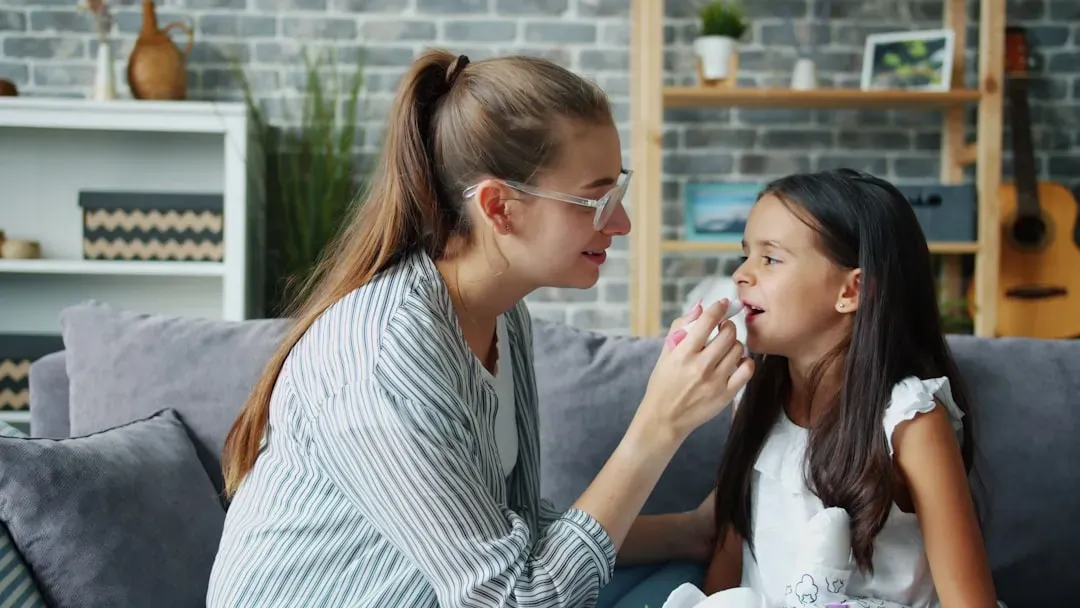
Talking less to parents doesn't mean talking less matters (Image Credits: Unsplash)
It's worth remembering that the quality of parent teen communication still shapes outcomes, even during the quietest stretches. Research shows that ease of communication with parents directly affects teen mental health outcomes, and when young people find it easy to talk to their mother, they're much more likely to report high levels of emotional well-being. The volume of conversation can drop while its importance stays exactly the same.
Timing turns out to matter more than most parents expect. Wanting to talk to parents during adolescence is often less intentional than opportune, the psychological readiness required is a mysterious and chancy thing that the teenager often does not consciously control. Waiting until "later" to have a real conversation often means missing the narrow window when a teen was actually ready to open up.
Rebuilding conversation starts with how parents show up, not how much they talk

Rebuilding conversation starts with how parents show up, not how much they talk (Image Credits: Pexels)
Reconnecting doesn't usually require grand gestures. It tends to come down to small, repeated choices about how a parent responds in ordinary moments. Listening more than talking and trying to understand their perspective without immediately offering solutions or judgments makes a teen more likely to keep the door open next time, even if today's conversation was brief.
Setting also matters more than people assume. Looking for natural moments to start a conversation, such as during car rides, while cooking dinner, or at bedtime, these times can be less intimidating and more conducive to open dialogue. A sit down "we need to talk" rarely works as well as a low pressure exchange that happens sideways, while doing something else entirely.
The takeaway for parents living through the quiet

The takeaway for parents living through the quiet (Image Credits: Pexels)
The silence that shows up during the teenage years is rarely one single thing. It's brain development, shifting social priorities, a genuine need for privacy, and sometimes the pull of a phone screen, all layered on top of each other during a stretch of years that's already loaded with change.
Most of it resolves on its own, especially when parents stay patient, available, and low key rather than pushing for answers on their own timeline. The exceptions worth watching for are the ones tied to isolation, lost interests, or a mood that doesn't lift, since those point toward something beyond ordinary distance. For everything else, staying present without demanding constant conversation tends to be what eventually brings a teen back around.